
Official Document in British Sign Language (BSL)
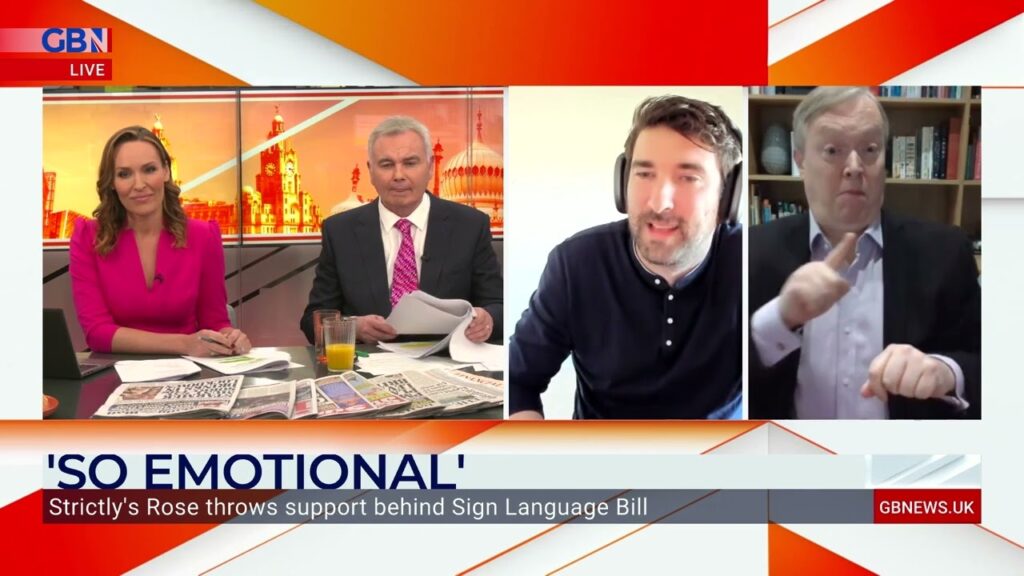
The sign for “official document” is used in various contexts within the UK Deaf community, such as when discussing certificates, contracts, or any formal paperwork. It conveys the importance of the document being recognized and verified, making it a significant sign in both personal and professional settings.
How to Sign “Official Document”
- Start with your dominant hand in a flat handshape (like a “B” handshape) and hold it in front of your body, palm facing down.
- Move your dominant hand slightly to the side, as if you are presenting something.
- Next, use your non-dominant hand to create a flat handshape (also like a “B” handshape) and place it under your dominant hand, representing the document itself.
- Raise both hands together slightly, indicating the importance of the document.
- Finish with a nod or a slight facial expression that shows seriousness or formality, which are important non-manual features in BSL.
Common Mistakes
- Forgetting to use non-manual features like facial expressions, which convey the seriousness of the document.
- Using an incorrect handshape; ensure both hands are in flat handshapes.
- Not positioning the hands in the correct space; the dominant hand should always be above the non-dominant hand to indicate hierarchy.
BSL vs ASL
In BSL, the sign for “official document” uses both hands to convey the idea of a document being presented, while in ASL, the sign is typically made with a single handshape that resembles a paper being held. The use of two hands in BSL emphasizes the importance of the document, reflecting the visual-spatial nature of the language.
Related Signs
- Certificate – A formal document proving achievement.
- Contract – A legally binding document between parties.
- ID – A document that proves identity.
- Paper – A general sign for any kind of paper.
- Form – A document used to collect information.
Frequently Asked Questions
Can you use this sign in a sentence?
Yes, you can use it in a sentence like: “I need to submit the official document.” You would sign “I need official document” with appropriate facial expressions.
Are there regional variations for this sign?
While the sign is generally consistent across the UK, some regions may have slight variations in movement or emphasis. It’s good to observe local Deaf signing.
What are some signs similar to “official document”?
Related signs include “certificate,” “contract,” and “ID,” which also represent formal documents but with slight variations in handshape and movement.
What tips do you have for learning this sign?
Practice in front of a mirror to perfect your handshape and facial expressions. Watching native signers can also help you understand the nuances better.
Is this sign used in formal situations only?
This sign is primarily used in formal contexts, but can also be used casually when discussing documents with friends or colleagues.
How can I improve my BSL skills overall?
Engage with the Deaf community through events, classes, and social gatherings. Regular practice and interaction are key to fluency.
Practice This Sign
Try signing Official Document In Bsl with your camera and get AI coaching on your handshape, movement, and location.
Free · No signup required