
Number in British Sign Language (BSL)
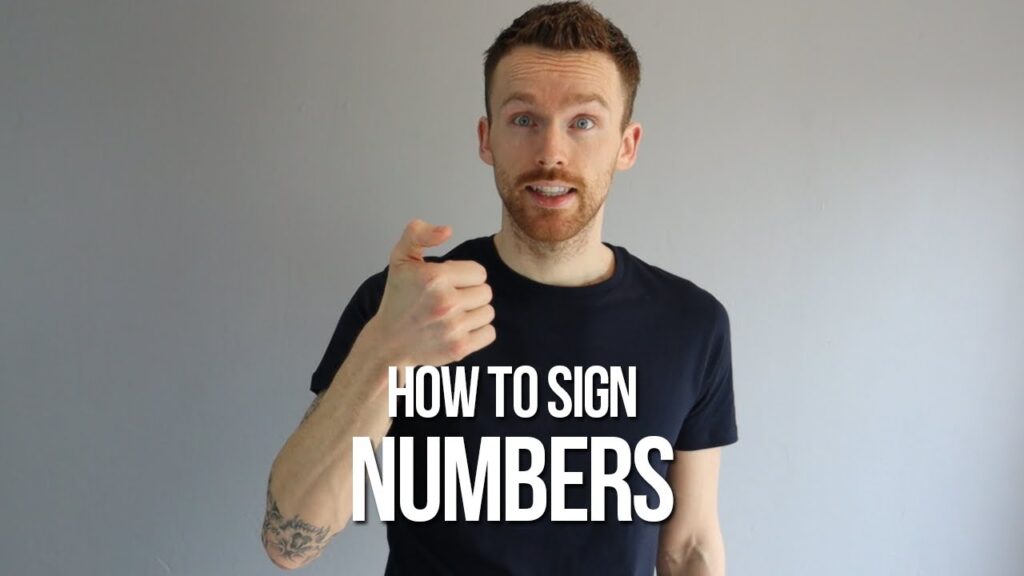
The sign “number” in BSL is used to refer to numerical concepts and is an essential part of everyday communication within the UK Deaf community. It can be used in various contexts, such as counting, discussing prices, or indicating phone numbers. Understanding this sign helps in engaging in conversations that involve quantification or numerical value.
How to Sign “Number” in BSL
- Start with your dominant hand in a flat ‘B’ shape (palm facing down).
- Position your hand at chest level, a little to the side.
- Move your hand slightly forward and upwards, maintaining the ‘B’ shape.
- As you make this movement, nod your head slightly to indicate the action.
- To specify a particular number, you can follow this sign with the corresponding number sign (e.g., 1, 10, etc.) using your other hand.
Common Mistakes
- Forgetting to use the non-manual features, such as nodding your head, which adds meaning to the sign.
- Holding the hand too low or too far from the body, which can make the sign unclear.
- Confusing “number” with similar signs, leading to miscommunication.
BSL vs ASL
In BSL, the sign for “number” is made with a flat ‘B’ shape, while in ASL, it often involves a different handshape and movement. This highlights the unique structure and grammar of BSL compared to ASL, reflecting the distinct cultural contexts of the two languages.
Related Signs
- 1 – The sign for the number one, often used in counting.
- 10 – Represents the number ten, useful for discussing quantities.
- 100 – Indicates the number one hundred, applicable in financial contexts.
- 1 Dollar – Used when discussing currency or prices.
- 10 In Bsl – A specific reference to the number ten within BSL.
Frequently Asked Questions
How can I use “number” in a sentence in BSL?
You can use “number” at the beginning of a sentence to introduce a topic, such as “Number 5 is my favourite.” In BSL, you would sign “NUMBER” followed by the sign for “5.”
Are there regional variations in the sign for “number”?
Most regions in the UK use a similar sign for “number,” but it’s good to be aware of local dialects and variations that may exist within different Deaf communities.
What are some signs similar to “number”?
Signs like “count,” “total,” and specific numbers (e.g., 1, 10, 100) are related and often used in conjunction with “number.”
What tips can help me learn the sign for “number”?
Practice in front of a mirror to ensure your handshape and movement are correct. Watching videos and engaging with Deaf individuals can also enhance your learning experience.
Why is understanding numerical signs important?
Numerical signs are essential for daily communication, including shopping, phone conversations, and social interactions, making it crucial for effective communication.
Can I use facial expressions with the sign?
Yes! Non-manual features like facial expressions and head movements are vital in BSL, as they help convey the meaning and context of the sign.
Practice ASL Signs
Use your camera to practice signs and get real-time AI feedback on your technique.
Free · No signup required