
Now in British Sign Language (BSL)

The sign “now” in BSL conveys the idea of the present moment and is frequently used in everyday conversations within the UK Deaf community. It helps to establish the timing of an action or situation, making it clear that something is happening at this very moment.
How to Sign “Now” in BSL
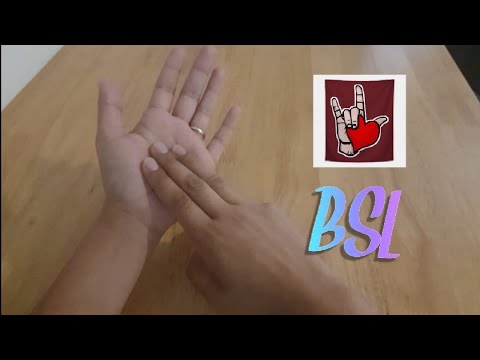
- Start with your dominant hand in a flat handshape (like the palm of your hand facing down).
- Position your hand in front of your chest, about shoulder height.
- Move your hand slightly forward, away from your body, while maintaining the flat handshape.
- As you perform the movement, use a facial expression that conveys immediacy, such as raising your eyebrows slightly.
- Incorporate a slight nod of your head to emphasise the present moment.
Common Mistakes
- Not using facial expressions: Many learners forget to incorporate non-manual features, which are crucial for conveying meaning in BSL.
- Incorrect handshape: Some may use a fist instead of a flat hand, which alters the sign’s meaning.
- Failing to maintain the topic-comment structure: Learners sometimes forget to place the topic (now) at the beginning of their sentences.
BSL vs ASL
In BSL, “now” is signed with a flat hand moving forward from the chest, while in ASL, the sign involves a different handshape and movement. This highlights the unique grammar and structure of each sign language, reflecting their distinct cultural backgrounds.
Related Signs
- 1 – The sign for the number one.
- 10 – The sign for the number ten.
- 100 – The sign for the number one hundred.
- 11 – The sign for the number eleven.
- 12 – The sign for the number twelve.
Frequently Asked Questions
How do I use “now” in a BSL sentence?
You can use “now” to establish the timing of an action. For example, to say “I am eating now,” sign “now” followed by the sign for “eat.”
Are there regional variations for this sign?
The sign for “now” is generally consistent across the UK, but some regions may have slight variations in facial expressions or speed of signing.
What are some signs similar to “now”?
Signs like “today” or “currently” are related and can be used in similar contexts, but they have distinct meanings.
Any tips for learning this sign?
Practice in front of a mirror to ensure your handshape and facial expressions are correct. Watching native signers can also help.
Can “now” be used in different contexts?
Yes, “now” can indicate urgency, immediacy, or simply the present moment, depending on the context of the conversation.
Is “now” used differently in formal vs. informal settings?
The sign itself remains the same, but the context and accompanying signs may change depending on the formality of the situation.
Practice ASL Signs
Use your camera to practice signs and get real-time AI feedback on your technique.
Free · No signup required