
Makaton and BSL Difference in British Sign Language (BSL)

The sign “Makaton and BSL difference” is used to discuss the distinctions between Makaton, a language programme that uses signs alongside speech, and British Sign Language (BSL), a fully-fledged language with its own grammar and structure. This sign is commonly used in educational and community settings when explaining these differences to parents, educators, or those new to sign language.
How to Sign “Makaton And Bsl Difference” in BSL
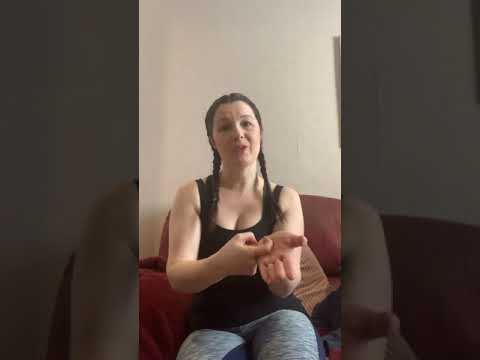
- Start with your dominant hand in front of you, palm facing towards yourself, and create the sign for “Makaton” by forming a flat handshape and moving it slightly forward.
- Next, transition to your non-dominant hand, which should be in a similar flat handshape, to indicate “BSL.” Position this hand next to your dominant hand.
- Now, bring both hands together slightly, representing the “difference” between the two. You can use a slight side-to-side movement to show contrast.
- Throughout the sign, maintain a neutral, informative facial expression while using eyebrows to indicate the topic-comment structure of BSL, raising them when introducing “Makaton” and lowering them when signing “BSL.”
- Ensure you are using space effectively by keeping your dominant hand in the forefront for emphasis while your non-dominant hand follows closely.
Common Mistakes
- Using a flat handshape for both signs but forgetting to differentiate the hand movements for “Makaton” and “BSL.”
- Neglecting non-manual features, such as facial expressions, which are crucial for understanding the topic-comment structure in BSL.
- Not using enough space to visually separate the two concepts, which can lead to confusion about the differences.
BSL vs ASL
In BSL, the signs for “Makaton” and “BSL” are distinct, with clear movements and handshapes that reflect the topic-comment structure. In contrast, American Sign Language (ASL) may have different signs and may not use the same grammatical structure, focusing more on the context rather than the specific handshapes used in BSL.
Related Signs
- (Bsl – A sign representing BSL as a whole.
- (Bsl) – Another variation of the BSL sign.
- 1 – The sign for the number one, often used in counting.
- 1 Dollar – A sign for currency, helpful in financial discussions.
- 10 – The sign for the number ten.
Frequently Asked Questions
How can “Makaton and BSL difference” be used in a BSL sentence?
This sign can be used as part of a longer sentence explaining how Makaton is often used with children and BSL is used for fluent communication within the Deaf community.
Are there regional variations in how this sign is performed?
While the core sign remains consistent, some regional variations may exist in handshape or movement style. It’s beneficial to observe local signers for guidance.
What are some similar signs to “Makaton and BSL difference”?
Similar signs include “Makaton,” “BSL,” and “difference,” each conveying related concepts that can be combined in conversation.
What tips can help in learning this sign?
Practice in front of a mirror to check your hand shapes and facial expressions. Watching video demonstrations and mimicking the movements can also be beneficial.
Can this sign be used in formal education settings?
Yes, this sign is particularly useful in educational contexts when discussing communication methods for children with different needs.
Is this sign used by hearing people as well?
Yes, hearing people involved in education or healthcare may use this sign to communicate effectively with Deaf individuals or those who use Makaton.
Practice ASL Signs
Use your camera to practice signs and get real-time AI feedback on your technique.
Free · No signup required