
Familial in British Sign Language (BSL)
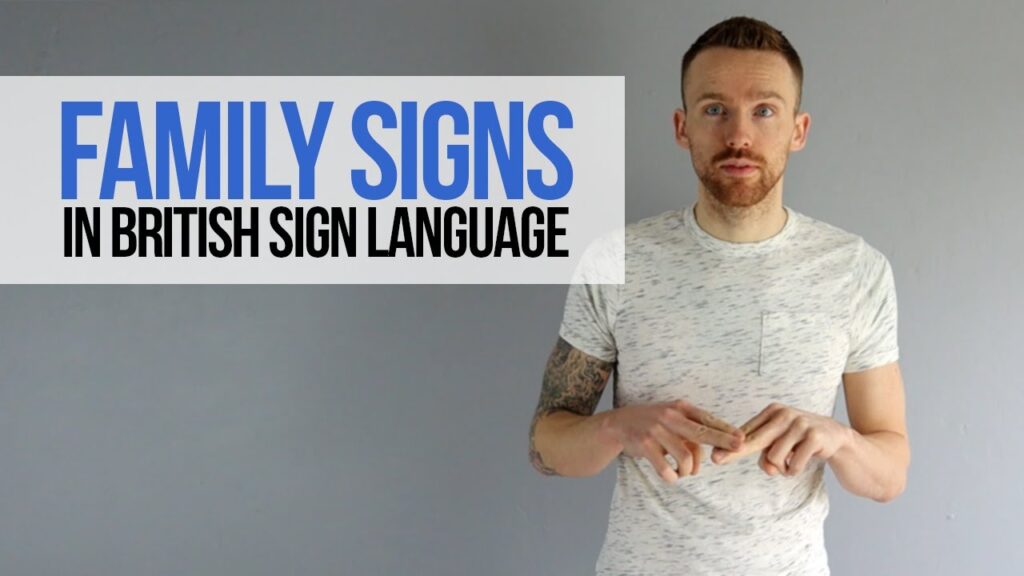
The sign “familial” in BSL refers to anything related to family or kinship. It’s often used in conversations about relationships, family gatherings, and discussions about heritage within the UK Deaf community, where valuing family connections is common. This sign conveys a sense of belonging and community.
How to Sign “Familial” in BSL

- Start with your dominant hand in a flat shape (like the letter ‘B’) and place it on your chest to represent the heart or core of family.
- Move your hand outward from your chest, away from your body, while keeping the flat hand shape. This movement signifies the extension of family beyond just the immediate.
- Maintain a friendly expression throughout the sign, showing affection and warmth associated with family ties.
- As you perform the sign, ensure your non-dominant hand is relaxed at your side or held in a neutral position to keep the focus on the dominant hand.
Common Mistakes
- Forgetting to use a clear, flat handshape, which can make the sign unclear.
- Not maintaining facial expressions that convey warmth and connection, making the sign feel less genuine.
- Confusing the movement direction; the sign should extend outward from the chest, not sideways or backward.
BSL vs ASL
In BSL, “familial” is signed with a specific handshape and movement that emphasizes the heart and connectivity. In contrast, ASL uses a different sign entirely, often involving a gesture that signifies family or relatedness without the same focus on the heart area. Understanding these differences highlights the unique aspects of each sign language.
Related Signs
- Family – The general sign for family, encompassing all members.
- Relative – The sign used to indicate relatives, such as cousins or aunts.
- Sibling – The specific sign for brothers and sisters.
- Parent – A sign referring to mothers and fathers.
- Child – The sign representing children in a family context.
Frequently Asked Questions
How can “familial” be used in a BSL sentence?
To use “familial” in a sentence, you might say: “My familial connections are important,” signing “MY FAMILY-RELATIONSHIP IMPORTANT” with the appropriate facial expressions.
Are there regional variations for the sign “familial” in the UK?
While the sign is generally consistent across the UK, some regions may have slight variations in movement or facial expression. Observing local signers can help with this.
What are similar signs to “familial”?
Signs like “family,” “relative,” and “sibling” are similar and relate closely to the concept of familial connections.
What tips can help me learn this sign better?
Practice in front of a mirror to check your handshape and facial expressions. Additionally, try to observe native BSL users to understand the context better.
Can “familial” be used in different contexts?
Yes, the sign can be used in various contexts, such as discussing family events, relationships, or heritage.
What non-manual features should I use with this sign?
Use a warm, friendly facial expression to convey affection and connection when signing “familial.” It is essential for expressing the emotional context.
Practice ASL Signs
Use your camera to practice signs and get real-time AI feedback on your technique.
Free · No signup required