
Data Exchange in British Sign Language (BSL)

The sign for “data exchange in BSL” refers to the process of sharing information or data within the Deaf community. It is often used in contexts related to technology, research, or collaborative projects where information is being shared. This sign is helpful when discussing topics like access to resources, research findings, or community initiatives.
How to Sign “Data Exchange” in BSL
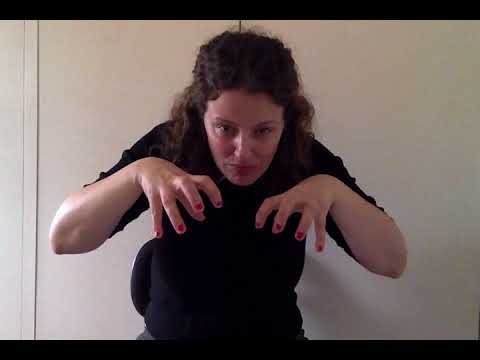
- Start by forming both hands into flat ‘B’ shapes (palms facing down).
- Bring your hands together in front of you, slightly apart, to represent the idea of data being shared.
- Move your hands outward, away from each other, as if you are dispersing or exchanging data.
- While doing this, use facial expressions to convey openness and clarity, showing that you are sharing valuable information.
- It’s also effective to maintain eye contact with your audience to emphasize the importance of the exchange.
Common Mistakes
- Forgetting to use the correct handshape; some learners may mistakenly use a fist instead of the flat ‘B’ handshape.
- Not using enough movement; the sign should demonstrate a clear exchange, so lack of motion can lead to confusion.
- Overlooking facial expressions; learners might forget that non-manual features, like facial expressions, are important in conveying meaning.
BSL vs ASL
The sign for “data exchange” in BSL differs from its counterpart in ASL. While both signs convey the same general idea, BSL tends to use more spatial representation and handshapes that reflect the physical act of exchanging, whereas ASL may prioritise a more abstract representation. This highlights the unique grammar and structure of each sign language.
Related Signs
- 1 – The sign for the number one.
- 1 Dollar – The sign for one dollar, useful in financial discussions.
- 10 – The sign for ten, often used in counting.
- 100 – The sign for one hundred, useful in numerical contexts.
- 11 – The sign for eleven, another foundational number in counting.
Frequently Asked Questions
How can I use “data exchange” in a BSL sentence?
You might say, “WE DATA EXCHANGE,” where “WE” is signed with both hands pointing to you and another person, followed by the sign for “data exchange.”
Are there regional variations in the sign?
While the sign is widely used, some regions may have slight variations in movement or facial expressions. It’s always good to learn from local Deaf individuals.
What are some similar signs?
Signs related to sharing or communication, such as “sharing” or “information,” can often accompany discussions about data exchange.
What tips do you have for learning this sign?
Practice in front of a mirror to refine your handshape and movement, and try to incorporate facial expressions to enhance clarity.
Can this sign be used for non-technical exchanges?
Yes, “data exchange” can refer to any kind of information sharing, not just technical data. Context is key!
What is the importance of data exchange in the Deaf community?
Data exchange is crucial for collaboration, access to resources, and building community knowledge among Deaf individuals.
Practice ASL Signs
Use your camera to practice signs and get real-time AI feedback on your technique.
Free · No signup required