
BSL Numbers to 20 in British Sign Language (BSL)
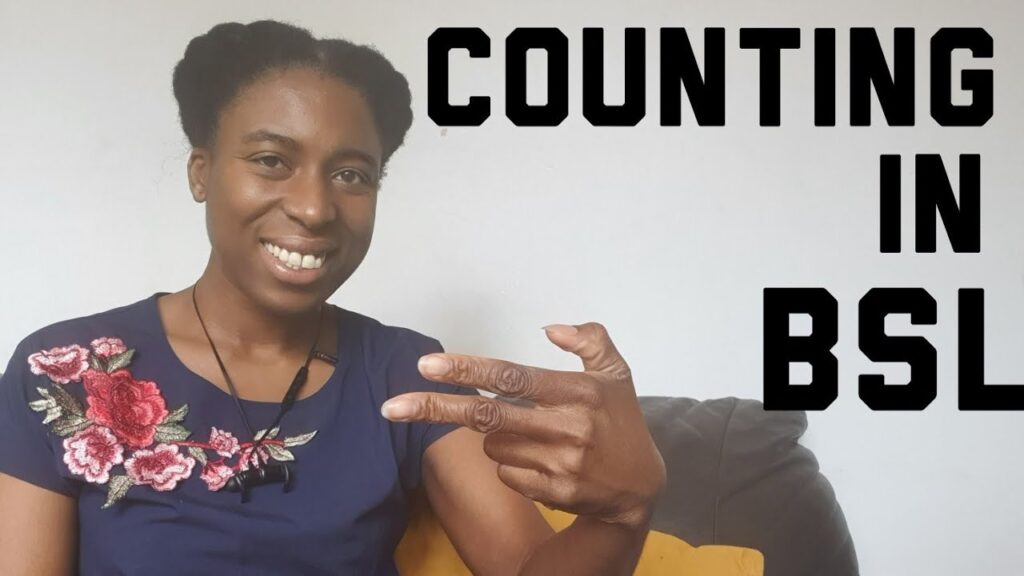
Understanding BSL numbers up to 20 is essential for everyday communication in the UK Deaf community. These signs are commonly used in various contexts, from casual conversations to more formal settings. Mastering these numbers helps foster clearer interactions and enriches your BSL vocabulary.
How to Sign “Bsl Numbers To 20″ in BSL
- Start with your dominant hand, using the index finger to represent the number 1. Hold it upright in front of you.
- To indicate the number 2, extend your middle finger alongside the index finger, keeping both fingers straight and upright.
- For the number 3, add your ring finger to the mix, keeping all three fingers (index, middle, and ring) extended.
- For the number 4, extend your pinky finger as well, keeping all four fingers straight and upright.
- To show the number 5, open your hand fully, spreading your fingers apart.
- For numbers 6 to 9, use your dominant hand to touch your thumb to your palm, then extend your fingers to represent 6 (thumb and pinky), 7 (thumb and ring), 8 (thumb and middle), and 9 (thumb and index).
- For 10, make a fist and tap it against your chest.
- To sign the numbers 11 to 20, combine the first digit (1 or 2) with the sign for the second digit (1 to 9) in a fluid motion. Keep the numbers clear and distinct.
- Facial expressions are important in BSL. Use a neutral or happy expression when counting.
Common Mistakes
- Forgetting to use facial expressions, which can affect the clarity of communication.
- Confusing the signs for numbers 6 to 9; ensure you are using the correct finger combinations.
- Not maintaining a clear space in front of you for signing, which can lead to miscommunication.
BSL vs ASL
In BSL, numbers are often signed using a combination of fingers and hand shapes, while ASL uses different signs for the same numbers. For example, BSL uses a more straightforward finger counting method, while ASL incorporates unique handshapes and movements for each number.
Related Signs
- 1 – The sign for one, using the index finger.
- 10 – The sign for ten, made by tapping a fist against the chest.
- 100 – The sign for one hundred, typically using a flat hand.
- 11 – The sign for eleven, using the index finger and a tapping motion.
- 12 – The sign for twelve, combining the signs for 1 and 2.
Frequently Asked Questions
How do I use numbers in BSL sentences?
In BSL, numbers can be used as topics. For example, “10” can be the topic followed by a comment about what it refers to, like “10 people.” Use clear hand signs and maintain space for clarity.
Are there regional variations in BSL numbers?
Yes, there can be slight variations in how numbers are signed across different regions in the UK. It’s beneficial to learn from local Deaf community members.
What are some similar signs to numbers in BSL?
Signs like 1, 10, and 100 are related as they all pertain to numeric values.
What tips can help me learn BSL numbers more effectively?
Practice regularly, watch native signers, and engage with the Deaf community to enhance your skills. Use visual aids to reinforce learning.
Can I use fingerspelling for numbers?
While fingerspelling is useful, it’s generally more common to use the specific hand signs for numbers in BSL for clarity and fluidity in conversation.
What is the importance of facial expressions in BSL?
Facial expressions convey emotions and clarify the meaning of signs. They are integral to BSL grammar and can change the context of what you’re signing.
Practice ASL Signs
Use your camera to practice signs and get real-time AI feedback on your technique.
Free · No signup required