
BSL for No in British Sign Language (BSL)

The BSL sign for “no” is a fundamental part of communication in the UK Deaf community. It is used in various contexts to express disagreement, refusal, or negation. This sign is crucial for everyday interactions, allowing individuals to assert their preferences and boundaries clearly.
How to Sign “Bsl For No” in BSL
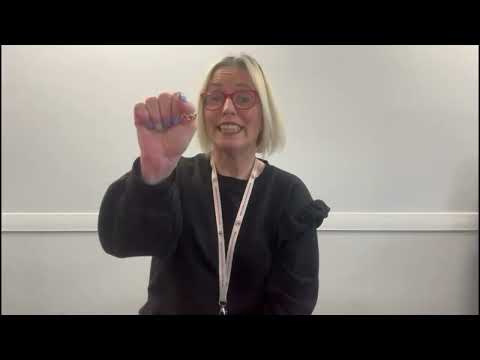
- Start with your dominant hand in a flat ‘O’ shape, with your palm facing towards you.
- Bring your hand away from your face and then quickly flick your fingers outwards, creating a strong outward motion.
- Ensure your facial expression matches the sign; a firm expression reinforces the meaning of “no.”
- Utilize space by positioning your hand at about chest height when you make the sign.
Common Mistakes
- Forgetting to use a firm facial expression, which can make the sign seem less emphatic.
- Using a weak or unclear hand motion, leading to confusion about the sign’s meaning.
- Positioning the hand too close to the face, which can make the sign less clear.
BSL vs ASL
In BSL, “no” is signed with a flat hand and a clear outward motion, while in American Sign Language (ASL), it is often represented by a different hand shape, such as a fist, with a different movement. The approach to expressing negation varies between the two sign languages, reflecting their unique grammatical structures and cultural contexts.
Related Signs
- Yes – The sign for agreement or affirmation.
- Stop – Used to indicate a halt or cessation.
- Please – A polite sign often used in requests.
- Okay – Signifying agreement or acceptance.
- Maybe – A sign for uncertainty or indecision.
Frequently Asked Questions
How can I use “no” in a BSL sentence?
You can structure a sentence using “no” by placing the topic first, followed by the sign for “no.” For example, “I want to go, no” would be signed by first signing “I want to go” and then the sign for “no.”
Are there regional variations for the sign “no” in the UK?
While the sign for “no” is fairly consistent across the UK, some individuals may use slight variations in hand shape or movement based on regional dialects.
What are some similar signs to “no”?
Signs like “stop” or “don’t want” can be related as they also express refusal or negation in conversation.
What tips can help me learn this sign?
Practice in front of a mirror to ensure your facial expressions match your signs. Additionally, try using the sign in context with friends or in conversation to reinforce your learning.
Can I use “no” in a more informal setting?
Yes, “no” is suitable for both formal and informal contexts, making it a versatile sign for everyday conversations.
How important is facial expression when signing?
Facial expressions are critical in BSL as they add meaning and context to your signs, helping to convey your emotions and intentions effectively.
Practice ASL Signs
Use your camera to practice signs and get real-time AI feedback on your technique.
Free · No signup required