
BSL-1k Dataset in British Sign Language (BSL)
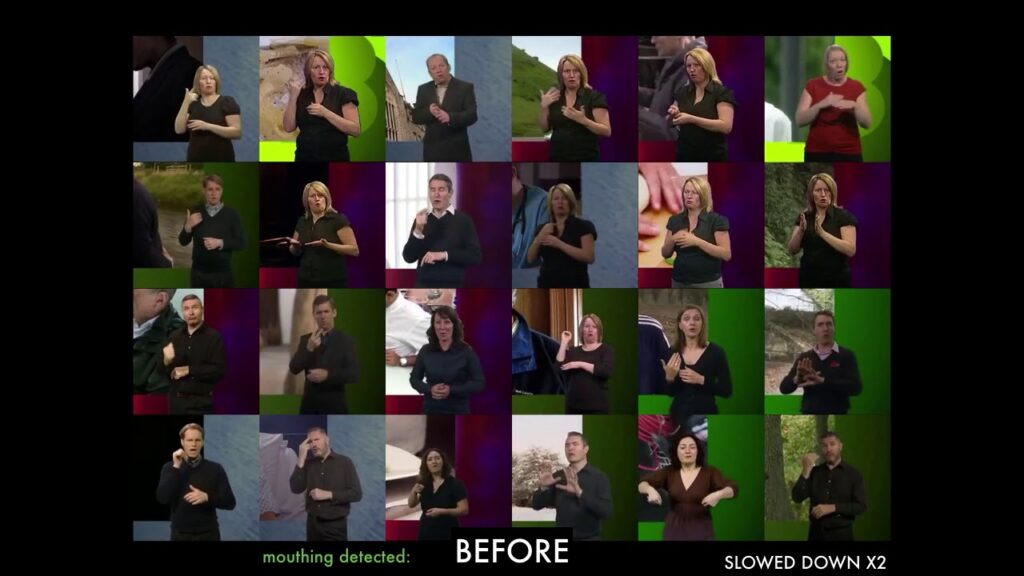
The sign “bsl-1k dataset” refers to a collection of data specifically designed to facilitate research and development within the British Sign Language community. This sign is often used in discussions about resources for learning and teaching BSL, particularly in academic and technological contexts.
How to Sign “Bsl-1K Dataset” in BSL
- Start with your dominant hand in a flat ‘B’ shape, palm facing up.
- Use your non-dominant hand to create a ‘1’ sign, by extending your index finger upwards.
- Position the ‘1’ hand above the ‘B’ hand, moving it slightly forward to indicate a relationship.
- As you move the ‘1’ hand, raise your eyebrows to show interest or importance, a key non-manual feature in BSL.
- Finish the sign with a slight forward motion of the ‘B’ hand, indicating a dataset or collection.
Common Mistakes
- Inadvertently using the wrong handshape for ‘1’, such as a fist instead of an index finger.
- Neglecting to use appropriate facial expressions, which are crucial for conveying the meaning in BSL.
- Failing to position the hands correctly in relation to each other, which can lead to confusion about the sign’s meaning.
BSL vs ASL
In BSL, the sign for “bsl-1k dataset” incorporates specific handshapes and movements that differ from American Sign Language (ASL). In ASL, the sign may rely more on a different configuration or additional movement to convey the same concept, showcasing the unique aspects of each sign language.
Related Signs
- 1 – The sign for the number one.
- 100 – The sign representing one hundred.
- 10 – The sign for the number ten.
- 1 Dollar – The sign for one dollar.
- 10 In Bsl – The sign for ten in BSL context.
Frequently Asked Questions
How can I use “bsl-1k dataset” in a BSL sentence?
You can say, “I have a bsl-1k dataset,” by incorporating the sign with the appropriate topic-comment structure, where you establish the topic (the dataset) first and then comment on it.
Are there regional variations for this sign across the UK?
While the core sign remains consistent, some regions may have slight variations in handshape or movement. It’s best to learn from local Deaf communities.
What are some similar signs I should know?
Other useful related signs include 100 and 10, which can help in discussing different datasets or amounts.
What tips do you have for learning this sign?
Practice in front of a mirror to observe your hand shapes and facial expressions. Watching videos can also help reinforce the correct movements.
Can I use this sign in a formal presentation?
Yes, using “bsl-1k dataset” in a presentation is appropriate, especially if discussing BSL resources. Remember to maintain clear non-manual features for clarity.
What is the importance of the “bsl-1k dataset”?
This dataset is crucial for researchers and educators in improving BSL learning tools and resources, thus benefiting the entire Deaf community.
Practice ASL Signs
Use your camera to practice signs and get real-time AI feedback on your technique.
Free · No signup required