
Above in British Sign Language (BSL)
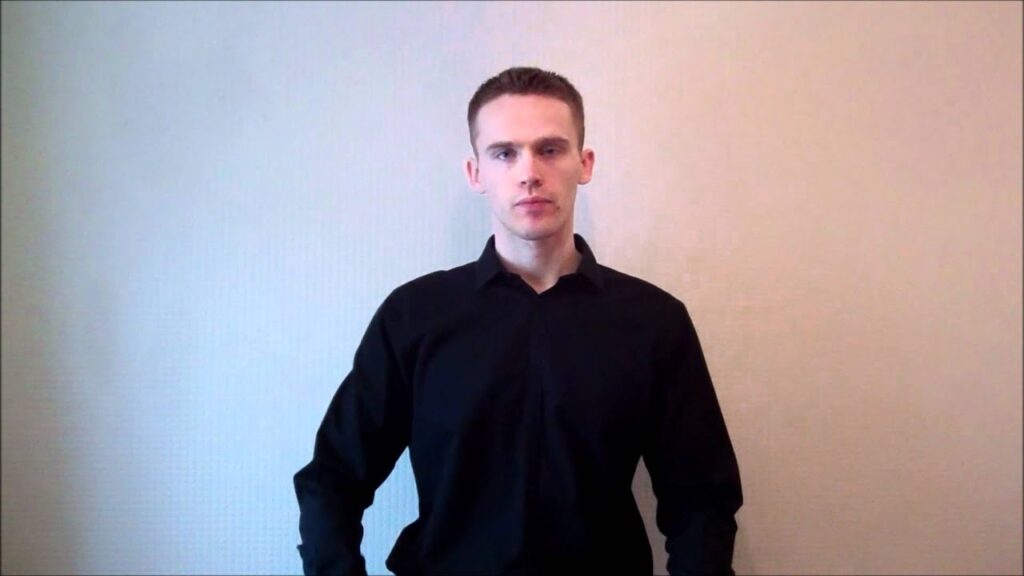
The sign for “above” in BSL is used to indicate something that is higher or located over another object. It can be applied in various contexts, such as describing the position of items, people, or places. This sign is commonly used in everyday conversations among the UK Deaf community.
How to Sign “Above” in BSL
- Begin with your dominant hand in a flat handshape, fingers extended and together.
- Position your hand in front of your body at chest height.
- Move your hand upwards in a smooth motion, while keeping your palm facing forward.
- As you move your hand up, raise your eyebrows slightly to indicate that you are commenting on the position of something being ‘above’.
- Finish the sign by returning your hand to the starting position if needed, or hold the final position if you want to emphasise it further.
Common Mistakes
- Forgetting to use non-manual features, such as facial expressions, which are crucial for conveying meaning in BSL.
- Not keeping the hand movement smooth and fluid, which can lead to misunderstanding of the sign.
- Using a fist handshape instead of a flat handshape, which may confuse the sign with another meaning.
BSL vs ASL
In BSL, the sign for “above” involves a specific handshape and movement that differs from American Sign Language (ASL). In ASL, “above” is often signed with a different handshape and a more pronounced upward gesture, reflecting the distinct grammar and structure of each sign language.
Related Signs
- Over – Used to indicate something is over or on top of something else.
- Below – The opposite of above, indicating something that is lower.
- High – This sign expresses a location that is significantly elevated.
- Up – A sign that indicates movement or direction towards a higher position.
- Under – Refers to something that is beneath or lower than another object.
Frequently Asked Questions
Can you use “above” in a BSL sentence?
Yes, you can use “above” in sentences to describe the position of objects, e.g., “The book is above the table.”
Are there regional variations for this sign in the UK?
Generally, the sign for “above” remains consistent across the UK, but local dialects may have slight variations in movement or facial expressions.
What is a similar sign to “above”?
The sign for “over” is often used in similar contexts and can be related in meaning depending on the situation.
What tips do you have for learning this sign?
Practice in front of a mirror to ensure your handshape and movement are correct, and pay attention to your facial expressions.
Is this sign used in everyday conversation?
Absolutely! “Above” is a common sign in everyday discussions about locations and positions.
How does context affect the use of “above”?
The context can change how you use “above”, as it may need to be paired with other signs for clarity, such as the object you are referring to.
Practice ASL Signs
Use your camera to practice signs and get real-time AI feedback on your technique.
Free · No signup required