
Valuer in Australian Sign Language (Auslan)

The sign “valuer” in Auslan refers to someone who assesses or determines the worth of something, often used in contexts related to finance, property, or personal belongings. This sign is commonly used when discussing appraisals, evaluations, or when referring to someone’s expertise in determining value.
Table of Contents
How to Sign “Valuer”
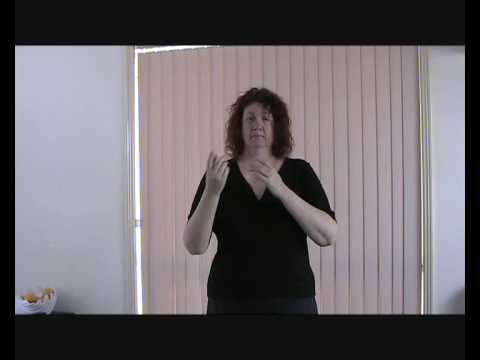
- Start by extending your dominant hand into a “C” shape, with your fingertips pointing upward.
- Position your hand near your chest, palm facing towards your body.
- Move your hand slightly forward and upward, as if you are showcasing or presenting something valuable.
- Maintain a neutral facial expression, or use a slight smile to convey positivity about the value being discussed.
Common Mistakes
- Forgetting to use the appropriate hand shape; ensure your hand is in a “C” shape throughout the sign.
- Not moving the hand forward enough, which can make the sign unclear.
- Neglecting facial expressions, which are vital for conveying the right tone in ASL.
Related Signs
- 1 – The sign for the number one.
- 1 Dollar – Represents one dollar in currency.
- 10 – The sign for the number ten.
- 100 – Represents one hundred in numerical form.
- 11 – The sign for the number eleven.
Using “Valuer” in Everyday Conversations
The sign “Valuer” can be particularly useful in various contexts, especially when discussing property, appraisals, or financial matters. Here are a few example sentences that demonstrate how to incorporate this sign naturally into conversations:
- Example 1: “MY FRIEND VALUER HOUSE.” (My friend is a valuer of houses.)
- Example 2: “VALUER COMING TOMORROW.” (The valuer is coming tomorrow.)
- Example 3: “I NEED VALUER FOR MY PROPERTY.” (I need a valuer for my property.)
These examples can come up in casual conversations among friends, discussions in a professional setting, or even in community meetings focused on property development and real estate.
Cultural Notes
The role of a valuer is significant within the Australian Deaf community, as many Deaf individuals are involved in property ownership or investment. Understanding the nuances of the sign “Valuer” goes beyond just the handshape; it’s about recognising the importance of accurate valuations in the context of community wealth and accessibility to housing. In terms of dialect, while the sign itself may remain consistent across Australia, there can be slight variations in facial expressions or non-manual features that accompany the sign, particularly between northern and southern regions. These variations often reflect local cultural influences and practices within the Deaf community.
Tips for Learning This Sign
To effectively learn and remember the sign “Valuer,” consider the following strategies:
- Mirror Practice: Use a mirror to observe your handshape and movements. This helps to refine your signing and ensures you’re using the correct form.
- Watch for Non-Manual Features: Pay attention to facial expressions and body language when signing. These non-manual features can add context and meaning to the sign.
- Incorporate into Short Sentences: Practice using “Valuer” in various short sentences, as shown in the examples. This reinforces your memory and helps you use the sign in real-life situations.
Regular practice and engagement with the Deaf community can enhance your learning experience and deepen your understanding of Auslan.
Frequently Asked Questions
How can I use “valuer” in a sentence?
You can say, “I need a valuer to assess my house,” using the sign after the appropriate noun.
Are there regional variations for this sign?
While “valuer” is commonly understood, some regions may use variations or different signs, so it’s good to learn from local Deaf communities.
What are some similar signs to “valuer”?
Related signs include “assess,” “evaluate,” and “appraise,” which have similar meanings and contexts.
How does this sign compare to BSL?
While Auslan and BSL share some similarities, the sign for “valuer” may differ in BSL. It’s worth exploring both languages to appreciate their uniqueness.
What tips do you have for teaching this sign?
Encourage learners to practice facial expressions and gestures, as these are crucial for clarity in ASL.
Practice This Sign
Try signing Valuer In Auslan with your camera and get AI coaching on your handshape, movement, and location.
Free · No signup required