
P.a. in Australian Sign Language (Auslan)
The sign “P.A. in Auslan” refers to a ‘personal assistant’ in the context of support services for individuals who are Deaf or hard of hearing. It is commonly used in discussions about accessibility, workplace accommodations, or personal assistance needs.
Table of Contents
How to Sign “P.A.”
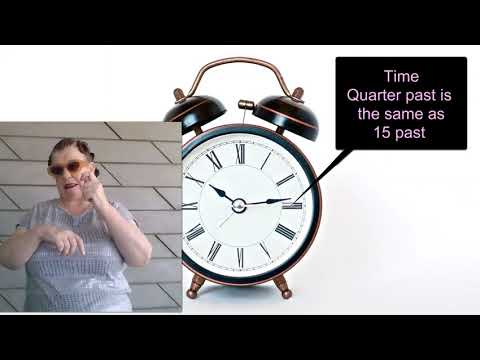
- Start with your dominant hand in a “P” shape. To create a “P” shape, extend your thumb and index finger while curling your middle, ring, and pinky fingers into your palm.
- Position your hand near your chin, with the palm facing away from you.
- Move your hand slightly forward and down in a smooth motion, maintaining the “P” shape.
- Use a facial expression that conveys understanding and support, as this adds emotional context to the sign.
Common Mistakes
- Forgetting to use the correct handshape for the letter “P,” which may lead to confusion.
- Not incorporating facial expressions, which are crucial in conveying the meaning and nuance of the sign.
- Moving the hand too quickly, which can result in unclear communication.
Related Signs
- 1 – Sign for the number one.
- 1 Dollar – Sign representing one dollar or currency.
- 10 – Sign for the number ten.
- 100 – Sign for the number one hundred.
- 11 – Sign for the number eleven.
Using “P.a.” in Everyday Conversations
The sign “P.a.” is often used in casual conversations among friends and family. Here are a few example sentences that illustrate its natural use:
- Sentence: “P.a. loves to tell stories.”
Context: This could come up during a gathering or family dinner when discussing family members and their personalities. - Sentence: “My P.a. took me to the park yesterday.”
Context: This might arise in a conversation about weekend activities with friends. - Sentence: “Is your P.a. coming to the event?”
Context: This is a common question when planning social events where family members might be involved.
These examples show how the sign “P.a.” integrates seamlessly into discussions about family and relationships, reflecting the importance of family ties in Deaf culture.
Cultural Notes
The term “P.a.” holds a special place in the Australian Deaf community, as it signifies not just a familial role but also a connection to Deaf culture and identity. In many instances, “P.a.” is used to emphasize respect and affection towards one’s father or paternal figure. This sign can also exemplify the close-knit nature of Deaf families, where communication through Auslan fosters deep bonds.
While the sign itself remains consistent, dialect variations may exist between northern and southern regions of Australia. In some northern communities, the sign might be accompanied by additional non-manual features, such as facial expressions, to convey warmth or emphasis. Understanding these nuances can enrich your communication and connection within the community.
Tips for Learning This Sign
To effectively learn and remember the sign “P.a.”, consider the following strategies:
- Mirror Practice: Use a mirror to practice the sign in front of it. Observe your hand shape and movement to ensure accuracy.
- Watch for Non-Manual Features: Pay attention to facial expressions and body language when practicing the sign. These features add meaning and context to your signing.
- Use in Short Signed Sentences: Incorporate “P.a.” into brief conversations with friends or family. For example, share a memory or ask about family gatherings using the sign. This helps reinforce your memory through practical application.
Regular practice and engagement with the Deaf community will not only improve your signing skills but also deepen your understanding of the cultural significance behind the sign.
Frequently Asked Questions
How would I use “P.A. in Auslan” in a sentence?
You might say, “I need a P.A. in Auslan to help me with my tasks.” This emphasizes the need for assistance in a professional or personal setting.
Are there regional variations for this sign?
While the sign for “P.A. in Auslan” is generally consistent, some regions may have slight variations in execution. It’s always good to learn from local users.
Are there similar signs I should know?
Yes, signs for roles like “interpreter” or “helper” can also be relevant in similar contexts, and are important for effective communication.
How does this compare to BSL?
British Sign Language has its own sign for “personal assistant,” which may look different from Auslan. It’s essential to understand these differences when communicating internationally.
What tips do you have for teaching this sign?
Encourage learners to practice in pairs and emphasize the importance of facial expressions to convey emotion and intent clearly.
Practice This Sign
Try signing P.A. In Auslan with your camera and get AI coaching on your handshape, movement, and location.
Free · No signup required