
Quiet in Australian Sign Language (Auslan)
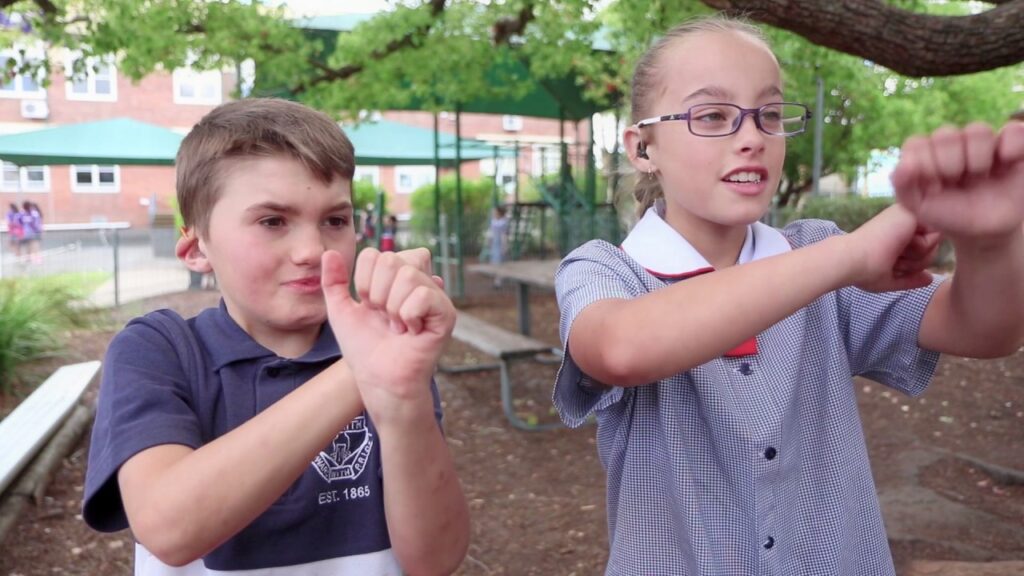
The sign for “quiet” in Auslan is used to convey the idea of silence or calmness. It’s commonly used in situations where you want to ask someone to lower their voice or to indicate that a space should be peaceful. This sign can also express a request for others to be quiet.
Table of Contents
How to Sign “Quiet”
- Start with your dominant hand in a flat shape, fingers extended and together, resembling a “5” handshape.
- Position your hand near your mouth, with your palm facing inward towards your face.
- Move your hand slightly away from your mouth while gently closing your fingers to form a fist. This motion signifies reducing noise.
- Maintain a calm and serene facial expression throughout the sign to emphasize the meaning of quietness.
Common Mistakes
- Some learners may forget to close their hand into a fist, making the sign look incomplete.
- Using an exaggerated or loud facial expression can contradict the meaning of quiet.
- Not positioning the hand close enough to the mouth can make the sign unclear.
Related Signs
- 1 – The sign for the number one.
- 1 Dollar – The sign for one dollar, often used in pricing contexts.
- 10 – The sign for the number ten.
- 100 – The sign for one hundred, useful in financial discussions.
- 11 – The sign for the number eleven.
Using “Quiet” in Everyday Conversations
The sign for “Quiet” is often used in various everyday situations, allowing for clear and effective communication. Here are a few example sentences that show how to incorporate this sign naturally:
- Context: In a library
- “Please be quiet in the library.” → (SIGN: PLEASE + QUIET + LIBRARY)
- Context: During a meeting
- “Can everyone be quiet while we discuss?” → (SIGN: EVERYONE + QUIET + DISCUSS)
- Context: At home with children
- “I need you to be quiet while I work.” → (SIGN: I + NEED + YOU + QUIET + WORK)
In these situations, using the sign for “quiet” helps convey the need for reduced noise in a clear and polite manner.
Cultural Notes
Within the Australian Deaf community, the concept of silence and quietness holds significant cultural relevance. The sign for “Quiet” is often used not just in a literal sense, but also as a way to convey respect for the communication preferences of Deaf individuals. In social settings, asking for quiet can be a sign of understanding and empathy towards those who might be lip-reading or using sign language to communicate.
While the sign for “quiet” is generally consistent across the country, some regional dialect variations may exist. In northern areas, the sign might be performed with a slightly different handshape or movement, while in southern regions, the emphasis may vary. Acknowledging these nuances can enhance communication and foster connections within diverse Deaf communities.
Tips for Learning This Sign
Practicing the sign for “quiet” can be enjoyable and effective with the following methods:
- Mirror Practice: Stand in front of a mirror and practice the sign while observing your handshape and facial expressions. This will help reinforce muscle memory and ensure your sign looks natural.
- Focus on Non-Manual Features: Pay attention to your facial expressions while signing “quiet.” A calm, serene expression enhances the meaning of the sign and makes your communication clearer.
- Use in Short Signed Sentences: Incorporate “quiet” into simple, everyday sentences as you practice. This will help you remember the sign in context and improve your overall fluency in Auslan.
Consistent practice with these techniques will help solidify your understanding and use of the sign for “quiet” in your Auslan conversations.
Frequently Asked Questions
How can I use “quiet” in a sentence?
You can say, “Please be quiet,” by signing “please” before the sign for quiet.
Are there regional variations for this sign?
What are similar signs to “quiet”?
Signs like “silence” or “calm” may have similar meanings and can be used in related contexts.
How does this compare to BSL?
While BSL has its own version of the sign for quiet, the handshape and movement may differ. Familiarizing yourself with both can be beneficial.
What tips do you have for teaching this sign?
Encourage students to practice with different facial expressions to convey the emotion of the sign effectively.
Practice This Sign
Try signing Quiet In Auslan with your camera and get AI coaching on your handshape, movement, and location.
Free · No signup required