
Question You in Australian Sign Language (Auslan)
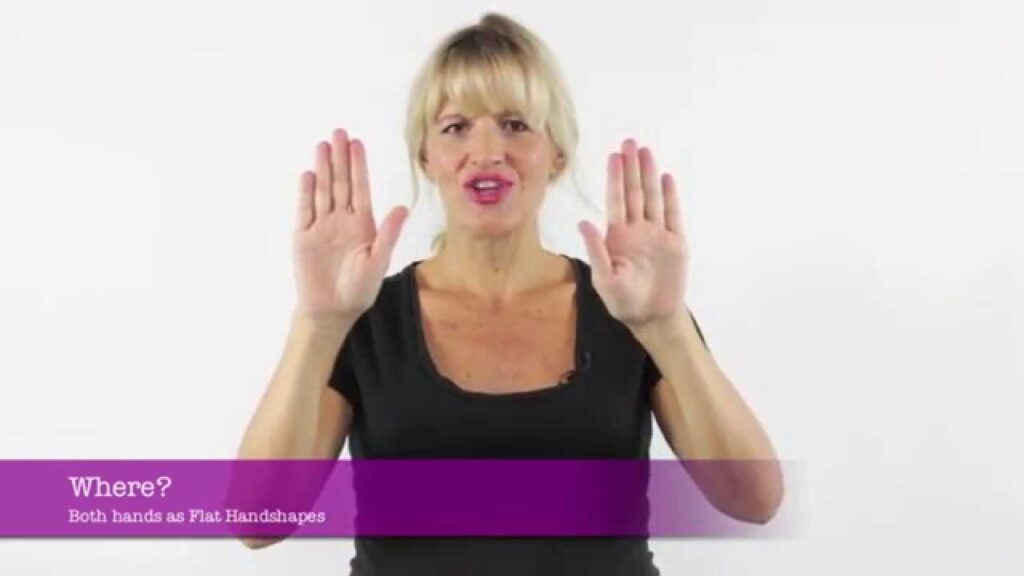
The sign for “question you in Auslan” is used to express that you’re asking someone a question, particularly in conversations or discussions. This sign is commonly used when clarifying something or when seeking specific information from someone. It’s a helpful sign to know in both casual and formal settings.
Table of Contents
How to Sign “Question You In Auslan”

- Start by raising your dominant hand in front of your chest. Your fingers should be together, and your palm should face outward.
- Use your index finger to point directly at the person you are addressing. This indicates that you are directing the question to them.
- As you point, raise your eyebrows for emphasis. This facial expression shows that you are asking a question and invites the other person to respond.
- Maintain a clear and open demeanor, and ensure your body language is engaged to convey your intent.
Common Mistakes
- Forgetting to use facial expressions, which are crucial in ASL for indicating questions.
- Pointing at the ground instead of at the person, which can confuse the message.
- Using a flat hand instead of the correct pointing gesture with the index finger.
Related Signs
- 1 – The sign for the number one.
- 10 – The sign for the number ten.
- 100 – The sign for the number one hundred.
- 11 – The sign for the number eleven.
- 12 – The sign for the number twelve.
Using “Question You” in Everyday Conversations
The sign “Question You” is commonly used in various conversational contexts when seeking information or clarification. Here are a few example sentences that demonstrate its use:
- Where are you going? – “Where you go question you”
- Do you want to join us for dinner? – “You want join us dinner question you”
- Have you seen my keys? – “You see my keys question you”
This sign often comes up in casual conversations among friends or during group discussions, making it a vital part of everyday Auslan communication. Using “Question You” helps to clearly indicate you are asking a question specifically directed at the person you are addressing.
Cultural Notes
The use of “Question You” is deeply embedded in the cultural practices of the Australian Deaf community. Asking direct questions is often encouraged, promoting open dialogue and engagement. In this context, the sign serves not only a grammatical function but also reflects the community’s value of clear and direct communication.
While Auslan is relatively consistent across Australia, some regional variations may exist. For instance, in Northern Australia, the signing space may differ slightly due to local signing styles, whereas in Southern states, you might notice a more fluid motion in the execution of signs. Being aware of these nuances can enrich your understanding and effectiveness in communication.
Tips for Learning This Sign
Practicing “Question You” can be both fun and effective with a few structured approaches:
- Mirror Practice: Stand in front of a mirror to observe your sign and ensure your hand movements and facial expressions are accurate.
- Watch for Non-Manual Features: Pay attention to your facial expressions and body language, as these are crucial in conveying the question’s intent.
- Use in Short Signed Sentences: Create simple dialogues with a partner or teacher. Incorporate “Question You” into these exchanges to reinforce your learning.
By consistently practicing these techniques, you’ll enhance your proficiency in using “Question You” and become more comfortable in everyday Auslan conversations.
Frequently Asked Questions
How can I use this sign in a sentence?
You can use it like this: “I have a question you in Auslan.” Just sign it while pointing to the person you are asking.
Are there regional variations of this sign?
Yes, different regions may have slight variations in how the sign is performed, but the basic concept remains the same.
What are similar signs to this one?
Similar signs might include “ask,” “inquire,” or “question.” Each has its own nuances in ASL.
How does this sign compare to BSL?
In British Sign Language (BSL), the sign for “question” is different, but the concept of asking remains similar.
What are some teaching tips for this sign?
Encourage learners to practice with facial expressions and to engage with their peers through questions to enhance their signing skills.
Practice This Sign
Try signing Question You In Auslan with your camera and get AI coaching on your handshape, movement, and location.
Free · No signup required