
Quadrat in Australian Sign Language (Auslan)
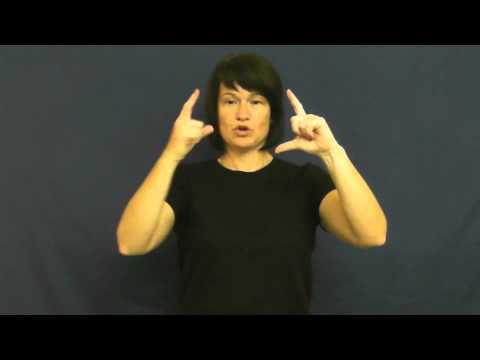
The sign for “quadrat” in Auslan refers to a geometric concept, typically used in mathematical or scientific contexts. This sign is especially useful when discussing shapes, areas, or measurements. It can also be relevant in educational settings or when explaining concepts related to geometry.
Table of Contents
How to Sign “Quadrat”
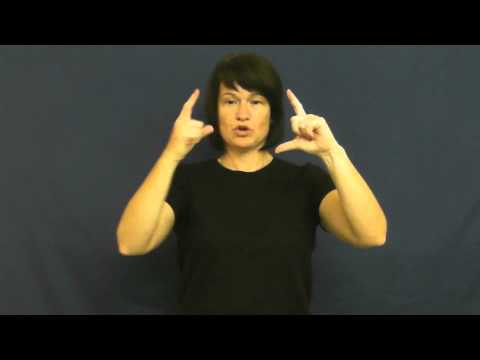
- Start with your dominant hand in a flat handshape, fingers together and extended.
- Position your hand in front of your body, about chest height, with the palm facing downward.
- Move your hand in a square shape, tracing the outline of a square in front of you. Make sure to lift your hand slightly at each corner to emphasize the shape.
- Maintain a neutral or focused facial expression throughout the sign to convey the seriousness of the geometric concept.
Common Mistakes
- Some learners may forget to outline the corners of the square, making it look more like a straight line.
- Others might use the wrong handshape, such as a fist, which can change the meaning.
- Not maintaining a consistent height while signing can lead to confusion about the intended shape.
Related Signs
- 1 – The sign for the number one.
- 10 – The sign for the number ten.
- 100 – The sign for the number one hundred.
- 12 – The sign for the number twelve.
- 14 – The sign for the number fourteen.
Using “Quadrat” in Everyday Conversations
The sign “Quadrat” is often used in discussions related to scientific studies, particularly in biology and environmental science. Here are a few example sentences that illustrate how this sign can fit into everyday conversations:
- Sentence: “I used a quadrat to measure plant growth.”
Auslan Sign Order: “I quadrat plant growth use.”
Situation: This might come up in a classroom setting or during a project discussion among students studying ecology. - Sentence: “The researcher placed the quadrat in the field.”
Auslan Sign Order: “Researcher field quadrat place.”
Situation: This could be used in a conversation about fieldwork or scientific methods with peers or mentors. - Sentence: “We will analyze the data from the quadrat.”
Auslan Sign Order: “We data quadrat analyze will.”
Situation: This may arise during a meeting where team members discuss their findings from an environmental study.
Cultural Notes
In the Australian Deaf community, the use of “Quadrat” is not only a linguistic tool but also reflects a broader appreciation for science and research. It’s common for Deaf individuals to engage in environmental activism and conservation efforts, where understanding scientific principles, including the use of quadrats, is essential.
Additionally, while Auslan is relatively uniform across Australia, some regional variations exist. For instance, in northern areas, the sign may incorporate slightly different movements or facial expressions compared to southern dialects. Being mindful of these nuances can enhance communication and foster better understanding among community members.
Tips for Learning This Sign
To effectively learn and remember the sign “Quadrat,” consider the following practical tips:
- Mirror Practice: Use a mirror to practice the sign. This helps you see your own movements and ensure they are accurate.
- Watch for Non-Manual Features: Pay attention to facial expressions and body language that accompany the sign. These features are crucial in conveying the full meaning.
- Incorporate into Short Sentences: Use “Quadrat” in simple sentences to reinforce your learning. For example, practice saying “I use quadrat” regularly in different contexts.
- Engage with the Community: Join Deaf groups or classes where you can use “Quadrat” in conversation. Real-life practice is invaluable.
Frequently Asked Questions
How can I use “quadrat” in a sentence?
You can say, “The area of the quadrat is important for our research,” and sign “quadrat” while discussing the area.
Are there regional variations for this sign?
There may be slight variations across different regions, but the basic sign remains consistent among Auslan users.
What are some similar signs?
Signs for shapes like “circle” or “triangle” might be similar in handshape but differ in movement. You can explore these shapes in related resources.
How does this compare to BSL?
The British Sign Language (BSL) sign for “square” is different; it’s essential to learn signs contextually within each language.
What tips do you have for teaching this sign?
Use visual aids and physical shapes to reinforce learning. Encourage students to practice in pairs to gain confidence.
Practice This Sign
Try signing Quadrat In Auslan with your camera and get AI coaching on your handshape, movement, and location.
Free · No signup required