
Page in Australian Sign Language (Auslan)
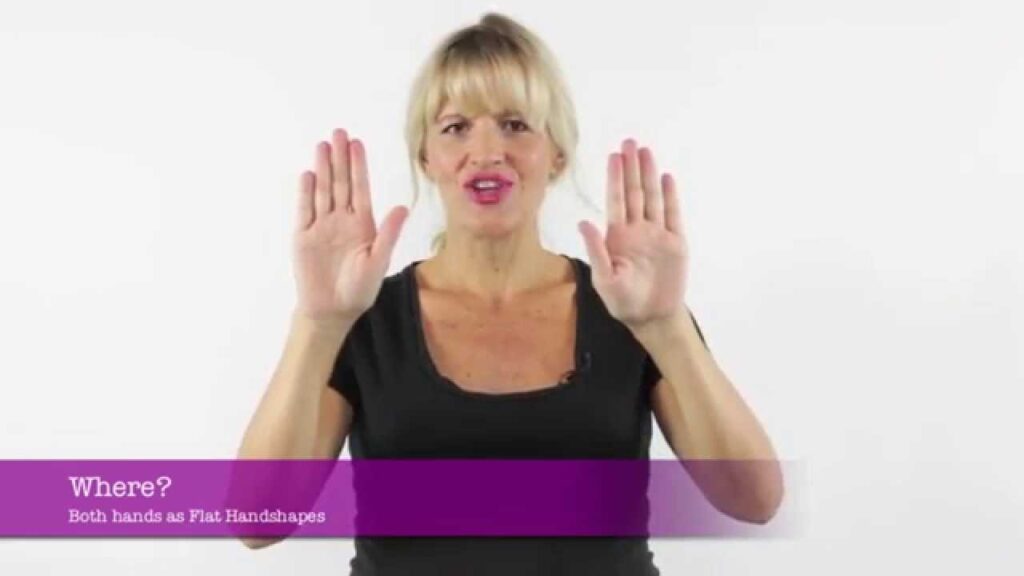
The sign for “page” in Auslan is used to refer to a single sheet of paper or a page in a book. This sign is commonly used in educational settings, discussions about reading materials, or when giving directions related to written content.
Table of Contents
How to Sign “Page”
- Start with your dominant hand in a flat shape, resembling an open book. Your fingers should be extended and together, with your palm facing upwards.
- Hold your non-dominant hand in a similar flat shape, positioned slightly above your dominant hand.
- Move your dominant hand slightly upward, as if you are flipping a page. Your non-dominant hand should remain stationary.
- While performing the movement, maintain a neutral facial expression, but you can add a slight nod to indicate the action of turning a page.
Common Mistakes
- Using a fist instead of a flat hand shape can make the sign unclear.
- Moving both hands instead of just the dominant hand may confuse the meaning.
- Forgetting to maintain facial expressions that match the action can detract from the sign’s clarity.
Related Signs
- 1 – The sign for the number one.
- 1 Dollar – The sign for one dollar, often used in financial discussions.
- 100 – The sign for one hundred.
- 10 – The sign for the number ten.
- 12 – The sign for the number twelve.
Using “Page” in Everyday Conversations
The sign “Page” frequently appears in various contexts, especially when discussing books, documents, or presentations. Here are some example sentences that illustrate its use in everyday conversations:
- “I need to turn the page to find the answer.” (Page is signed while mimicking the action of turning a page.)
- “Can you show me page three of your notes?” (This can be accompanied by pointing to an imaginary page in the air.)
- “I love the illustrations on this page.” (While signing, you can gesture as if pointing to the specific page in a book.)
These examples typically come up in educational settings, during book clubs, or casual discussions about reading material, making the sign essential for effective communication within the Deaf community.
Cultural Notes
The concept of “Page” is not just about the physical aspect of a page in a book; it also reflects the value the Australian Deaf community places on literacy and education. Access to written materials is crucial, and the use of “Page” can signify a deeper connection to storytelling and information sharing. In the Australian Deaf community, individuals often emphasize the importance of visual literacy, which aligns closely with their everyday experiences.
Dialect variations may exist between northern and southern regions of Australia, but the sign for “Page” remains widely understood. Some individuals may modify their signing style slightly, reflecting their local community’s influence. However, the core meaning remains consistent across regions, fostering unity in communication.
Tips for Learning This Sign
To effectively learn and remember the sign for “Page,” consider these practical tips:
- Mirror Practice: Use a mirror to observe your handshape and movement. This will help ensure you are forming the sign correctly and can aid in self-correction.
- Focus on Non-Manual Features: Pay attention to your facial expressions and body language while signing. Non-manual features enhance the meaning and can make your signing more expressive.
- Use in Short Signed Sentences: Incorporate “Page” into simple sentences during practice. For example, while signing with a friend, you might say, “What page?” This contextual use will reinforce your memory of the sign.
Regular practice in conversation will help solidify your understanding and fluency in using “Page” in Auslan.
Frequently Asked Questions
How would I use “page” in a sentence?
You can say, “I need to turn the page,” which in Auslan would combine the sign for “I,” the sign for “need,” and then the sign for “page” to convey your message.
Are there regional variations of this sign?
While the sign for “page” is fairly consistent across Auslan users, some variations may exist in specific communities. It’s always good to learn from local signers.
What are some similar signs to “page”?
Signs related to “page” include “book” and “read,” which are often used together in discussions about literature.
How does “page” compare to BSL?
In BSL, the sign for “page” may look different, reflecting variations in sign language structure and culture. It’s useful to learn both if you’re communicating with different signers.
What are some teaching tips for this sign?
Encourage students to practice with real books or printed materials. This contextual learning helps solidify the meaning and use of the sign.
Practice This Sign
Try signing Page In Auslan with your camera and get AI coaching on your handshape, movement, and location.
Free · No signup required