
Neckerchief in Australian Sign Language (Auslan)
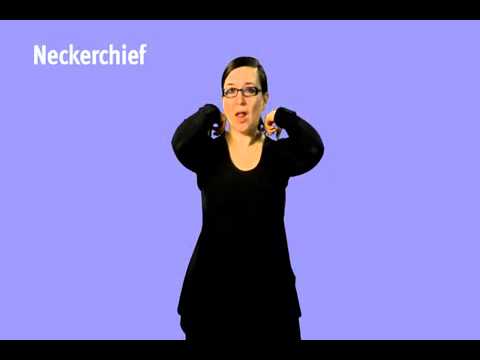
The sign for “neckerchief” in Auslan refers to a type of scarf or cloth worn around the neck, often for fashion or practical reasons. It’s commonly used in discussions about clothing, fashion, or when describing someone’s outfit. This sign helps to convey specific details about attire in a visual way, making communication clearer.
Table of Contents
How to Sign “Neckerchief”
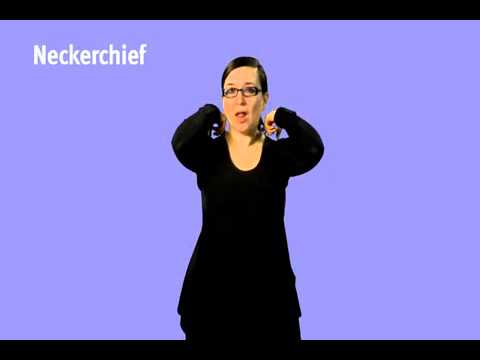
- Start with your dominant hand in a flat “B” handshape (fingers extended together, thumb tucked in).
- Position your hand in front of your chest, palm facing down.
- Move your hand downwards and slightly outward, as if you’re draping a neckerchief around your neck.
- As you perform this movement, maintain a neutral or slightly interested facial expression to convey the action clearly.
Common Mistakes
- Some learners may forget to use the flat “B” handshape, which can lead to confusion about the sign.
- Not moving the hand downward sufficiently can make the sign unclear, as it may look like a different gesture.
- Failing to maintain an appropriate facial expression might dilute the meaning and intent of the sign.
Related Signs
- 1 – The sign for the number one.
- 1 Dollar – The sign for one dollar.
- 10 – The sign for the number ten.
- 100 – The sign for the number one hundred.
- 11 – The sign for the number eleven.
Using “Neckerchief” in Everyday Conversations
The sign for “neckerchief” can come up in various everyday contexts, especially when discussing clothing, fashion, or personal style. Here are a few example sentences where this sign fits naturally:
- “I love your neckerchief, it looks stylish!”
- In this situation, you’re complimenting someone on their neckerchief while chatting at a social event.
- “I wear a neckerchief when I go hiking to protect my neck from the sun.”
- This might come up during a conversation about outdoor activities or tips for sun safety.
- “Do you think a neckerchief is appropriate for the wedding?”
- This could arise when discussing attire choices for a formal event.
Cultural Notes
In the Australian Deaf community, clothing and fashion can carry significant cultural meaning. The neckerchief has historical ties to various occupational groups, such as the working class and the Australian bush culture. It can symbolize practicality and a sense of identity. While the sign itself remains consistent, regional dialects may influence how expressive the signing is, particularly in face and body language. For instance, in some northern areas, a more exaggerated signing style may be observed, while southern signers might use a subtler approach. Understanding these cultural nuances can enhance communication and deepen connections within the community.
Tips for Learning This Sign
Practicing the sign for “neckerchief” effectively can enhance your fluency in Auslan. Here are some concrete tips:
- Mirror Practice: Stand in front of a mirror to practice the sign, ensuring your movements are clear and accurate. This will help you refine your technique and observe your facial expressions.
- Watch for Non-Manual Features: Pay attention to the facial expressions and body language that accompany the sign, as these are critical in Auslan for conveying meaning.
- Use It in Short Signed Sentences: Incorporate the sign into simple phrases regularly. For instance, practice saying, “I like your neckerchief” in different contexts to build familiarity.
These methods will reinforce your learning and help you feel more confident using the sign in conversations.
Frequently Asked Questions
How can I use “neckerchief” in a sentence?
You can say, “I love your neckerchief!” by signing the compliment after the sign for “neckerchief.”
Are there regional variations for this sign?
Yes, some regions may have slight variations in how the sign is performed. It’s beneficial to observe local signers.
What are some similar signs?
Similar signs include “scarf” and “tie,” as they all relate to clothing accessories worn around the neck.
How does this sign compare to BSL?
In British Sign Language (BSL), the sign for “neckerchief” may differ significantly, so it’s essential to learn the specific signs for each language.
What are some teaching tips for this sign?
Practice in front of a mirror to ensure handshape and movement are accurate. It helps to watch proficient signers demonstrate the sign as well.
Practice This Sign
Try signing Neckerchief In Auslan with your camera and get AI coaching on your handshape, movement, and location.
Free · No signup required