
Magnet in Australian Sign Language (Auslan)

The sign for “magnet” in Auslan represents the concept of magnetism and is often used when discussing science, physics, or everyday objects that have magnetic properties. This sign can be useful in educational settings or casual conversations about items like refrigerator magnets or magnetic toys.
Table of Contents
How to Sign “Magnet”
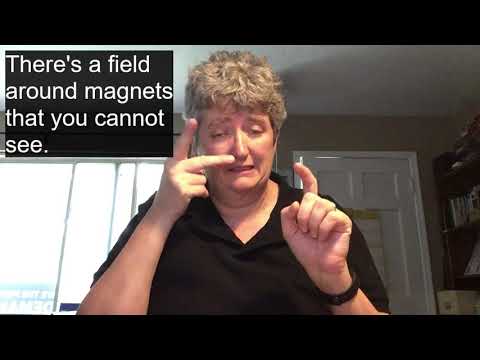
- Start with your dominant hand in a flat “B” shape, with fingers extended and held together.
- Position your hand a few inches away from your chest, palm facing outward.
- Move your hand slightly towards your body while maintaining the flat handshape, as if you are drawing something toward you.
- Maintain a neutral facial expression or convey curiosity, as this can enhance the meaning of the sign.
Common Mistakes
- Forgetting to keep the fingers together in the “B” handshape, which can lead to confusion with other signs.
- Not moving the hand towards the body, which may make the sign unclear or incorrect.
- Using overly exaggerated movements, which can distract from the clarity of the sign.
Related Signs
- 1 – Represents the number one.
- 1 Dollar – Signifying one dollar in currency.
- 10 – Represents the number ten.
- 100 – Signifying one hundred.
- 11 – Represents the number eleven.
Using “Magnet” in Everyday Conversations
In Auslan, the sign for “magnet” can be effectively incorporated into everyday conversations. Here are a few example sentences that demonstrate how this sign can be used naturally:
- “I use a magnet to hold my notes on the fridge.” (SIGN: “I” + “MAGNET” + “USE” + “HOLD” + “NOTES” + “FRIDGE”)
- “The magnet is strong enough to hold the picture.” (SIGN: “MAGNET” + “STRONG” + “HOLD” + “PICTURE”)
- “Can you find the magnet that fell?” (SIGN: “YOU” + “FIND” + “MAGNET” + “FELL”)
These examples show how the sign can come up in discussions about household items, school projects, or when organizing materials. Using signs in context helps reinforce their meanings and encourages fluid conversation.
Cultural Notes
The sign for “magnet” is part of everyday vocabulary within the Australian Deaf community. It is often used in educational settings, particularly in science classes, where discussions about magnets and their properties take place. In some regions, variations in the sign may occur, reflecting local dialects or preferences. For instance, in certain areas, the movement or handshape may slightly differ, but the core concept remains the same. Being aware of these dialectical variations can enhance communication and understanding among Deaf individuals from different backgrounds.
Tips for Learning This Sign
Practicing the sign for “magnet” can be fun and engaging. Here are some effective ways to help you learn and remember it:
- Mirror Practice: Stand in front of a mirror while signing. This allows you to see your handshape and movement, helping to refine your technique.
- Focus on Non-Manual Features: Pay attention to facial expressions and body language that accompany the sign. These non-manual features enrich communication and can clarify meaning.
- Use in Short Sentences: Incorporate the sign into short, simple sentences as part of your daily routine. For example, when talking about items on your fridge, include the sign to reinforce learning through context.
By integrating these practices into your learning routine, you’ll become more comfortable with the sign and improve your overall Auslan skills.
Frequently Asked Questions
How can I use “magnet” in a sentence?
You could say, “I have a magnet on my fridge,” by signing “I HAVE MAGNET FRIDGE.”
Are there any regional variations for this sign?
While the sign is widely understood, some regions may have slight variations in handshape or movement. It’s always good to check with local Deaf communities.
Are there similar signs in Auslan?
Yes, signs for “attract” or “pull” can be similar, but they convey different meanings. Ensure the context is clear when using them.
How does this sign compare to BSL?
In British Sign Language (BSL), the sign for “magnet” may differ in handshape and movement. It’s essential to learn the specific sign for each language.
What are some tips for teaching this sign?
Use visual aids and real objects to demonstrate magnetism, and encourage learners to practice in pairs to reinforce the sign’s meaning.
Practice This Sign
Try signing Magnet In Auslan with your camera and get AI coaching on your handshape, movement, and location.
Free · No signup required