
Kid in Australian Sign Language (Auslan)

The sign for “kid” in Auslan refers to a young child or youth. It’s commonly used in conversations about family, education, or when discussing activities involving children. Being able to express this concept is essential for effective communication within the Deaf community.
Table of Contents
How to Sign “Kid”
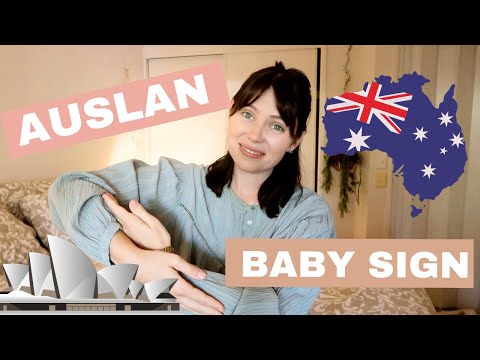
- Start with your dominant hand in a flat handshape (like a “B” handshape) with fingers extended and together.
- Position your hand at about chest level, palm facing down.
- Move your hand downwards in a slight arc while maintaining the flat handshape.
- As you move your hand down, use a friendly facial expression, perhaps smiling, to convey warmth and affection.
Common Mistakes
- Some learners may forget to use facial expressions, which are crucial in sign language for conveying emotions and context.
- Using a fist instead of a flat handshape can change the meaning of the sign, so be sure to maintain the correct handshape.
- Omitting the downward movement can make the sign seem incomplete or unclear to others.
Related Signs
- 1 – The sign for the number one.
- 1 Dollar – The sign representing one dollar in currency.
- 10 – The sign for the number ten.
- 100 – The sign for one hundred.
- 11 – The sign for the number eleven.
Using “Kid” in Everyday Conversations
The sign “Kid” is often used in a variety of everyday contexts, especially when discussing family, education, or social activities involving young people. Here are a few example sentences to illustrate how it can be used:
- Example 1: “My kid is starting school next year.”
(Sign: MY KID SCHOOL NEXT YEAR) - Example 2: “Do you have kids?”
(Sign: YOU HAVE KIDS?) - Example 3: “The kids are playing outside.”
(Sign: KIDS PLAY OUTSIDE)
These sentences may come up naturally during conversations with friends, family gatherings, or even in community events where children are present. They help convey information about children in a way that is engaging and relevant.
Cultural Notes
In the Australian Deaf community, the term “kid” carries a sense of familiarity and affection. It is often used to foster connections among parents and caregivers of Deaf children, creating a supportive environment where experiences can be shared. Additionally, the cultural context of “kid” may vary slightly between northern and southern dialects of Auslan. While the core sign remains the same, some regional variations in facial expressions and non-manual features may be observed. This reflects the rich diversity within the Deaf community in Australia.
Tips for Learning This Sign
To effectively learn and remember the sign for “Kid,” consider the following practical strategies:
- Mirror Practice: Use a mirror to practice the sign, ensuring your handshape and movement are accurate. This visual feedback will help reinforce muscle memory.
- Observe Non-Manual Features: Pay attention to facial expressions and body language that accompany the sign. Non-manual features are crucial in Auslan and provide additional context to the sign’s meaning.
- Use in Short Signed Sentences: Incorporate the sign into simple sentences in your daily conversations, even if you’re practicing alone. This will help solidify your understanding and use of the sign in context.
Regular practice and engagement with the Deaf community will enhance your learning experience and confidence in using Auslan.
Frequently Asked Questions
How can I use “kid” in a sentence?
You can say, “I have a kid,” by signing “I HAVE KID.” This combines the sign for “I,” “have,” and “kid” in a fluid motion.
Are there regional variations for the sign “kid”?
While “kid” is generally understood across Auslan users, some regions may have slight variations in handshape or movement.
What are some similar signs to “kid”?
Related signs include “child,” which may have a different handshape or movement, and “play,” often used in contexts involving children.
How does the sign for “kid” compare to British Sign Language (BSL)?
In BSL, the sign for “kid” may look different, highlighting the variations between Auslan and BSL while maintaining similar meanings.
What tips do you have for teaching this sign?
Encourage students to practice in pairs, focusing on facial expressions and the smoothness of their movements to enhance clarity and comprehension.
Practice This Sign
Try signing Kid In Auslan with your camera and get AI coaching on your handshape, movement, and location.
Free · No signup required