
I Know in Australian Sign Language (Auslan)
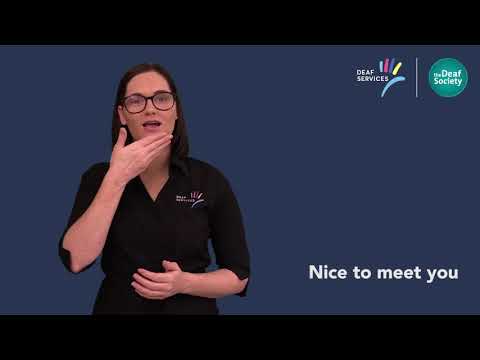
The sign “I know” in Auslan is used to express understanding or knowledge about something. It can be utilized in various contexts, from confirming facts to showing awareness in conversations. This sign is a fundamental part of communication, helping to convey confidence in what you know.
Table of Contents
How to Sign “I Know”

- Start with your dominant hand in a flat handshape (similar to the letter “B”).
- Position your hand near your forehead, with your palm facing inward toward your forehead.
- Bring your hand forward slightly while maintaining the same flat handshape, as if you’re gently pushing away the knowledge.
- Accompany the sign with a confident facial expression, indicating certainty.
Common Mistakes
- Some learners may confuse the handshape, using a fist instead of a flat hand.
- Others might forget to include appropriate facial expressions, which are essential for conveying meaning in ASL.
- Occasionally, the movement may be too abrupt; it should be smooth and confident.
Related Signs
- 1 – The sign for the number one.
- 10 – The sign for the number ten.
- 100 – The sign for the number one hundred.
- 11 – The sign for the number eleven.
- 12 – The sign for the number twelve.
Using “I Know” in Everyday Conversations
The sign “I Know” is often used in various conversational situations to express understanding or familiarity with a topic. Here are a few example sentences to illustrate its usage:
- Situation: Discussing a shared experience
Auslan Sentence: “I KNOW you went to the concert.” - Situation: Responding to someone’s question
Auslan Sentence: “Do you know the new restaurant? I KNOW it’s good.” - Situation: Sharing knowledge about an event
Auslan Sentence: “I KNOW the meeting is at 10 AM.”
These examples highlight how “I Know” can seamlessly integrate into your conversations, providing clarity and affirming shared knowledge.
Cultural Notes
In the Australian Deaf community, the sign “I Know” goes beyond mere communication; it reflects a cultural emphasis on shared knowledge and community awareness. When using this sign, it’s common to accompany it with facial expressions that convey confidence or affirmation, emphasizing the importance of non-manual features in Auslan.
Regional variations do exist within Auslan, including northern and southern dialects. While “I Know” tends to be consistent across Australia, some signs may have slight differences in execution or accompanying gestures depending on the region. It is always beneficial to engage with local Deaf communities to gain insight into these dialectal nuances.
Tips for Learning This Sign
Practicing the sign “I Know” can be fun and effective with some targeted strategies:
- Mirror Practice: Stand in front of a mirror and practice the sign. This will help you see your own movements and ensure you are forming the sign correctly.
- Non-Manual Features: Pay attention to your facial expressions when signing “I Know.” Experiment with different expressions to see how they change the meaning or emphasis of your statement.
- Use in Context: Create short signed sentences that incorporate “I Know.” For example, practice with statements like “I KNOW my friend” or “I KNOW the answer.” This will help reinforce your memory of the sign within a conversational context.
By integrating these methods into your learning routine, you’ll find it easier to remember and use “I Know” naturally in your Auslan conversations.
Frequently Asked Questions
How can I use “I know” in a sentence?
You can use it to confirm information, such as saying, “I know that you are coming to the party.”
Are there regional variations for this sign?
While the sign is generally consistent, some regions may have slight variations in movement or facial expressions.
What are some similar signs?
Signs like “I understand” or “I see” convey similar meanings but may have different handshapes or movements.
How does this sign compare to BSL?
The sign for “I know” in British Sign Language (BSL) differs, so it’s essential to learn the specific signs for each language.
What are some tips for teaching this sign?
Encourage students to practice in pairs and provide feedback on their facial expressions and handshapes for better clarity.
Practice This Sign
Try signing I Know In Auslan with your camera and get AI coaching on your handshape, movement, and location.
Free · No signup required