
Family in Australian Sign Language (Auslan)

The sign for “family” in Auslan represents the concept of family, which is central to many people’s lives. You’ll often use this sign when talking about your relatives or discussing family gatherings and relationships. It helps foster connections within the Deaf community.
Table of Contents
How to Sign “Family”
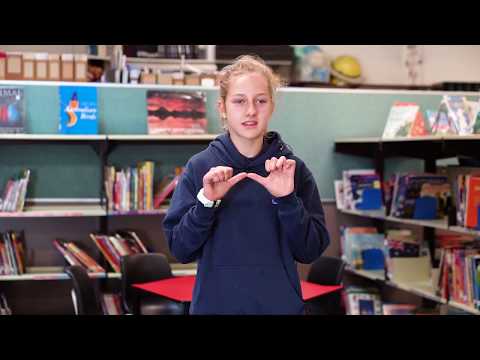
- Start with both hands open and flat, fingers extended. Your dominant hand should be in front of your non-dominant hand.
- Bring your dominant hand towards your non-dominant hand, curving it slightly as you do so.
- As you bring your dominant hand closer, close your fingers into a slight fist when they meet the palm of your non-dominant hand.
- Maintain a friendly facial expression, as this enhances the meaning of “family” and shows warmth.
Common Mistakes
- Forgetting to use a friendly facial expression, which can make the sign feel less personal.
- Using only one hand instead of both, which may not convey the full meaning of “family.”
- Rushing through the movement, leading to unclear signing that can confuse the viewer.
Related Signs
- 1 – The sign for “one,” which can be used in counting family members.
- 1 Dollar – Useful for discussing family finances.
- 100 – Can be relevant when talking about family budgets or events.
- 10 – Helpful when referencing larger family groups.
- 11 – This can come into play when discussing age or number of siblings.
Using “Family” in Everyday Conversations
The sign for “Family” is commonly used in a variety of everyday conversations within the Deaf community. Here are a few example sentences that incorporate this sign naturally:
- My family is coming to visit this weekend. (FAMILY + MY + VISIT + THIS WEEKEND)
- Do you have a big family? (HAVE + BIG + FAMILY + YOU?)
- We are having a family gathering next month. (WE + HAVE + FAMILY + GATHERING + NEXT MONTH)
These examples illustrate how the sign for “Family” can flow seamlessly into conversations about plans, inquiries, or sharing information regarding loved ones. It often arises in discussions about events, personal life, or when connecting with others about familial relationships.
Cultural Notes
The concept of “Family” is deeply valued in the Australian Deaf community, often extending beyond biological ties to include chosen families of friends and community members. This reflects a broader cultural understanding of family as a support network, particularly important in a community where social connections are vital. In terms of dialect, while the sign for “Family” is generally consistent across Australia, some regional variations may exist in signing speed or emphasis. Southern and Northern Deaf communities may have slightly different non-manual features accompanying the sign, such as facial expressions or head movements, which enrich the communication experience.
Tips for Learning This Sign
Practicing the sign for “Family” can be both fun and effective with a few helpful techniques:
- Mirror Practice: Stand in front of a mirror and practice the sign while watching your own movements. This helps you refine your technique and ensures you’re making the sign clearly.
- Focus on Non-Manual Features: Pay attention to facial expressions and body language while signing. A smile or a raised eyebrow can add context to your meaning.
- Use Short Signed Sentences: Incorporate the sign for “Family” into short, meaningful sentences. Try to use it in conversations with peers or during practice sessions to reinforce your learning.
These strategies can help you internalize the sign and build confidence in using it in conversation.
Frequently Asked Questions
How can I use “family” in a sentence?
You might say, “My family is coming over for dinner,” using the sign for family while expressing the sentence.
Are there regional variations for this sign?
While the sign for “family” is fairly consistent, some regions may have slight variations in hand movements or facial expressions.
Are there similar signs to “family”?
Yes, signs for “parent,” “sibling,” and “child” are closely related and can help further clarify family relationships.
How does “family” compare between ASL and BSL?
The sign for “family” in BSL is different, with unique handshapes and movements, reflecting the distinct cultures of each sign language.
What are some teaching tips for learning this sign?
Practice in front of a mirror, focus on facial expressions, and try to use the sign in context to reinforce learning.
Practice This Sign
Try signing Family In Auslan with your camera and get AI coaching on your handshape, movement, and location.
Free · No signup required