
Fahrenheit in Australian Sign Language (Auslan)

The sign for “fahrenheit” in Auslan represents the temperature scale commonly used in the United States and several other countries. This sign is often used in conversations about weather, cooking, or any context where temperature measurements are discussed.
Table of Contents
How to Sign “Fahrenheit”
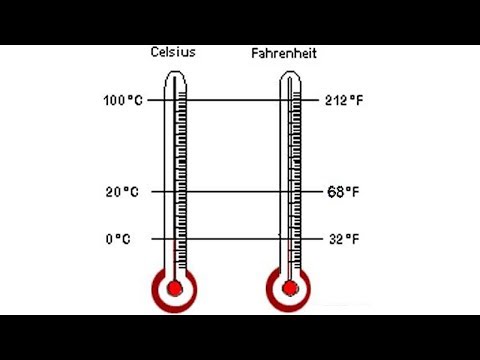
- Start with your dominant hand in a flat “F” handshape (thumb and index finger extended, other fingers closed).
- Position your hand near your chest, palm facing inwards.
- Move your hand slightly forward and then downwards in a gentle curve, while maintaining the “F” shape.
- As you move your hand, your facial expression should reflect curiosity or inquiry, as if asking about the temperature.
Common Mistakes
- Using a closed fist instead of the correct “F” handshape.
- Moving the hand too quickly, which can make it difficult for others to understand the sign.
- Not using facial expressions, which can lead to a lack of clarity in conveying the meaning.
Related Signs
- 1 – The sign for the number one.
- 10 – The sign for the number ten.
- 100 – The sign for the number one hundred.
- 12 – The sign for the number twelve.
- 15 – The sign for the number fifteen.
Using “Fahrenheit” in Everyday Conversations
The sign for “Fahrenheit” is often used in discussions about the weather, cooking, or when talking about temperature preferences. Here are a few example sentences that illustrate how to incorporate this sign naturally into conversation:
- “Today is very hot, it’s 95 Fahrenheit.” (Sign for “today” + sign for “very hot” + sign for “95 Fahrenheit”)
- “What temperature do you prefer for baking? I like it at 350 Fahrenheit.” (Sign for “what” + sign for “temperature” + sign for “baking” + sign for “I like 350 Fahrenheit”)
- “The forecast says it will reach 100 Fahrenheit this weekend.” (Sign for “the forecast” + sign for “says” + sign for “reach” + sign for “100 Fahrenheit”)
These examples show how “Fahrenheit” can be integrated into everyday discussions, making it a useful sign for various contexts.
Cultural Notes
In the Australian Deaf community, the use of “Fahrenheit” reflects not only the measurement of temperature but also ties into broader discussions about cultural adaptation. While Celsius is the primary temperature scale used in Australia, “Fahrenheit” may still come up, particularly in discussions influenced by American media or when engaging with people from countries that primarily use Fahrenheit.
It’s also worth noting that dialectal variations can exist within Auslan, depending on the region. For instance, some Deaf individuals from northern regions may use slightly different signs or nuances when discussing temperature compared to those in southern areas. This reflects the rich diversity within the Australian Deaf community.
Tips for Learning This Sign
Practicing the sign for “Fahrenheit” can be made easier and more effective with the following strategies:
- Mirror Practice: Stand in front of a mirror while signing. This will help you see the movements and positions of your hands and body, allowing you to self-correct any mistakes.
- Watch for Non-Manual Features: Pay attention to facial expressions and body language that accompany the sign. These non-manual features can provide additional context and meaning.
- Use it in Short Signed Sentences: Create simple sentences incorporating “Fahrenheit” in your daily practice. This contextual use will reinforce your memory and help you become more comfortable with the sign.
Consistent practice using these methods will enhance your confidence in using the sign “Fahrenheit” in conversation.
Frequently Asked Questions
Can you use “fahrenheit” in a sentence?
Yes! You can say, “Today’s temperature is 75 degrees Fahrenheit,” and sign “fahrenheit” to clarify the temperature scale.
Are there regional variations for this sign?
Yes, some regions may have variations, but the “F” handshape is widely recognized in Auslan.
How is this sign similar to others?
The “F” handshape is used in various signs that involve numbers or measurements, so it can be similar to signs for other temperatures or quantities.
How does this compare to BSL?
British Sign Language (BSL) has different signs for temperature measurements. It’s best to learn the specific signs used in each language.
What are some teaching tips for this sign?
Encourage students to practice in pairs to give feedback on handshape and facial expressions, as these are crucial for clarity.
Practice This Sign
Try signing Fahrenheit In Auslan with your camera and get AI coaching on your handshape, movement, and location.
Free · No signup required