
Camera Operator in Australian Sign Language (Auslan)
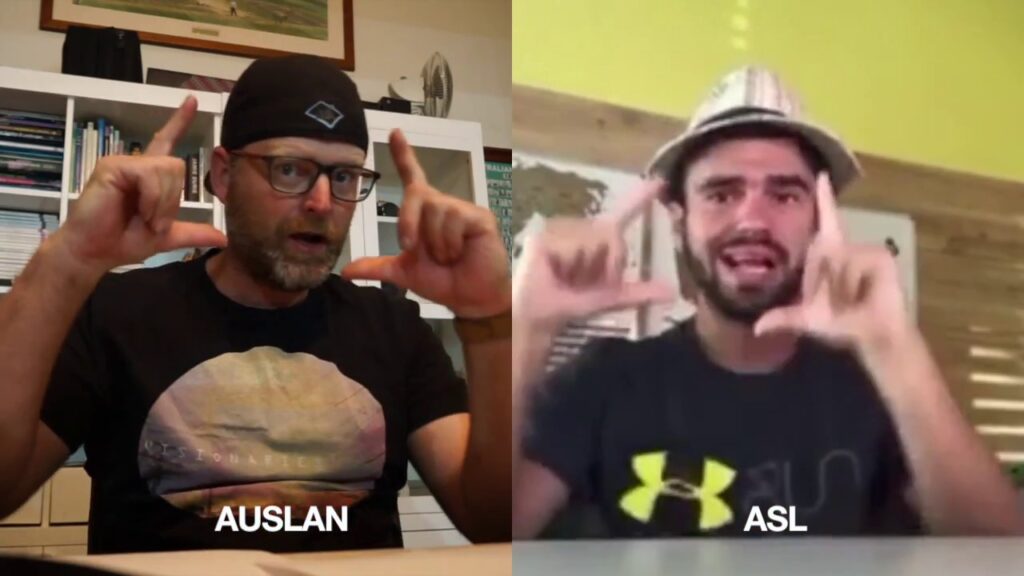
The sign for “camera operator” in Auslan refers to a person who operates a camera, often in the context of film or television production. This sign is commonly used in discussions about media, filmmaking, or when identifying the role of someone in a production setting.
Table of Contents
How to Sign “Camera Operator”

- Start with your dominant hand in a flat open hand shape (like a “B” handshape) facing downwards.
- Position your dominant hand slightly above your non-dominant hand, which is also in a flat open hand shape, but facing upwards.
- Move the dominant hand forward and backward in a gentle, rolling motion, as if mimicking the movement of a camera being operated.
- Maintain eye contact and use facial expressions that convey focus and engagement, to emphasize the action of operating a camera.
Common Mistakes
- Forgetting to use both hands; the sign should involve the interaction between the dominant and non-dominant hand.
- Using an incorrect handshape; ensure the dominant hand is flat to accurately represent the camera operator’s role.
- Neglecting facial expressions; facial cues are an important part of ASL communication that add context to the sign.
Related Signs
- 1 – The sign for the number one, used in various contexts.
- 1 Dollar – The sign for one dollar, helpful in financial discussions.
- 10 – The sign for the number ten, useful for counting.
- 100 – The sign for one hundred, also useful in various contexts.
- 11 – The sign for eleven, often used in counting or numbering.
Using “Camera Operator” in Everyday Conversations
Incorporating the sign for “Camera Operator” in casual conversations can enhance communication, especially when discussing media, film, or photography. Here are a few example sentences that illustrate how to use this sign naturally:
- Sentence: “MY FRIEND CAMERA OPERATOR FILM NEW MOVIE.”
Situation: This might come up when discussing a friend’s job in the film industry. - Sentence: “YESTERDAY, I SEE CAMERA OPERATOR AT PARK.”
Situation: This could be shared when chatting about an event or a shoot you witnessed. - Sentence: “I WANT TO BE CAMERA OPERATOR WHEN I GROW UP.”
Situation: This is a common aspiration that may arise in conversations about career goals.
These examples show how the sign can seamlessly fit into everyday discussions, making the conversation more engaging and relevant.
Cultural Notes
The role of a camera operator is significant in the Australian Deaf community, particularly in the context of Deaf media and representation. Many Deaf individuals are passionate about storytelling through visual media, and camera operators play a crucial part in bringing these narratives to life. The Australian Deaf community is increasingly producing its own films and content, showcasing unique perspectives and experiences.
In terms of dialect variations, while the sign for “Camera Operator” is generally consistent across Australia, there may be some slight differences in non-manual features or facial expressions depending on regional influences. It’s beneficial to observe local Deaf communities to appreciate these nuances and ensure effective communication.
Tips for Learning This Sign
Practicing the sign for “Camera Operator” can be enjoyable and effective with a few helpful strategies:
- Mirror Practice: Stand in front of a mirror and practice the sign while watching your hand shapes and movements. This helps with muscle memory and accuracy.
- Watch for Non-Manual Features: Pay attention to your facial expressions and body language when signing. These non-manual features can add context and emotion to your communication.
- Use in Short Sentences: Incorporate the sign in simple sentences during conversations. For example, practice with friends or classmates by discussing topics related to film or photography.
Through consistent practice and engagement with the Deaf community, mastering the sign for “Camera Operator” can become a natural part of your Auslan vocabulary.
Frequently Asked Questions
How can I use “camera operator” in a sentence?
You can say, “The camera operator is setting up the shot,” by signing “camera operator” followed by the action sign for “setting up” and “shot.”
Are there regional variations for this sign?
Yes, signs can vary by region, so it’s beneficial to learn from local Deaf communities to understand any differences.
Are there similar signs in Auslan?
Yes, signs for related roles like “director” or “producer” may share similarities in handshape and movement.
How does this sign compare to BSL?
The sign for “camera operator” in BSL may differ in handshape and movement, reflecting the unique characteristics of British Sign Language.
What are some teaching tips for this sign?
Practice in front of a mirror to ensure correct hand shapes and movements, and consider pairing with visual aids or videos for better understanding.
Practice This Sign
Try signing Camera Operator In Auslan with your camera and get AI coaching on your handshape, movement, and location.
Free · No signup required