
Balanced Equation in Australian Sign Language (Auslan)

The sign for “balanced equation” in Auslan represents a concept commonly used in mathematics and science, particularly in discussions about chemical equations and algebra. This sign is useful in educational settings, especially when teaching students about the importance of balance in equations.
Table of Contents
How to Sign “Balanced Equation”
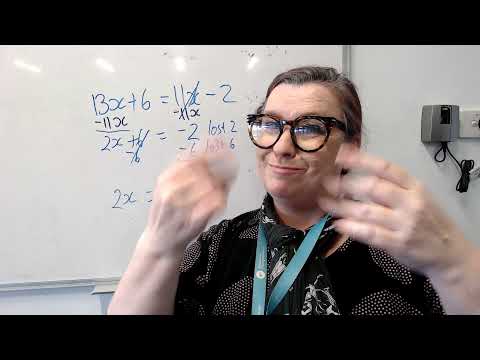
- Start with your dominant hand in a flat handshape (like a “B” handshape) and place it horizontally in front of your body.
- With your non-dominant hand, also in a flat handshape, mirror the dominant hand, positioning it directly opposite.
- Bring both hands slightly closer together, maintaining the flat handshapes, as if they are balancing an equation.
- As you bring your hands together, lean forward slightly and raise your eyebrows to indicate the significance of balance.
- Hold the position briefly, then return to the starting position to signify the completion of the thought.
Common Mistakes
- Forgetting to use the flat handshape, which can lead to confusion with other signs.
- Not maintaining the balance between the two hands, which can make the sign unclear.
- Neglecting facial expressions, which are crucial for conveying meaning in Auslan.
Related Signs
- 1 – Represents the number one.
- 10 – Represents the number ten.
- 100 – Represents the number one hundred.
- 11 – Represents the number eleven.
- 12 – Represents the number twelve.
Using “Balanced Equation” in Everyday Conversations
The sign “Balanced Equation” can be used in various contexts, especially when discussing mathematics, science, or even metaphorically in conversations about relationships or fairness. Here are a few example sentences that illustrate how this sign can fit naturally into everyday discussions:
- Situation: Talking about a math lesson in school.
Sentence: “TEACHER SIGN BALANCED EQUATION.” (The teacher signed about a balanced equation.) - Situation: Discussing a science experiment.
Sentence: “OUR EXPERIMENT NEED BALANCED EQUATION.” (Our experiment needs a balanced equation.) - Situation: Reflecting on a fair negotiation.
Sentence: “WE MUST HAVE BALANCED EQUATION IN AGREEMENT.” (We must have a balanced equation in the agreement.)
Cultural Notes
The sign for “Balanced Equation” is not just a technical term; it reflects the value placed on communication and education within the Australian Deaf community. Mathematics and science are important subjects in many educational settings, and the ability to express complex concepts like balanced equations is vital. In different regions of Australia, variations in signing can occur, particularly in northern and southern dialects. While the sign itself may remain consistent, the regional signing styles may influence how it’s incorporated into broader conversations.
Tips for Learning This Sign
To effectively learn and remember the sign for “Balanced Equation,” consider these practical strategies:
- Mirror Practice: Use a mirror to practice the sign. This will help you observe your hand shape and movement, ensuring accuracy.
- Watch for Non-Manual Features: Pay attention to facial expressions and body language that accompany the sign. These non-manual features add emphasis and meaning.
- Use in Short Signed Sentences: Incorporate the sign into simple sentences during practice. This helps reinforce its meaning and context, making it easier to recall during conversations.
Consistent practice in various contexts will enhance your comfort and fluency in using “Balanced Equation” in Auslan.
Frequently Asked Questions
How can I use “balanced equation” in a sentence?
You can say, “In chemistry, we must always create a balanced equation to follow the laws of conservation of mass.”
Are there regional variations for this sign?
While the sign is generally consistent, some regions may have slight variations in handshape or movement. It’s good to observe locals when learning.
What are some similar signs?
Signs like “equation” or “balance” share elements but may differ in hand movements or positions. It’s useful to differentiate them during learning.
How does this compare to BSL?
British Sign Language (BSL) has different signs for “balanced equation,” and the structure may vary significantly from Auslan. Observing both can be helpful.
What tips do you have for teaching this sign?
Encourage students to practice in pairs, focusing on facial expressions and hand shapes. Videos can also be helpful for visual learners.
Practice This Sign
Try signing Balanced Equation In Auslan with your camera and get AI coaching on your handshape, movement, and location.
Free · No signup required