
Background Noise in Australian Sign Language (Auslan)
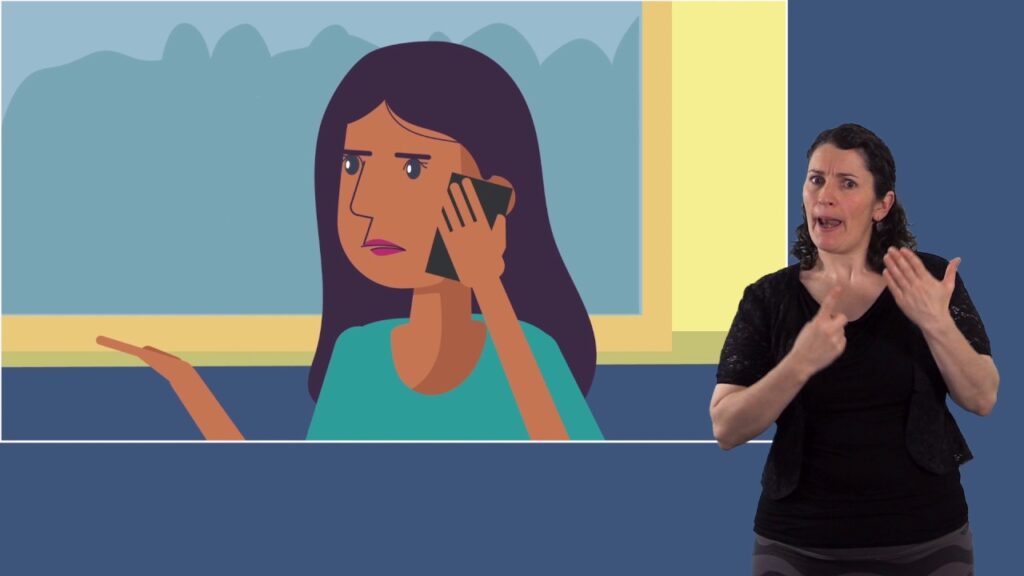
The sign for “background noise” in Auslan is used to describe sounds that are present in an environment but are not the main focus of attention. This sign is commonly used in conversations about sound levels, distractions, or general noise in a setting. It helps convey the context of a discussion when background sounds might interfere with communication.
Table of Contents
How to Sign “Background Noise”

- Start with both hands open, fingers spread apart, and palms facing down.
- Position your hands in front of your chest, about shoulder-width apart.
- Move your hands outward slowly and slightly downward, as if you are signaling a broad area.
- As you move your hands, slightly shake them side to side to indicate the presence of noise.
- Maintain a neutral facial expression or add a slight frown to convey distraction or annoyance with the background noise.
Common Mistakes
- Some learners tend to keep their hands too still, which can make the sign less expressive.
- Others may forget to use facial expressions, which are crucial for conveying meaning in Auslan.
- Incorrectly placing their hands too high or too low can also change the sign’s intended meaning.
Related Signs
- 1 – The sign for the number one, part of many counting contexts.
- 1 Dollar – Used when discussing money or prices.
- 10 – Another number sign that can be useful in various contexts.
- 100 – Sign for one hundred, often used in financial discussions.
- 11 – The sign for eleven, helpful in counting situations.
Using “Background Noise” in Everyday Conversations
The sign for “Background Noise” is commonly used in various contexts, especially when discussing environments that may not be conducive to communication. Here are a few example sentences that illustrate how to use this sign effectively:
- Situation: At a noisy café with friends.
- Auslan Sentence: “CAFÉ BACKGROUND NOISE IS LOUD.” (Café background noise is loud.)
- Situation: In a classroom setting during a lesson.
- Auslan Sentence: “TEACHER SPEAKING, BACKGROUND NOISE DISTRACTING.” (The teacher is speaking, but the background noise is distracting.)
- Situation: Discussing a movie with friends.
- Auslan Sentence: “MOVIE GOOD, BUT BACKGROUND NOISE HARD TO HEAR.” (The movie was good, but the background noise made it hard to hear.)
These examples show how the sign can be integrated into daily conversations, helping to express frustrations or observations regarding the auditory environment.
Cultural Notes
In the Australian Deaf community, the concept of “Background Noise” transcends mere sound; it relates to the importance of a conducive signing environment. Many Deaf individuals prefer quiet spaces where they can engage in clear communication without distractions. This sign reflects a shared understanding of the challenges that background noise presents in social interactions.
There can also be regional dialect variations within Auslan, particularly between northern and southern Australia. While the sign itself remains relatively consistent, the contexts in which it is used or the emphasis placed on non-manual features may vary. Recognising these subtle differences can enhance communication and foster a deeper connection within the community.
Tips for Learning This Sign
Practicing the sign for “Background Noise” can be made easier with a few simple techniques:
- Mirror Practice: Use a mirror to watch your hand shapes and movements. This helps ensure that your signing is clear and accurate.
- Observe Non-Manual Features: Pay attention to facial expressions and body language while signing. This adds meaning and context to your sign, making it more expressive.
- Incorporate in Short Sentences: Regularly use the sign in brief conversations or practice sentences. For example, create scenarios where background noise would be an issue and sign about it with friends or fellow learners.
By using these techniques, you’ll reinforce your understanding of the sign and its application in everyday language.
Frequently Asked Questions
How can I use “background noise” in a sentence?
You can say, “The background noise made it hard to hear the speaker” by using the sign along with context.
Are there regional variations in the sign?
Yes, some regions may have slight variations in handshape or movement, so it’s helpful to learn from local Deaf communities.
What are some similar signs?
Signs like “loud” or “quiet” can complement discussions about background noise and its impact.
How does this compare to BSL?
While there are similarities, BSL has its own unique signs and structures, so it’s important to learn each language separately.
What tips do you have for teaching this sign?
Encourage learners to practice in noisy environments to better understand the context and meaning of the sign.
Practice This Sign
Try signing Background Noise In Auslan with your camera and get AI coaching on your handshape, movement, and location.
Free · No signup required