
When in Sign Language (ASL)
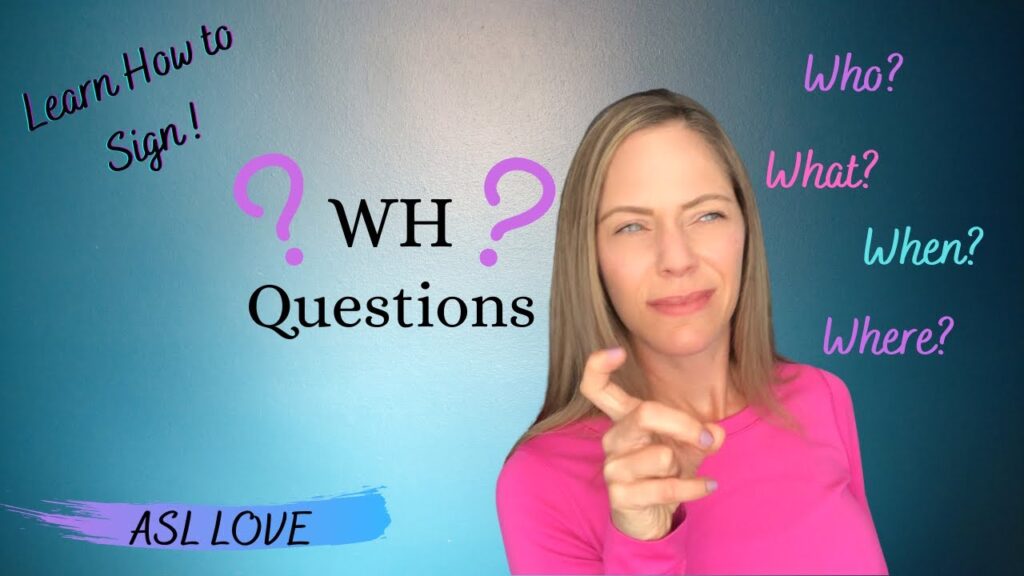
The sign “When” is used to ask about the timing of events or actions. It’s an essential component of conversation, helping to clarify the temporal context of discussions. Whether you’re planning events, recounting stories, or discussing schedules, knowing how to use this sign effectively can enhance communication.
[VIDEO_PLACEHOLDER]
Table of Contents
Forming the sign
- Handshape: Start with your dominant hand in a bent ‘W’ shape, which involves using your thumb and first three fingers.
- Location: Position your hand near your chin or cheek, which is a common placement for signs that inquire or ask questions.
- Movement: Move your hand slightly away from your face while maintaining the bent ‘W’ shape. This movement should be fluid, expressing the act of questioning.
- Non-manual signals: While performing the sign, raise your eyebrows to emphasize the questioning nature of the sign. It is important to use facial expressions to convey inquiry effectively.
The sign “When” visually represents the concept of time and inquiry. By utilizing the bent ‘W’ handshape and appropriate non-manual signals, you can clearly communicate when something occurs. Emphasizing the questioning aspect with your facial expressions adds clarity to the conversation.
Using “When” in sentences
The sign “When” can be incorporated into a variety of sentences to ask about specific timings. For instance, you might sign, “When is the meeting?” or “When did you arrive?” This allows for clearer communication about schedules or events. It’s often paired with other signs to form complete questions or statements.
For example, if you want to ask, “When will you finish your homework?”, you would sign “When” followed by “you finish homework.” The structure remains similar across different contexts, making it a versatile sign in everyday conversation.
Signs related to “When”
Understanding related signs can enhance your communication skills. Here are a few signs that you might find useful:
- What – Used to ask for information or clarification.
- Where – Inquiring about location.
- Why – Asking for reasons or explanations.
- How – Used to ask about the manner or process of doing something.
Common confusion with a similar sign
Some learners may confuse the sign “When” with the sign for “Where.” While both involve a similar handshape and facial expressions, the context of the question distinguishes them. “When” focuses on time, while “Where” pertains to location. Paying attention to the context of the sentence and the accompanying signs will help clarify the intended meaning.
FAQ
What is the proper context for using “When”?
“When” is typically used to ask about the timing of events or actions. It’s appropriate in both formal and informal settings, such as planning a meeting or discussing past events.
Can “When” be used in a statement?
Yes, while “When” is primarily a question word, it can also be used in statements that involve timing, such as, “I remember when you came.”
How can I practice using “When”?
To practice, engage in conversations with others, asking various questions that require the use of “When.” You can also practice with a partner by creating dialogues that include this sign.
Is there a difference in how “When” is signed during storytelling?
During storytelling, “When” may be accompanied by more expressive facial cues and body language to convey the timeline of events, adding depth to the narrative.
Practice ASL Signs
Use your camera to practice signs and get real-time AI feedback on your technique.
Free · No signup required