
What’s Up in Sign Language (ASL)
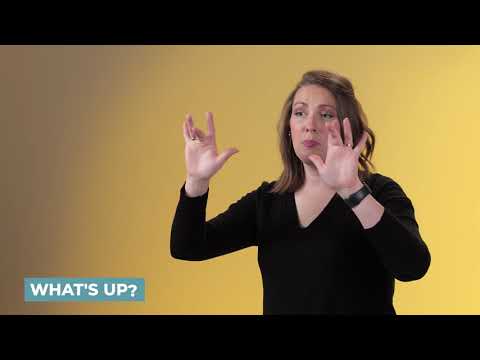
The sign “What’s Up” is a friendly and informal way to greet someone or inquire about their well-being in American Sign Language (ASL). It’s commonly used among friends and in casual settings to start a conversation. This phrase conveys interest in someone’s current situation or feelings, making it a staple in everyday interactions.
[VIDEO_PLACEHOLDER]
Table of Contents
Forming the sign
- Handshape: Start with your dominant hand in a “5” handshape. Your fingers should be extended and spread apart, with the palm facing somewhat towards the person you are signing to.
- Location: Position your hand at about chest level, slightly in front of your body.
- Movement: Move your hand upward in a slight arc while maintaining the “5” handshape. The movement should be fluid and relaxed, almost as if you are lifting your hand to signal a friendly hello.
- Non-manual signals: Accompany the sign with a friendly facial expression, such as a slight smile or raised eyebrows, to enhance the welcoming tone of your greeting.
This sign is characterized by its easy-going hand movement and welcoming facial expressions, which reflect the casual nature of the greeting. It’s essential to maintain a soft and relaxed demeanor while signing “What’s Up” to convey an approachable vibe.
Using “What’s Up” in sentences
“What’s Up” can be used in various contexts. For instance, when you see a friend, you can simply sign “What’s Up” to initiate conversation. Here are some examples:
- Upon entering a gathering, you might sign “What’s Up” to everyone in the room, inviting them to interact.
- If you bump into a colleague at work, you could sign “What’s Up” to break the ice and engage in casual conversation.
- When catching up with a friend, signing “What’s Up” serves as a friendly prompt for them to share any news or updates.
Signs related to “What’s Up”
There are several signs in ASL that are related to greetings and inquiring about someone’s well-being. Here are a few:
- Hello – A general greeting suitable for various situations.
- How are you? – A more specific inquiry about someone’s health and well-being.
- What? – Used to ask for clarification or information.
- Hey – An informal greeting similar to “What’s Up.”
- Howdy – A friendly and informal greeting often used in casual contexts.
Conversational variations
While “What’s Up” is a standard phrase, there are various conversational variations that can be used depending on the context or relationship with the person you are signing to. For example:
- “What’s good?” – A similar casual greeting that conveys a sense of friendliness.
- “What’s going on?” – This variation indicates a deeper inquiry into someone’s life or situation.
- “What’s new?” – This can be used to ask someone for updates or changes in their life since you last spoke.
Using these variations can help keep conversations fresh and engaging, making your interactions more dynamic.
FAQ
Can “What’s Up” be used in formal situations?
Generally, “What’s Up” is quite informal and is best reserved for casual contexts. In formal settings, consider using a more standard greeting like “Hello” or “Good morning.”
How is “What’s Up” different from “How are you?”
“What’s Up” is more casual and often used among friends, while “How are you?” can be used in both casual and formal settings and typically invites a more detailed response.
Is there a specific way to sign “What’s Up” based on the region?
While the core sign remains consistent across different regions, slight variations in facial expressions and movement speed may occur among different Deaf communities.
Are there any cultural nuances to consider with this sign?
Yes, using “What’s Up” typically indicates a casual, friendly relationship, so it’s best to use it with peers or acquaintances rather than in serious or formal contexts.
Can hearing people use “What’s Up” in ASL?
Yes, hearing individuals can absolutely learn and use “What’s Up” in ASL as a way to communicate with Deaf individuals. It shows respect and effort in learning ASL.
Practice ASL Signs
Use your camera to practice signs and get real-time AI feedback on your technique.
Free · No signup required