
Strong in Sign Language (ASL)
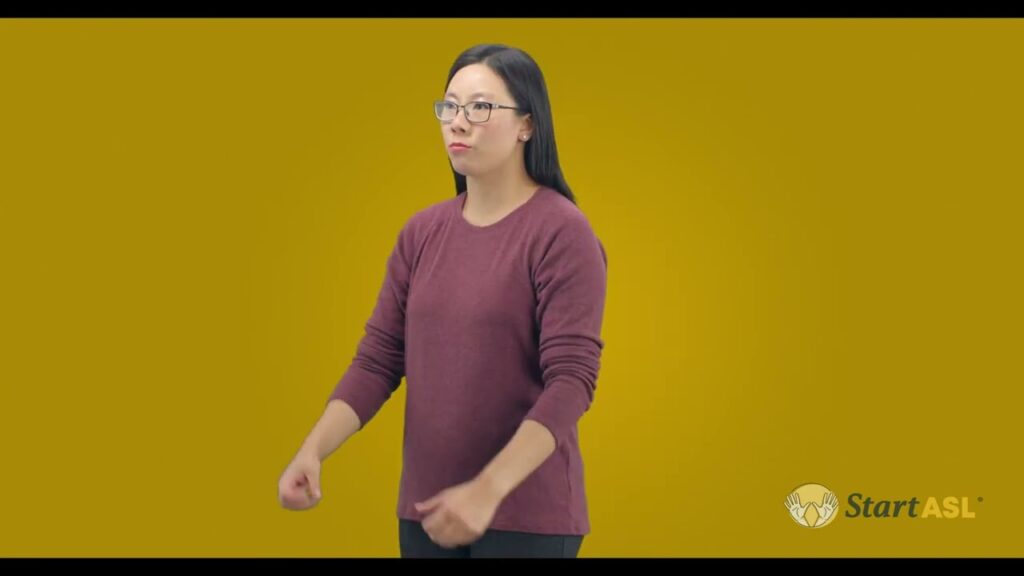
The sign “Strong” conveys the concept of strength or power, whether physically, emotionally, or in the context of character. It can be used to describe a person, an object, or an idea that possesses notable resilience or capability. This sign is versatile and can be adapted to various contexts, making it a valuable addition to your ASL vocabulary.
[VIDEO_PLACEHOLDER]
Table of Contents
Forming the sign
- Handshape: Start with your dominant hand in a fist. The fingers should be tightly closed, with the thumb wrapped around them.
- Location: Position your fist at the center of your chest, around the level of your heart.
- Movement: Push your fist outward from your chest, extending your arm forward while maintaining the fist shape. This movement should be decisive and firm.
- Non-manual signals: You can add emphasis by raising your eyebrows as you push your fist out, which signals intensity and strength.
This sign embodies the notion of strength, as the firm fist and outward movement visually represent power and assertiveness. The placement near the heart also adds a layer of emotional depth, suggesting not only physical strength but also inner resilience.
Adding degree & emphasis
To express varying degrees of strength, you can modify your signing speed and the force of your movement. For instance, a quick and forceful push can signify “very strong,” while a slower, softer motion may indicate “somewhat strong.” Non-manual signals, such as facial expressions, can also enhance your message; for example, a determined look can intensify the meaning.
Pairing “Strong” with other signs
When “Strong” is paired with other signs, it can create a more nuanced message. For instance:
- Strong Person: Sign “Strong” followed by “Person” to indicate someone who is physically capable.
- Strong Feeling: Use “Strong” with “Feeling” to describe powerful emotions.
- Very Strong: Combine “Very” with “Strong” to emphasize even more strength.
Common confusion with a similar sign
Many learners may confuse “Strong” with the sign for “Muscle.” While both signs convey strength, “Muscle” often emphasizes physical attributes specifically related to muscle, whereas “Strong” has a broader meaning that can include emotional and character strength. Understanding this distinction can help ensure clarity in your communication.
FAQ
Can “Strong” be used in a metaphorical sense?
Yes, “Strong” can describe emotional strength or resilience in situations, not just physical strength.
Is there a sign for “stronger”?
Yes, you can use “Strong” with a modification in movement to indicate “stronger,” or combine it with the sign for “more.”
How can I practice the sign effectively?
Practice in front of a mirror or with a friend. Pay attention to your facial expressions and hand movements to convey the right intensity.
Are there regional variations of the sign “Strong”?
While the basic sign is widely accepted, some regions may have unique variations influenced by local signing communities.
Practice ASL Signs
Use your camera to practice signs and get real-time AI feedback on your technique.
Free · No signup required