
Sister in Sign Language (ASL)
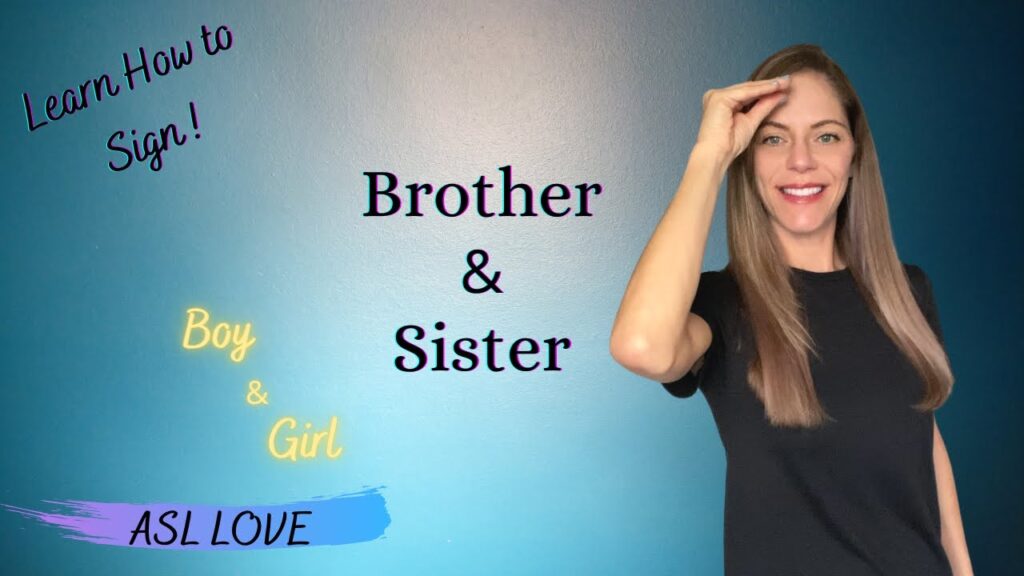
The sign for Sister is used to refer to a female sibling or a close female friend who is like a sister. It carries a sense of familial love and connection, often used in both casual and emotional contexts. This sign is an important part of daily communication among Deaf individuals, especially within family or community discussions.
[VIDEO_PLACEHOLDER]
Table of Contents
Forming the sign
- Handshape: Start with your dominant hand in a “B” handshape. This means your fingers are extended together, and your thumb is wrapped around the palm, creating a flat surface.
- Location: Position your hand near your chin, with the palm facing towards you. The location indicates closeness or personal connection.
- Movement: Move your hand outward from your chin slightly, as if you are gently pushing away a thought or idea.
- Non-manual signals: Accompany the sign with a slight smile or nod to express affection or connection. Your facial expressions enhance the meaning and add emotional context.
The movement and handshape combined create a visual representation of the concept of “sister,” emphasizing the connection and relational aspect of the term. The sign may be adapted with different facial expressions to convey various emotions like warmth or excitement when speaking of a sister.
Using “Sister” in sentences
When incorporating Sister into sentences, you can use it to describe family relationships or express emotions. For example, you might sign, “My sister is coming to visit,” to indicate a family member’s arrival. Alternatively, you could say, “I love my sister,” to convey affection. The context in which Sister is used can also include discussions about activities shared with your sister, such as, “I went shopping with my sister yesterday.”
Signs related to “Sister”
Here are a few signs that are related to Sister and can enhance your communications:
- Brother — The sign for a male sibling, providing a contrast to Sister.
- Family — A broader term encompassing all family members, including sisters.
- Friend — A sign to describe close companions, which can include a sisterly bond.
- Love — An expression of affection that can be associated with family members.
- Sibling — A general term for brothers and sisters, perfect for inclusivity.
Common confusion with a similar sign
It’s important to distinguish Sister from the sign for “Female,” which uses an “F” handshape. While both signs involve a location near the chin, they convey different meanings. Practicing both signs in context can help clarify when to use each one and enhance your communication skills.
FAQ
How do you sign ‘sisters’ in plural?
To indicate multiple sisters, you can repeat the sign for Sister with the same handshape and movement, or use a sweeping gesture to indicate a group.
Can Sister be used in a non-familial context?
Yes, Sister can also be used to refer to close female friends or members of a community who share a bond similar to siblings.
What facial expressions should I use with Sister?
Facial expressions can vary depending on the context. A smile or soft expression is appropriate when expressing love or affection, while a neutral expression can be used in more general statements.
Is there a sign for ‘half-sister’?
Yes, you can specify “half-sister” by signing Sister and then adding the sign for “half,” which is typically formed by using a flat hand and a slight motion.
Are there regional differences for signing Sister?
While the sign for Sister is generally consistent, there may be slight variations in handshape or movement depth based on regional dialects within the Deaf community.
Practice ASL Signs
Use your camera to practice signs and get real-time AI feedback on your technique.
Free · No signup required