
Friend in Sign Language (ASL)
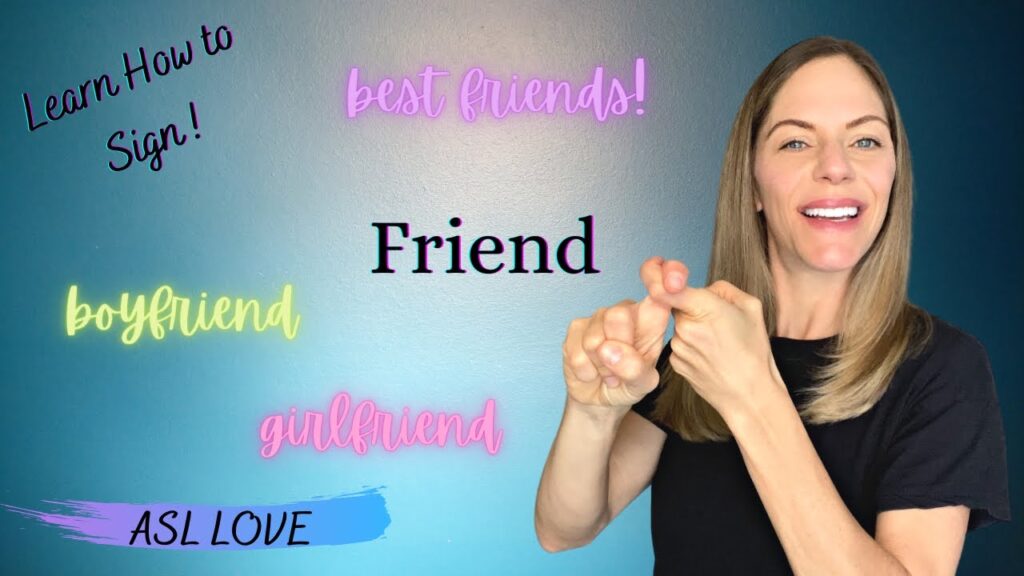
The sign for Friend represents a bond of companionship and mutual support between individuals. It is commonly used in various social contexts, from casual greetings to deeper conversations about relationships. Understanding how to sign Friend can help forge connections and communicate affection within the Deaf community.
[VIDEO_PLACEHOLDER]
Table of Contents
Forming the sign
- Handshape: Use the “F” handshape, where the thumb and index finger form a circle, while the other fingers are extended and held together.
- Location: Position the dominant hand in front of your body, approximately at chest level.
- Movement: Move the dominant hand in a slight arc toward the non-dominant hand, which is typically held palm facing up and serves as a reference point.
- Non-manual signals: Incorporate a friendly facial expression, such as a smile, to convey warmth and openness. Eye contact is also essential in conveying sincerity.
The sign for Friend is created using a specific handshape and movement that symbolizes connection. The “F” handshape signifies the concept of friendship, while the careful movement toward the non-dominant hand reinforces the idea of bringing people together. This combination of handshape, movement, and facial expression makes the sign not only visually clear but also emotionally resonant.
Using “Friend” in sentences
In a sentence, you can incorporate the sign for Friend in various ways. For instance, you might say, “I have a friend,” which would be signed as “I” (point to yourself) followed by the sign for Friend. If you want to express an action, such as “Let’s become friends,” you can include the sign for “let’s” (using the palm facing outward) along with Friend.
Another example could be, “My friend is here,” where you would sign “my” (using the possessive handshape) followed by the sign for Friend and a gesture indicating the location. This versatility in usage helps convey various messages about friendship and connections in everyday conversations.
Signs related to “Friend”
There are several signs that relate to the concept of friendship and social connections. Here are a few:
- Family – This sign represents familial relationships, which can often overlap with friendships.
- Help – Friends often help each other, making this sign relevant in conversations about support.
- Love – This sign signifies deeper emotional connections, which can include friendships.
- Get Together – This sign is used when you talk about meeting friends.
- Support – A key aspect of friendship is offering support.
Common confusion with a similar sign
Sometimes, beginners may confuse the sign for Friend with the sign for “Best Friend,” which is a variation that emphasizes a closer bond. While both signs use similar handshapes, the movement for “Best Friend” typically involves a more pronounced gesture, often bringing the two hands closer together or using more specific facial expressions to indicate the depth of the relationship. Understanding these subtle differences can enhance clarity in communication.
FAQ
What is the difference between Friend and Best Friend?
The sign for Best Friend includes a more intimate gesture and often uses a different facial expression to indicate a closer bond compared to the more general sign for Friend.
Can I use the sign for Friend to introduce someone?
Yes, you can use the sign for Friend when introducing someone to imply their relationship status. For example, saying “This is my friend” can be signed directly.
Is the sign for Friend the same in all regions?
While the basic sign for Friend is widely recognized, there may be slight regional variations in how it is performed. It’s important to observe local usage when learning.
How can I express a group of friends?
To refer to a group of friends, you can use the sign for Friend in a plural sense by using an arcing motion with both hands or indicating a larger group contextually.
Practice ASL Signs
Use your camera to practice signs and get real-time AI feedback on your technique.
Free · No signup required