
Pissed Off in Sign Language (ASL)
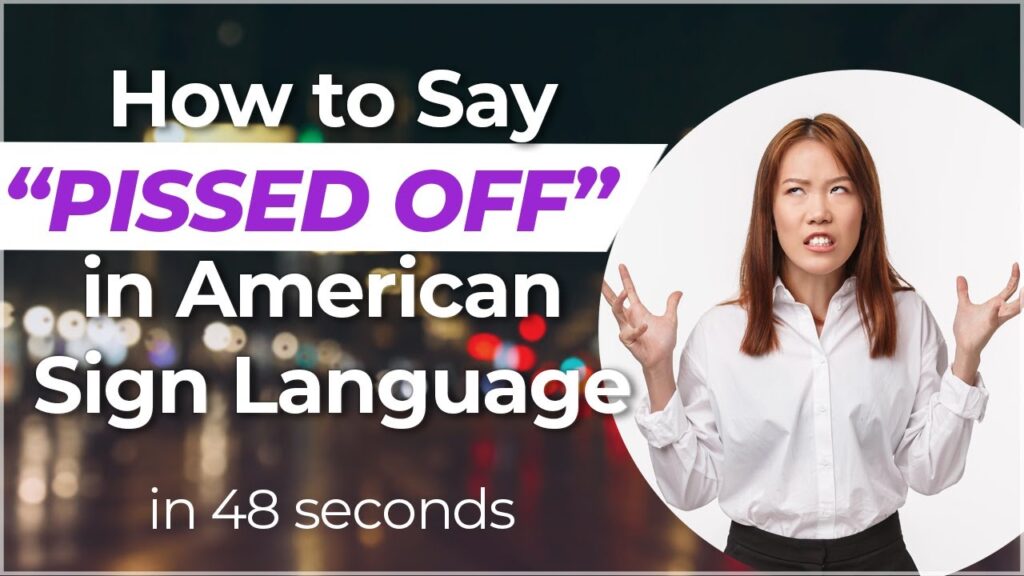
Pissed Off is a common expression used to convey feelings of anger or frustration. This sign is often utilized in various contexts, whether expressing personal grievances, discussing injustices, or simply venting about a frustrating situation. It’s a powerful sign that can be used among friends or in more serious conversations when emotions run high.
[VIDEO_PLACEHOLDER]
Table of Contents
How to Form the Sign
- Handshape: Use a dominant hand in a flat shape, resembling a “5” handshape with fingers spread apart.
- Location: Position your dominant hand in front of your chest, approximately at chin height.
- Movement: Start by placing your hand in front of yourself with the palm facing away, then move it slightly back towards your body while bending your fingers inward to convey a sense of frustration.
- Non-manual signals: Accompany the sign with facial expressions that reflect anger or annoyance, such as furrowing your brows or frowning.
This sign effectively conveys the emotion associated with being “pissed off.” The combination of the specific handshape, movement, and non-manual signals work together to create a robust expression of frustration. Practicing the sign in front of a mirror can help with accuracy in both form and expression.
Using “Pissed Off” in Context
“Pissed Off” is often used in everyday conversations among Deaf individuals. For example, one might say, “I was really pissed off when my friend canceled our plans last minute.” This sign can also be used in storytelling or recounting events, adding emotional depth to the narrative. The context in which you use the sign can greatly affect its interpretation, so pay attention to your surroundings and the company you’re with.
Signs Related to “Pissed Off”
To expand your vocabulary and express a range of frustrations, consider these related signs:
Anger – A sign specifically denoting the emotion of anger.
Frustrated – A sign that captures a sense of irritation or annoyance.
Annoyed – A more mild expression of displeasure.
Upset – This sign conveys a sense of emotional disturbance.
Furious – A sign indicating a higher degree of anger than “pissed off.”
Common Confusion with Similar Signs
While “Pissed Off” is a clear expression of frustration, learners may confuse it with similar signs that express annoyance or irritation but do not carry the same weight. For example, the sign for “Frustrated” might be mistaken for “Pissed Off” due to similar handshapes and movements. However, “Frustrated” lacks the strong emotional connotation inherent in “Pissed Off.” It’s essential to pay attention to context and facial expressions to ensure effective communication.
Frequently Asked Questions
Can “Pissed Off” be used in professional settings?
While it is important to express emotions authentically, using “Pissed Off” in professional contexts may come across as unprofessional or overly emotional. Consider using a milder sign such as “Frustrated” in those situations.
Are there variations of the sign across different regions?
Yes, as with many signs, regional variations exist. In some areas, the movement or intensity of the sign may differ, so it’s beneficial to observe local Deaf culture for nuances.
What are some common responses when someone signs “Pissed Off”?
Responses may vary based on the context, but common replies include asking for details about why the person feels that way, offering support, or sharing a similar experience.
Is it considered rude to sign “Pissed Off” in public?
It depends on the context and the company. Among friends, it may be acceptable, but in more formal or public spaces, it could be viewed as inappropriate. Always gauge the atmosphere before signing.
Can facial expressions change the meaning of “Pissed Off”?
Absolutely. Facial expressions play a crucial role in ASL and can enhance or alter the meaning of the sign, conveying deeper emotions such as disappointment or rage.
Practice ASL Signs
Use your camera to practice signs and get real-time AI feedback on your technique.
Free · No signup required