
Moon in Sign Language (ASL)
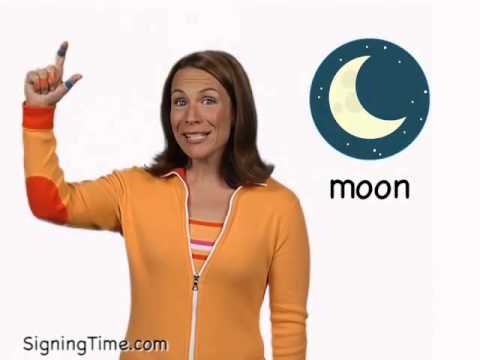
The sign “Moon” represents the celestial body that orbits the Earth and is often associated with nighttime, illumination, and various cultural meanings. In American Sign Language, this sign is used in contexts discussing astronomy, nature, and even mythology. It can evoke a sense of wonder and beauty when referenced in conversation.
[VIDEO_PLACEHOLDER]
Table of Contents
Forming the sign
- Handshape: Use your dominant hand in a flat “O” shape, resembling the rounded nature of the moon.
- Location: Position your hand in front of your face, about shoulder height.
- Movement: Move your hand gently in a circular motion, as if tracing the moon’s path in the sky.
- Non-manual signals: Maintain a relaxed facial expression, perhaps with a slight lift of the eyebrows to emphasize the wonder that the moon inspires.
This sign visually represents the moon’s shape and can be performed with grace to mimic its movement. The circular motion not only relates to the moon’s orbit but also adds an artistic flair to your signing, making it visually engaging.
Using “Moon” in sentences
You can incorporate “Moon” into a variety of sentences to express different ideas. For example:
- Simple sentence: “I saw a beautiful Moon last night.”
- Descriptive context: “The Moon is bright and full tonight.”
- In a metaphor: “Her smile shines like the Moon.”
Using “Moon” in different contexts showcases your ability to connect with various themes, whether they are poetic or straightforward. Remember to adjust your facial expressions to convey the sentiment of your message effectively.
Signs related to “Moon”
There are several signs that relate to the theme of “Moon” and the night sky. Familiarizing yourself with these can enhance your vocabulary and storytelling skills in ASL:
- Sun – The celestial body often contrasted with the moon.
- Stars – Refers to the other celestial bodies visible at night.
- Night – The time of day when the moon is visible.
- Sky – The expanse in which both the moon and stars exist.
- Light – The illumination that the moon provides.
Where this sign comes from
The sign “Moon” has roots in both natural observation and cultural significance. Historically, many cultures have celebrated the moon’s phases, linking it to agricultural cycles, tides, and even folklore. In ASL, the circular motion mimics the moon’s orbit, allowing for a visual representation that is both intuitive and expressive. This connection to nature enhances the sign’s relevance in daily conversation, as well as in storytelling and cultural discussions.
Common confusion with a similar sign
Some learners may confuse the sign for “Moon” with the sign for “Circle,” as both involve circular movements. To differentiate, remember that “Moon” specifically uses the “O” handshape and mimics the celestial body’s orbit, while “Circle” uses an open hand and focuses more on the shape itself rather than the motion through space. Paying attention to handshape and context will help clarify which sign you intend to use.
FAQ
What does the sign “Moon” look like?
The sign for “Moon” is made with a flat “O” handshape, moving in a circular motion in front of your face, about shoulder height.
Can “Moon” be used in a metaphorical context?
Yes, “Moon” can be used metaphorically in ASL, such as comparing someone’s smile to the beauty of the moon.
Is there a specific cultural significance to the moon in deaf culture?
Yes, the moon often represents beauty and inspiration in various cultural narratives, and its phases are celebrated in storytelling.
Are there any regional variations for signing “Moon”?
While the sign for “Moon” is generally consistent, some regions may have slight variations in handshape or movement. It’s good to observe local signers.
How is “Moon” used in everyday conversation?
Use “Moon” when discussing night skies, astronomy, or to express feelings related to beauty and wonder. It’s also common in poetic expressions.
Practice ASL Signs
Use your camera to practice signs and get real-time AI feedback on your technique.
Free · No signup required