
Fall in Sign Language (ASL)
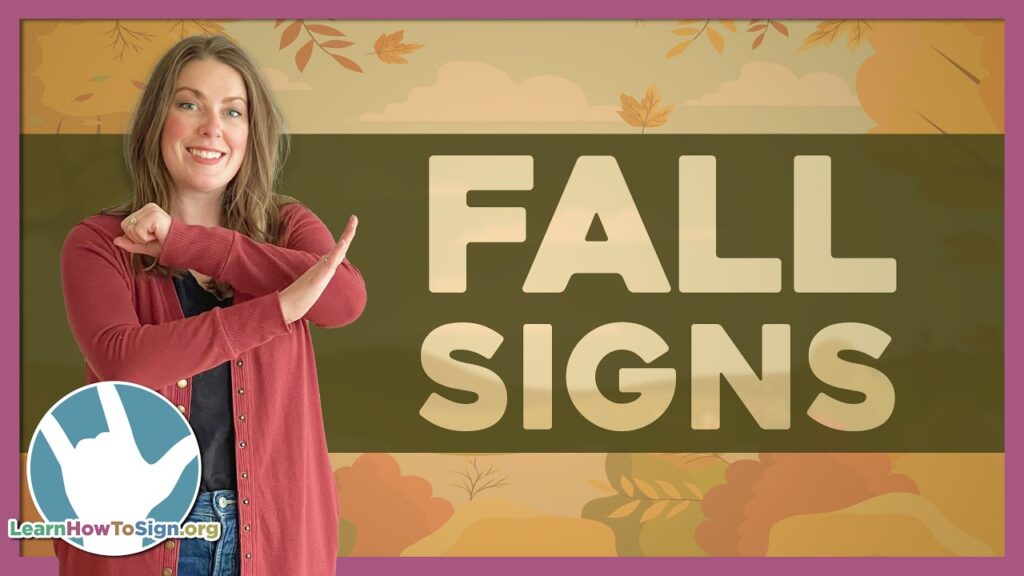
In American Sign Language, the sign for Fall represents both the action of falling and the autumn season. This versatile sign is used in various contexts, whether discussing the literal act of falling or talking about the time of year when leaves change color and drop from trees. Understanding how to sign “Fall” effectively can enhance your communication, especially when discussing seasonal activities or injuries.
[VIDEO_PLACEHOLDER]
Table of Contents
Forming the sign
- Handshape: Use your dominant hand in a flat “5” handshape with fingers extended and together.
- Location: Begin the sign at shoulder height, with the palm facing downwards.
- Movement: Move your hand downward in a smooth, fluid motion, mimicking the action of falling. You can also slightly bend your knees to emphasize the motion.
- Non-manual signals: Incorporate facial expressions that match the context, such as a surprised look when referring to a fall or a serene expression while discussing the autumn season.
This sign captures the essence of falling, whether it’s a person tripping or leaves cascading to the ground. Proper execution of the handshape and movement is crucial for clarity in communication.
Showing tense, aspect & repetition
In sign language, tense can often be shown through context and additional signs rather than specific changes to the sign itself. For “Fall,” you can modify the way you sign to indicate different tenses:
- Present tense: Sign “Fall” in a straightforward manner as described above.
- Past tense: To indicate that something has already fallen, you can perform the sign and then show a look of realization or sadness on your face.
- Future tense: When referring to something that will fall in the future, you can maintain an optimistic facial expression while signing.
- Repetition: If you want to emphasize that something falls multiple times, you can repeat the downward movement several times while altering the intensity of your facial expressions.
These variations help convey the timing and frequency of the action, making your communication more precise.
“Fall” in everyday signing
Incorporating “Fall” into your daily conversations allows for a richer exchange of ideas. Here are a few examples of how the sign can be used:
- Talking about the season: “I love the colors of Fall” can be signed by using “Fall” along with signs for “love” and “color.”
- Discussing an event: “I fell during the hike” can be expressed with a combination of signs for “I,” “hike,” and then “Fall.”
- Describing an action: “Be careful not to fall” can be communicated by signing “be careful” followed by “Fall.”
Using “Fall” in varied contexts helps you engage with others more effectively, facilitating deeper conversations.
Common confusion with a similar sign
One common point of confusion arises between the sign for “Fall” and the sign for “Drop.” While both involve downward motion, “Drop” typically uses a closed fist that moves downward, signifying something being let go, while “Fall” uses an open hand indicating a more natural, uncontrolled descent. Being aware of these subtle differences can help avoid miscommunication.
FAQ
What other signs are related to “Fall”?
Related signs include Autumn, which specifically refers to the season, and Trip, which indicates a physical stumble that may lead to falling.
Can I use “Fall” to describe other things?
Yes, “Fall” can be used metaphorically, such as in discussing someone’s fall from grace or a decrease in prices, as long as the context is clear.
Is “Fall” used differently in various regions?
While the sign for “Fall” is generally consistent across regions, some local variations may exist. It’s beneficial to learn from local Deaf communities.
How can I practice the sign for “Fall”?
You can practice the sign by incorporating it into sentences or scenarios, such as discussing autumn activities or practicing with a partner.
Practice ASL Signs
Use your camera to practice signs and get real-time AI feedback on your technique.
Free · No signup required