
Crown in Sign Language (ASL)
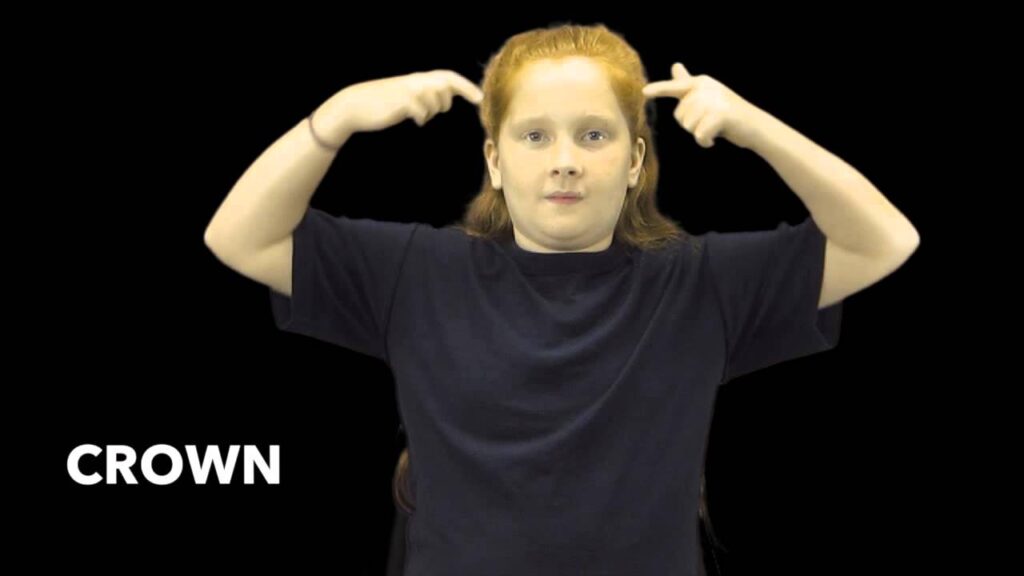
The sign “Crown” represents a type of headpiece often associated with royalty, authority, or celebration. This sign is commonly used in discussions about kings, queens, and ceremonial occasions. It can also convey themes of achievement or honor.
[VIDEO_PLACEHOLDER]
Table of Contents
Forming the sign
- Handshape: Start with your dominant hand shaped into a flat “B” handshape, where the fingers are extended and held together, while the thumb is tucked against the palm.
- Location: Position your hand above your head, with the palm facing downwards. This placement symbolizes the crown sitting atop a head.
- Movement: Gently glide the hand downward in a slight arc, then return to the initial position. This motion mimics the act of placing a crown upon one’s head.
- Non-manual signals: Incorporate facial expressions that convey regality or seriousness, such as raising your eyebrows slightly, to enhance the meaning of the sign.
The sign for “Crown” captures not only the physical attributes of the object but also its symbolic significance. By using the downward motion, you emphasize the act of crowning, making the gesture more vivid and meaningful.
Using “Crown” in sentences
In ASL, context is crucial when using the sign “Crown”. Here are some examples:
– “She wore a beautiful crown for her birthday celebration.”
– “The king’s crown was adorned with jewels.”
– “His achievements are deserving of a crown.”
These examples show how “Crown” can feature in various contexts, from celebrations to acknowledgments of success.
Signs related to “Crown”
To further enrich your ASL vocabulary, consider exploring these related signs:
- King: This sign represents a male monarch.
- Queen: This sign represents a female monarch.
- Crown Royal: Often associated with the brand, but can also signify high status.
- Jewel: A sign for precious items that may adorn a crown.
- Celebrate: This sign reflects the joy often associated with receiving a crown.
Regional variation
The sign for “Crown” may have slight variations across different regions. In some areas, the handshape might change slightly, with some signers using a more curved handshape rather than a flat “B” hand. It’s beneficial to observe local signers and adapt to their variations, which can enhance your signing fluency and cultural understanding.
FAQ
What is the difference between “Crown” and “Hat” in ASL?
The sign “Crown” specifically refers to a decorative headpiece associated with royalty, while “Hat” is a general term that covers various types of headwear.
Can “Crown” be used in a metaphorical sense?
Yes, “Crown” can symbolize achievement or recognition, such as being crowned the winner of a competition.
Is “Crown” used in any specific cultural practices within the Deaf community?
While “Crown” itself may not be a cultural sign, it is often used during celebrations like prom or homecoming, where royalty themes are prevalent.
How do you sign “Crown” for a group of people receiving crowns?
You can use the sign “Crown” and modify it by repeating the motion to indicate that multiple individuals are being crowned.
Practice ASL Signs
Use your camera to practice signs and get real-time AI feedback on your technique.
Free · No signup required