
Cloud in Sign Language (ASL)
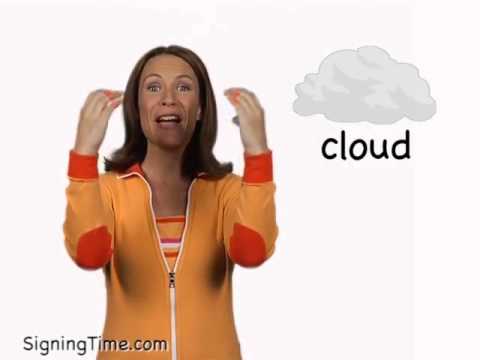
The sign “Cloud” represents the fluffy white formations we often see in the sky. This sign is commonly used in conversations about weather, nature, or when describing a scene. It captures the essence of clouds, conveying imagery and context in both casual and descriptive settings.
[VIDEO_PLACEHOLDER]
Table of Contents
Forming the sign
- Handshape: The dominant hand forms a loose ‘C’ shape, resembling the contour of a cloud.
- Location: The hand is typically positioned in front of your chest, at about the height of your chin.
- Movement: Gently move the ‘C’ handshape in a slight upward, then downward rolling motion, mimicking the movement of clouds drifting through the sky.
- Non-manual signals: Accompany the sign with a relaxed facial expression, which can express the softness and tranquility often associated with clouds.
This sign is visually expressive and captures the light, airy quality of clouds. The upward and downward motion reinforces the idea of clouds floating in the sky, making it easy for the viewer to understand the concept being conveyed.
Using “Cloud” in sentences
In American Sign Language, context is essential for comprehension. Here are a few example sentences using the sign “Cloud”:
- “Look at that big Cloud in the sky!”
- “The Cloud is blocking the sun.”
- “It might rain; there are dark Clouds forming.”
These examples show how “Cloud” can be used to describe weather conditions or make observations about the environment. The flexibility of the sign allows for various contexts, from casual conversations to more detailed discussions about weather patterns.
Signs related to “Cloud”
Understanding related signs can enhance your vocabulary and improve your signing fluency. Here are some signs that are often associated with “Cloud”:
- Sky – Refers to the expanse above us where clouds exist.
- Rain – A common phenomenon associated with clouds.
- Sunny – Describes weather conditions when clouds may be absent.
- Storm – Represents more intense weather conditions involving clouds.
- Snow – Describes a weather condition where clouds play a role in precipitation.
Common confusion with a similar sign
Many learners may confuse the sign for “Cloud” with the sign for “Fog.” Both involve similar handshapes and movements, but their meanings are distinct. “Fog” typically is signed with both hands moving in a wave-like motion close to the face, simulating how fog envelops surroundings. Practicing these signs together can help clarify their differences and enhance your signing accuracy in discussions about weather.
FAQ
What is the significance of expressing “Cloud” with non-manual signals?
Non-manual signals, such as facial expressions, add emotional nuance and context to the sign. For “Cloud,” a relaxed expression can convey the softness and calmness associated with clouds.
Can “Cloud” refer to different types of clouds?
Yes, while “Cloud” generally refers to any cloud, context can be provided by adding descriptive signs like “dark” or “fluffy” to specify the type.
Is there a different sign for “Cloud” in other regions?
Regional variations do exist, but the basic sign for “Cloud” is widely recognized across many Deaf communities. It’s beneficial to learn local variations during travels.
How can I practice the sign “Cloud” effectively?
Practice in front of a mirror to refine your handshape and movement. Additionally, incorporate it into sentences during conversations about the weather to build fluency.
Practice ASL Signs
Use your camera to practice signs and get real-time AI feedback on your technique.
Free · No signup required