
Clap in Sign Language (ASL)
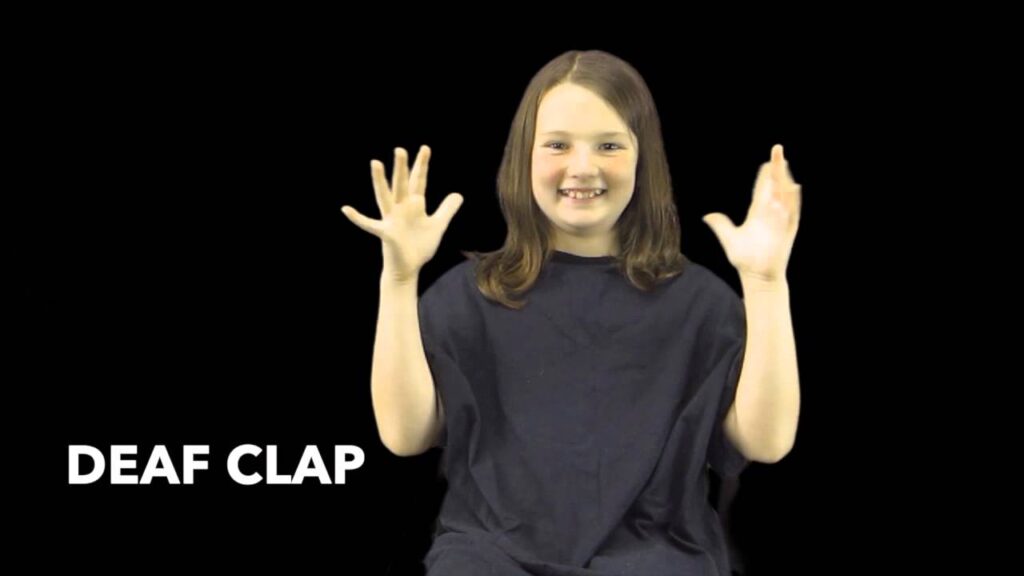
The sign “Clap” represents the action of clapping hands together, often used to express approval, excitement, or to encourage participation in a rhythmic manner. It is commonly employed in various contexts, such as applauding during performances, celebrating achievements, or signaling agreement. This sign is a foundational gesture that fosters connection and engagement within the Deaf community.
[VIDEO_PLACEHOLDER]
Table of Contents
How to Form the Sign “Clap”
- Handshape: Start with both hands open, fingers extended and close together. The palms should face each other.
- Location: Position your hands in front of your chest, approximately shoulder-width apart.
- Movement: Bring your hands together forcefully, creating a clapping sound. Then, return to the starting position and repeat as desired.
- Non-manual signals: Pair the sign with a smile or raise your eyebrows to convey enthusiasm or encourage participation.
When performing the sign “Clap,” the emphasis is on the forceful movement of the hands meeting each other, creating a lively and engaging gesture. The non-manual signals enhance the communication by expressing emotion, making the act of clapping more interactive and energetic.
Using “Clap” in Everyday Signing
The sign “Clap” can be integrated into conversations to express approval or excitement. For example, when someone shares good news, you might sign “Clap” to show your enthusiasm. Additionally, during events such as performances or presentations, clapping can be used to encourage the performer or speaker. It’s a sign that transcends individual words, allowing for shared experiences and communal responses.
Related Signs to “Clap”
Here are some signs that are related to “Clap” and can be used in similar contexts:
- Applause – The general action of showing approval through clapping.
- Cheer – A sign used to express excitement or encouragement, often used in sports contexts.
- Encourage – To support or motivate someone, often accompanied by clapping.
Common Confusion with Similar Signs
Some learners may confuse “Clap” with the sign for “Wave,” as both involve hand movements. However, “Clap” specifically requires the action of bringing hands together, while “Wave” involves moving one hand side to side. Paying attention to the context and the specific hand movements can help clarify which sign is appropriate to use.
FAQ
What occasions typically call for the sign “Clap”?
Clapping is commonly used during performances, celebrations, or any event where showing appreciation is appropriate. It’s also used in casual settings, like sharing great news with friends.
Can “Clap” be used to express sarcasm?
Yes, “Clap” can be used sarcastically by emphasizing the movement and using facial expressions that contradict the gesture, such as rolling your eyes or frowning.
Is there a difference in how “Clap” is signed in different regions?
While the basic sign for “Clap” is widely understood, some regional variations might exist in the movement’s intensity or accompanying expressions. It’s always good to observe local signing styles.
Can “Clap” be used with other signs?
Yes, “Clap” can be combined with other signs to enhance a message. For instance, after signing “good job,” you can follow it up with “Clap” to emphasize your praise.
What should I avoid when signing “Clap”?
Avoid signing “Clap” too lightly or without enthusiasm, as this can diminish the expression’s meaning. Ensure your movements are deliberate and accompanied by appropriate facial expressions.
Practice ASL Signs
Use your camera to practice signs and get real-time AI feedback on your technique.
Free · No signup required