
Break Down in Sign Language (ASL)
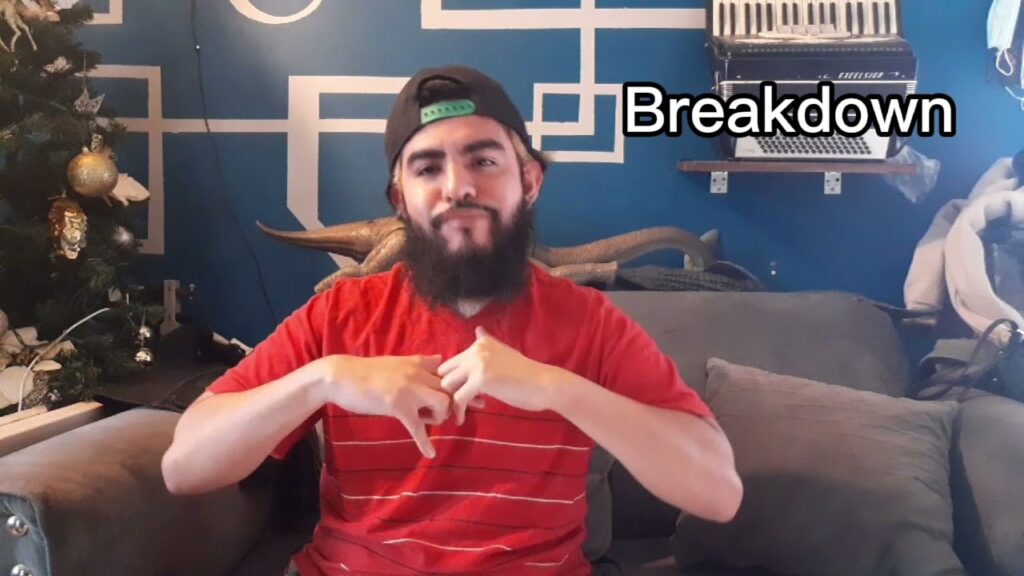
The sign “Break Down” is commonly used to describe the action of something collapsing or being dismantled, whether literally or metaphorically. It can refer to physical objects, ideas, or emotional states. This sign is particularly useful in conversations about difficulties, challenges, or problem-solving scenarios.
[VIDEO_PLACEHOLDER]
Table of Contents
Forming the sign
- Handshape: Use a “C” handshape for both hands.
- Location: Position your hands in front of your body at chest level.
- Movement: Bring both hands downwards, separating them gradually to indicate a breakdown or collapse.
- Non-manual signals: Furrow your brow to reflect the seriousness of the breakdown, and perhaps slightly shake your head to emphasize the negative aspect.
To form “Break Down,” start with both hands in the “C” shape at chest height. As you move your hands downward and apart, imagine depicting something falling apart. The downward movement symbolizes the action of breaking down, while the non-manual signals add emotional nuance to the sign, conveying a sense of difficulty or frustration.
Showing tense, aspect & repetition
In ASL, the tense of “Break Down” can be shown through your facial expressions and the context in which you use the sign. For example, to indicate it happening in the past, you might nod slightly as you perform the sign. For ongoing occurrences, you can repeat the sign while maintaining a serious facial expression to depict a persistent issue. Additionally, to show that something broke down repeatedly, you can sign it multiple times with a slight pause in between to indicate the sequence of events.
“Break Down” in everyday signing
In casual conversations, “Break Down” can be used in various contexts. For instance, if discussing a project that isn’t going as planned, you might say, “My project is going to break down soon,” using the sign to indicate impending issues. Similarly, when talking about emotional states, you might convey that someone is feeling overwhelmed by stating, “I feel like I’m about to break down,” while showing the sign with a concerned facial expression. This flexibility makes it a valuable addition to everyday vocabulary.
Common mistakes to avoid
One common mistake learners make is using an improper handshape. Ensure you’re forming a clear “C” shape, as using a flat hand or fist can change the meaning of your sign. Additionally, some may forget to incorporate non-manual signals, which are crucial in ASL for conveying emotions and context. Finally, remember to maintain a clear downward movement; hesitating or moving your hands upward can confuse the sign’s meaning.
Related signs
Collapse – Indicates a sudden falling down of a structure or organization.
Dismantle – Refers to taking something apart intentionally, often used in project contexts.
Cry – Often used when expressing emotional breakdown, showing distress or sadness.
Fail – Describes unsuccessful attempts and can be related to breaking down under pressure.
Stress – Indicates pressure that may lead to a breakdown, useful in conversations about mental health.
A learner’s tip
When learning “Break Down,” practice in front of a mirror to refine your movements and facial expressions. Pay attention to how your emotions can enhance the meaning of the sign. Additionally, try using it in various sentences with friends or fellow learners to improve your comfort and fluidity with the sign and its contexts.
FAQ
What does “Break Down” mean in ASL?
“Break Down” refers to the action of something collapsing or failing, both literally and metaphorically.
Can “Break Down” be used in different contexts?
Yes, it can describe physical breakdowns, emotional states, or problems in projects or plans.
Are there regional variations of “Break Down”?
While the basic sign is generally consistent, you may notice slight variations in speed or intensity based on the signer’s regional background.
What should I focus on when practicing this sign?
Pay attention to your handshape, movement, and accompanying facial expressions, as they all contribute to the meaning.
Practice ASL Signs
Use your camera to practice signs and get real-time AI feedback on your technique.
Free · No signup required