
Bacon in Sign Language (ASL)
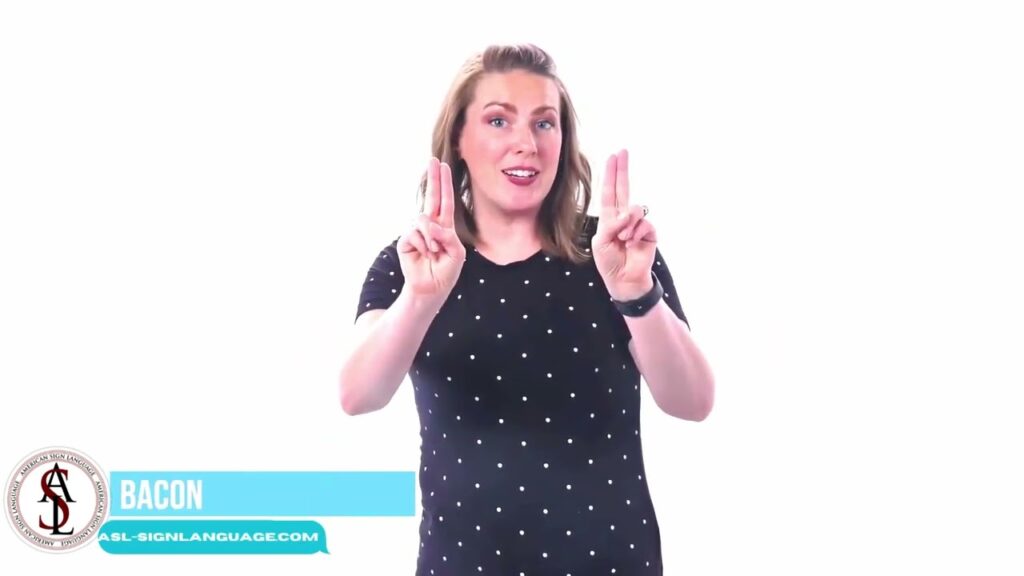
Bacon is a popular food item made from cured pork, typically enjoyed in breakfast dishes, sandwiches, and as a flavor enhancer in various recipes. In American Sign Language, the sign for “Bacon” reflects the unique characteristics of this beloved food. It is commonly used in culinary contexts, conversations about meals, and when discussing favorite foods.
[VIDEO_PLACEHOLDER]
Table of Contents
Forming the sign
- Handshape: Use the dominant hand in a flat ‘B’ handshape (with fingers extended and together).
- Location: Position your dominant hand near your chin or mouth, mimicking the action of bringing food towards your face.
- Movement: Move the hand forward, away from the face, as if offering or presenting the bacon to someone else. The motion should be gentle and inviting.
- Non-manual signals: Raise your eyebrows slightly while making the sign to indicate enthusiasm or delight, as bacon is often associated with enjoyment.
This sign encapsulates the visual and tactile experience of bacon, emphasizing its inviting nature. The movement of presenting the food mimics sharing a delicious meal with others, which is a significant aspect of Deaf culture, emphasizing community and connection through food.
Using “Bacon” in sentences
In ASL, “Bacon” can be used in various contexts. Here are some examples:
- I love bacon. (sign “I” + “LOVE” + “BACON”)
- Do you want bacon with your eggs? (sign “DO” + “YOU” + “WANT” + “BACON” + “WITH” + “YOUR” + “EGGS”)
- Bacon is my favorite breakfast food. (sign “BACON” + “MY” + “FAVORITE” + “BREAKFAST” + “FOOD”)
These sentences demonstrate how “Bacon” can easily fit into everyday conversations, particularly around meal preferences and food discussions. The sign can also be animated to express excitement about a meal, reinforcing the communal aspects of sharing food.
Signs related to “Bacon”
Here are some signs that are often used in conjunction with “Bacon”:
- Egg – A common breakfast item often paired with bacon.
- Toast – Another breakfast staple that complements bacon.
- Sandwich – Many people enjoy bacon in sandwiches.
- Cheese – Frequently used together in various dishes.
- Breakfast – The main meal where bacon is typically served.
Where this sign comes from
The sign for “Bacon” has evolved within the Deaf community, reflecting cultural attitudes towards food and meal-sharing. It has been adopted and adapted from various regional influences, showcasing the unique aspects of American cuisine. As bacon has become a staple in many American diets, the sign has gained popularity not only in homes but also in restaurants and culinary discussions among Deaf individuals.
Frequently asked questions about “Bacon”
Can I use the sign for “Bacon” to refer to other types of meat?
This sign specifically refers to bacon. For other meats, different signs exist, and it’s best to use those to avoid confusion.
Is there a different sign for vegetarian bacon alternatives?
Vegetarian alternatives may not have a unique sign and can typically be described by combining the sign for “bacon” with the sign for “vegetarian” or simply fingerspelling the name of the product.
What facial expressions should I use when signing “Bacon”?
Using positive facial expressions, like raising your eyebrows, can enhance the sign and convey excitement or delight about bacon.
Can I sign “Bacon” in a cooking context?
Yes! The sign is appropriate in cooking contexts, especially when discussing recipes or meal preparations that include bacon.
Is there a difference in signing “Bacon” regionally?
While the sign for “Bacon” is generally consistent, some regional variations may exist. It’s best to observe local signers and adapt accordingly.
Practice ASL Signs
Use your camera to practice signs and get real-time AI feedback on your technique.
Free · No signup required