
Agreement in Sign Language (ASL)
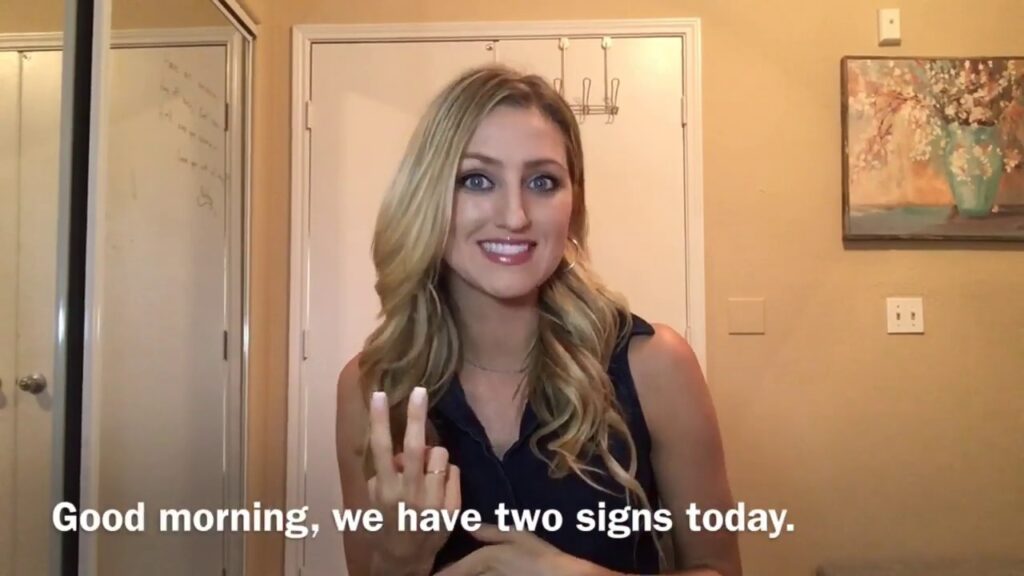
The sign “Agreement” represents the concept of concurrence or acceptance between parties in a conversation or discussion. It is commonly used in discussions where consensus is reached or to indicate mutual understanding. This sign plays a crucial role in establishing clarity during dialogues, ensuring that all involved parties are aligned in their thoughts or decisions.
[VIDEO_PLACEHOLDER]
Table of Contents
How to Form the Sign “Agreement”
- Handshape: Start with both hands open, palms facing each other. The fingers are spread apart, resembling open “A” hands.
- Location: Position your hands in front of your chest, slightly apart, at about shoulder height.
- Movement: Bring the hands together, moving them towards each other in a gentle, sweeping motion, as if you are sealing a deal. Then, pull them apart slightly while keeping the palms facing one another.
- Non-manual signals: Maintain a neutral facial expression while signing. You can slightly nod your head to emphasize agreement when appropriate.
This sign effectively conveys the sense of mutual acceptance or concord. Remember to keep your movements fluid and natural to reflect the ease of agreement in conversation.
Using “Agreement” in Sentences
In everyday conversation, “Agreement” can be incorporated in various contexts. For example:
- When confirming a plan: “We reached an Agreement about the meeting time.”
- In discussions: “There was an Agreement between both teams on the project objectives.”
- Expressing understanding: “I nod my head to show my Agreement with your suggestion.”
Signs Related to “Agreement”
To enrich your ASL vocabulary, consider these related signs:
- Consensus: Indicating general agreement among a group.
- Approve: To express that something is accepted or agreed upon.
- Yes: A sign used to affirm or agree with a statement.
- Understand: To convey comprehension of an idea or statement.
Regional Variations of the Sign
The sign for “Agreement” can have regional variations based on location and community. In some areas, the movement may be more pronounced, while in others, it may be more subtle. Always be attentive to the context and adapt accordingly based on the community you are interacting with. Observing native signers can help you understand these nuances better.
Frequently Asked Questions about “Agreement”
What is the difference between “Agreement” and “Consent” in ASL?
While both signs indicate approval or acceptance, “Agreement” focuses on mutual understanding, whereas “Consent” emphasizes permission or approval for something specific.
Can “Agreement” be signed with one hand?
Typically, “Agreement” is signed with two hands to convey the idea of connection and mutuality. Using both hands adds to its meaning, although some may adapt it in casual settings.
How do I know when to use the sign for “Agreement”?
Use “Agreement” in discussions where you want to express consensus, understanding, or acceptance. It is particularly useful in collaborative settings or when confirming plans.
Is there a cultural significance to the sign “Agreement”?
Yes, in Deaf culture, reaching an agreement is often seen as a vital part of communication, promoting harmony and clarity in interactions.
Practice ASL Signs
Use your camera to practice signs and get real-time AI feedback on your technique.
Free · No signup required