
Yes in Sign Language (ASL)
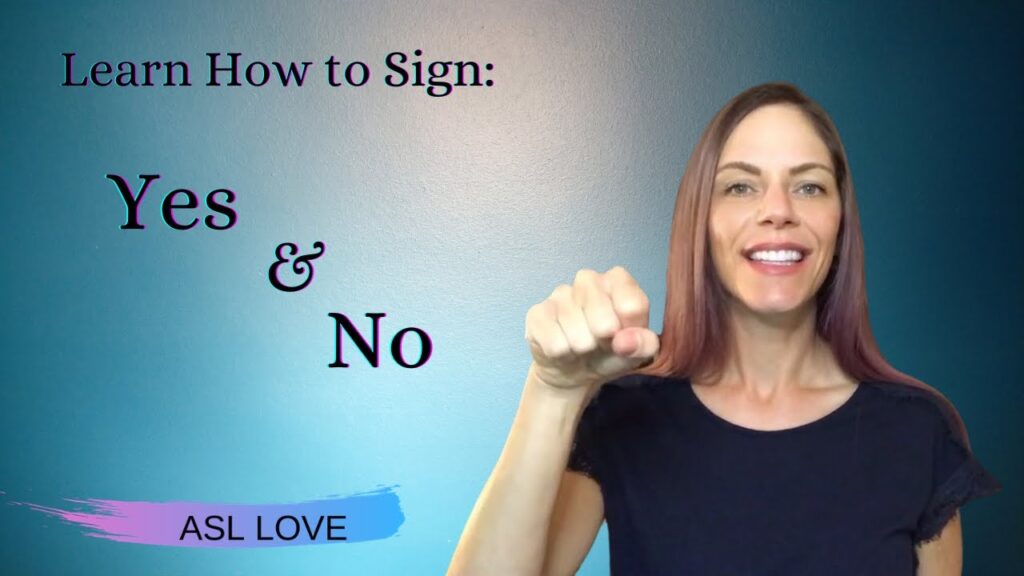
The sign “Yes” is an affirmative expression used to indicate agreement or affirmation in conversation. It is a fundamental sign in American Sign Language (ASL) that holds significant importance in daily interactions. Whether in response to a question or to confirm information, “Yes” plays a crucial role in effective communication within the Deaf community.
[VIDEO_PLACEHOLDER]
Table of Contents
Forming the sign
- Handshape: The sign for “Yes” is made with a closed fist. The thumb can either be tucked in or resting alongside the fingers, but the overall shape should resemble a fist.
- Location: The fist is typically positioned at the chin or near the chest, which helps convey the intent of affirmation.
- Movement: The sign involves a slight nodding motion of the fist. This movement mimics the natural gesture of nodding one’s head to indicate agreement.
- Non-manual signals: Along with the movement, accompanying facial expressions are essential. A slight smile or an assertive facial expression can enhance the positive affirmation of the sign.
The “Yes” sign is simple yet powerful. When used correctly, it can convey certainty and enthusiasm, making it a vital part of any conversation in ASL. The nodding motion reinforces the meaning, making it more expressive.
Using “Yes” in sentences
“Yes” can be used in various contexts, such as responding to questions or confirming statements. For example, if someone asks, “Do you want to go to the store?” you can respond with a clear sign of “Yes” to affirm your agreement. Additionally, it can be used in conversations to emphasize positivity, such as agreeing to a suggestion or expressing enthusiasm about an idea.
Signs related to “Yes”
There are several signs that complement “Yes” in conversation:
- No – the opposite of “Yes,” used for negation.
- OK – often used to show agreement or that everything is fine.
- Maybe – indicates uncertainty or conditional agreement.
- I Agree – a more emphatic way to express agreement with someone.
Common confusion with a similar sign
Some learners may confuse the sign “Yes” with the sign for “Okay,” as both involve similar handshapes and movements. However, “Yes” is a more assertive and definitive gesture, while “Okay” is often used in a more casual or less formal context. To clarify, “Yes” is typically more pronounced with a nodding motion, while “Okay” may involve a flat hand forming a circle.
FAQ
What is the significance of facial expressions when signing “Yes”?
Facial expressions in ASL are crucial for conveying tone and emotion. A positive facial expression while signing “Yes” enhances the affirmation, making it clear and enthusiastic.
Can “Yes” be used in questions?
Yes, “Yes” can be used in response to questions, as well as in questions where the signer is seeking confirmation or agreement.
Are there regional variations for the sign “Yes”?
In general, the sign “Yes” remains consistent across regions in the United States, but it’s always good to be aware of local Deaf culture and variations.
How can I practice signing “Yes”?
Practicing in front of a mirror can help improve your handshape and facial expressions. Try incorporating it into everyday conversations to become comfortable with its use.
Is there a different sign for “Yes” in different contexts?
The sign “Yes” typically remains the same in most contexts, but the emphasis and facial expressions may vary based on the situation.
Practice ASL Signs
Use your camera to practice signs and get real-time AI feedback on your technique.
Free · No signup required