
Wait in British Sign Language (BSL)
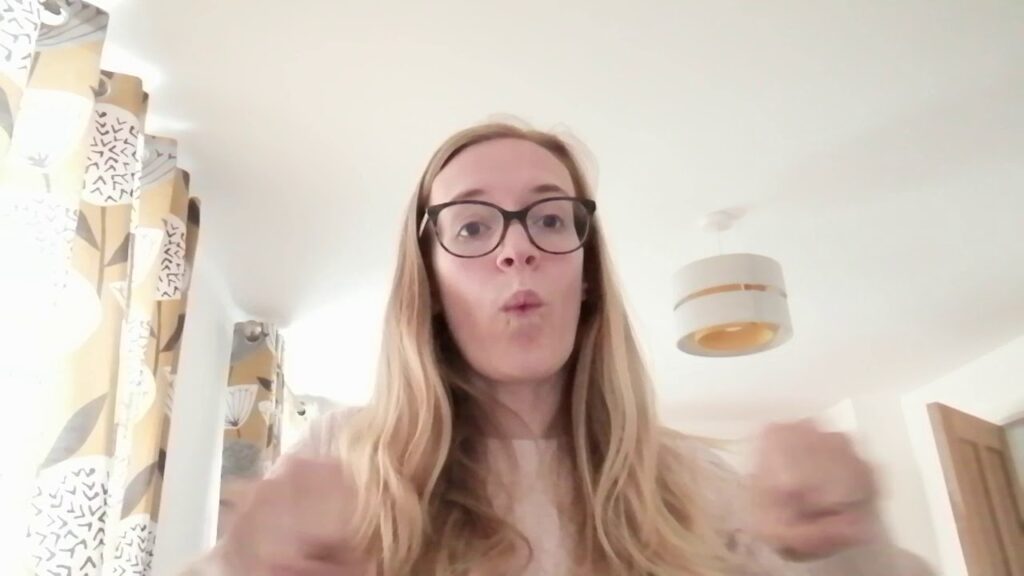
The sign for “wait” in BSL is commonly used in various contexts, such as asking someone to hold on for a moment or indicating a pause in conversation. It conveys the idea of patience and can be used in both casual and formal situations within the Deaf community.
How to Sign “Wait” in BSL

- Start with both hands in front of you, palms facing upwards.
- Form the letter ‘W’ with your dominant hand (using the index, middle fingers, and thumb).
- Position your non-dominant hand underneath your dominant hand, keeping it flat and palm up.
- Move the dominant hand slightly upwards and downwards, as if gently bouncing.
- Maintain a neutral facial expression, but you can raise your eyebrows slightly to emphasize the request.
Common Mistakes
- Using the wrong handshape: Ensure you use the correct ‘W’ handshape, as using a flat hand can change the meaning.
- Incorrect movement: Some learners may forget to include the gentle bouncing motion of the dominant hand.
- Facial expressions: Neglecting to use appropriate non-manual features, such as raising eyebrows, can make the sign less effective.
BSL vs ASL
In BSL, the sign for “wait” uses a ‘W’ handshape and a specific movement, while in ASL, the sign is performed using a different handshape and motion. This illustrates the distinct grammar and structure of each sign language.
Related Signs
- WAIT – A similar concept often used interchangeably.
- HOLD – Used to indicate holding something or waiting for something to happen.
- STOP – A sign that can be used to request someone to halt their actions.
- PLEASE – A polite addition often used when making requests, including waiting.
- HELP – Sometimes used in conjunction with waiting, especially when assistance is needed.
Frequently Asked Questions
How can I use “wait” in a BSL sentence?
You can use “wait” in a sentence like this: “WAIT, I need to think.” Remember to use the topic-comment structure.
Are there regional variations for the sign “wait” in the UK?
While the sign is generally consistent, some regions may incorporate slight variations in movement or facial expressions.
What are some similar signs to “wait”?
Signs like “hold” and “stop” can convey related meanings and can be used in similar contexts.
What tips do you have for learning this sign?
Practice in front of a mirror to ensure your handshape and movements are correct, and pay attention to your facial expressions.
Can “wait” be combined with other signs?
Yes, you can combine “wait” with signs like “please” to make your request more polite.
What role do facial expressions play in this sign?
Facial expressions enhance the meaning and tone of the sign, so it’s important to use them to convey patience or urgency.
How can I improve my BSL skills?
Engage with the Deaf community, practice regularly, and consider taking a class to enhance your skills.
Practice ASL Signs
Use your camera to practice signs and get real-time AI feedback on your technique.
Free · No signup required