
Tree in British Sign Language (BSL)
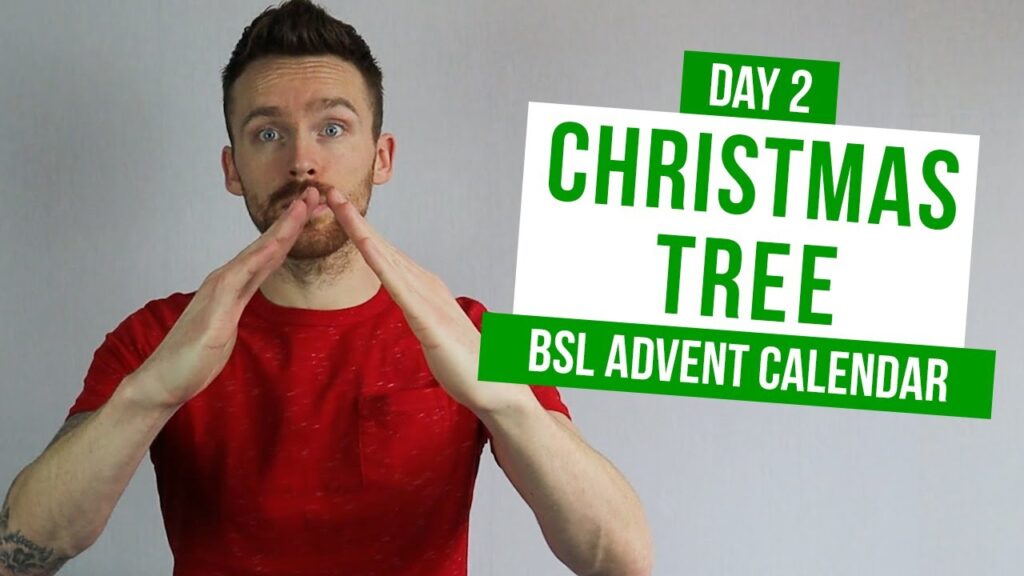
The sign for “tree” in British Sign Language (BSL) represents the concept of a tree and is commonly used in various contexts, such as nature discussions, storytelling, and environmental conversations. It’s a fundamental sign for anyone engaging with the UK Deaf community, particularly when discussing outdoor activities or ecology.
How to Sign “Tree” in BSL
- Start with your dominant hand in a flat ‘B’ shape (palm facing down).
- Position your hand a few inches above the non-dominant hand, which is also in a flat ‘B’ shape but held horizontally.
- Move your dominant hand upwards while keeping the palm facing down, mimicking the trunk and branches of a tree growing upwards.
- Incorporate a slight upward movement of your eyebrows to indicate the topic while signing.
- Finish with a steady hand position, holding it still to emphasise the tree’s stature.
Common Mistakes
- Mixing up hand shapes; ensure you use the correct ‘B’ shape for both hands.
- Not using enough movement; the upward motion is essential to convey growth.
- Forgetting non-manual features; facial expressions play a key role in BSL grammar.
BSL vs ASL
In American Sign Language (ASL), the sign for “tree” differs significantly from BSL. ASL typically uses a different handshape and movement, often involving a more distinct gesture to represent the tree’s branches. This highlights the diversity in sign languages and their unique structures.
Related Signs
- Leaf – Represents a leaf, often used in nature-related discussions.
- Forest – Signifying a collection of trees; useful in environmental contexts.
- Plant – Related to the growth of trees and other vegetation.
- Nature – A broader term encompassing trees and other natural elements.
- Flower – Often associated with trees during springtime.
Frequently Asked Questions
How can I use “tree” in a BSL sentence?
You can use “tree” as a topic in a sentence like: “TREE I like.” This follows the topic-comment structure of BSL.
Are there regional variations for the sign “tree”?
While the sign is generally consistent across the UK, you may notice slight variations in handshape or movement in different regions.
What are some similar signs to “tree”?
Signs like “leaf,” “plant,” and “forest” are closely related and often used in conjunction with “tree.”
What tips do you have for learning BSL signs like “tree”?
Practice in front of a mirror to check your handshape and movement. Joining a BSL class can also provide valuable feedback.
Can I use “tree” in storytelling?
Yes! “Tree” can be used to create vivid imagery when sharing stories about nature or personal experiences in parks and forests.
What are some common expressions to use with the sign “tree”?
Facial expressions like raising your eyebrows can denote excitement or interest when talking about trees.
Practice ASL Signs
Use your camera to practice signs and get real-time AI feedback on your technique.
Free · No signup required