
I’m Ok in British Sign Language (BSL)
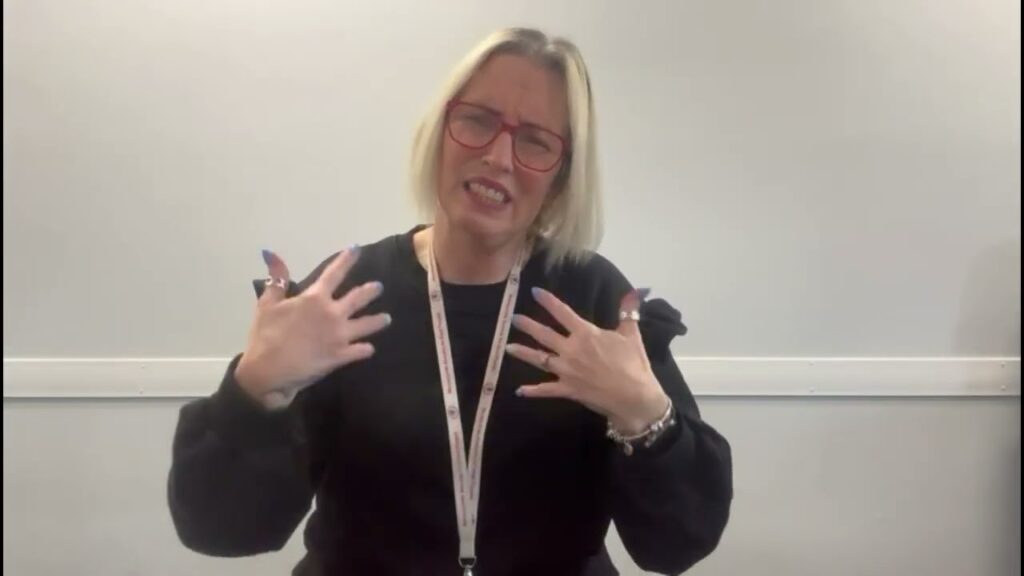
The sign for “I’m OK” in BSL is a reassuring gesture often used in casual conversations among the Deaf community in the UK. It’s a way to express that you are feeling fine or that everything is alright. This sign is frequently used in response to inquiries about one’s well-being.
How to Sign “I’m Ok” in BSL
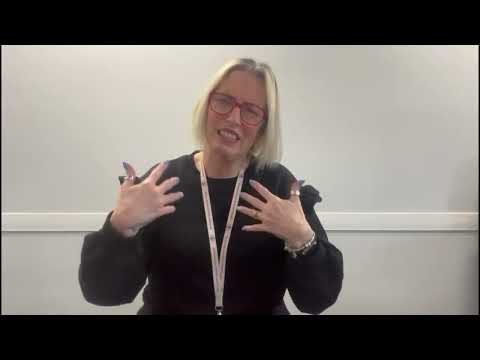
- Start with your dominant hand in a flat “B” shape (palm facing down).
- Position your hand at chest level, slightly to one side of your body.
- Move your hand in a small circular motion clockwise for a couple of seconds.
- While performing the sign, maintain a relaxed facial expression and use eye contact to engage your conversation partner.
Common Mistakes
- Forgetting to use facial expressions, which are vital for conveying meaning in BSL.
- Incorrectly shaping the hand; ensure it remains flat and in the correct position.
- Using too large of a movement; the sign should be subtle and not overly exaggerated.
BSL vs ASL
In BSL, the sign for “I’m OK” involves a flat hand moving in a circular motion. In contrast, in ASL (American Sign Language), the sign typically involves a thumbs-up gesture. This illustrates how different sign languages can vary significantly in both signs and grammar.
Related Signs
- OK – A common sign for approval or agreement.
- Feeling – Used to discuss emotions or states of being.
- Good – A positive affirmation or indication of quality.
- Well – Often used to express health or well-being.
- Fine – Another way to indicate that things are satisfactory.
Frequently Asked Questions
How can I use “I’m OK” in a BSL sentence?
You can use it as a response to someone asking how you are. For example, if someone signs “HOW YOU?”, you can sign “I’M OK”.
Are there regional variations of this sign in the UK?
The sign is generally consistent across the UK, but some regional variations may apply in terms of movement size or speed.
What other signs are similar to “I’m OK”?
Related signs include “FINE” and “GOOD”, which can be used in similar contexts to express well-being.
What are some learning tips for mastering this sign?
Practice regularly in front of a mirror to check your handshape and movement, and engage with the Deaf community for real-life practice.
Can I use “I’m OK” in formal settings?
While it’s primarily used in informal contexts, it can also be used in formal settings as a polite response to inquiries about your well-being.
Is there a difference in signing “I’m OK” when asking someone else?
When asking someone else if they are OK, you would sign “YOU OK?” instead of “I’M OK”.
Practice ASL Signs
Use your camera to practice signs and get real-time AI feedback on your technique.
Free · No signup required