
Ice Skate in British Sign Language (BSL)
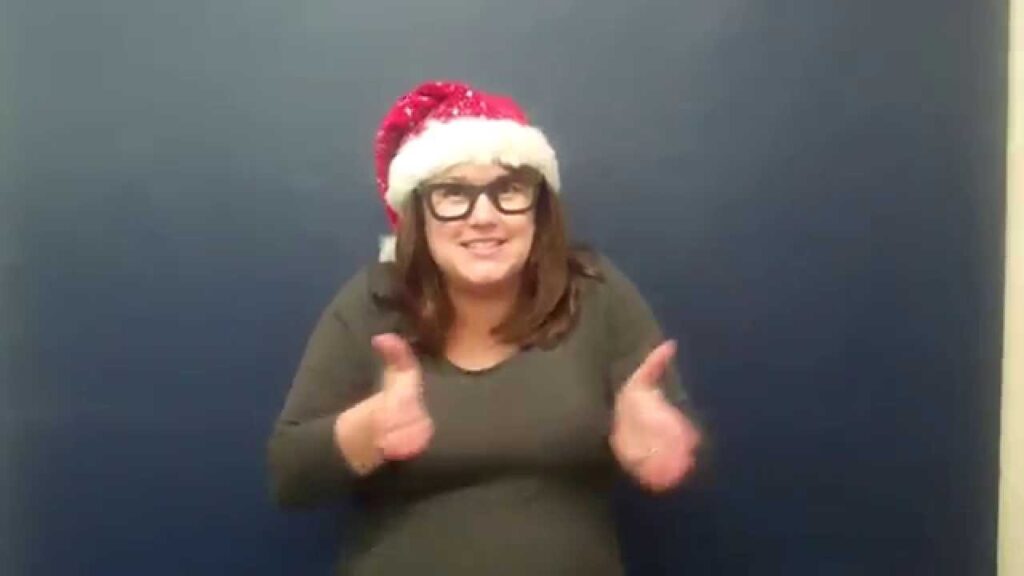
The sign for “ice skate” in BSL is used to refer to the action of skating on ice, often associated with winter sports or recreational activities. This sign is commonly used in discussions about ice skating, winter activities, and even during festive seasons when ice rinks are popular.
How to Sign “Ice Skate”

- Start with your dominant hand in a bent ‘V’ shape, representing the blade of the skate. Your thumb should be pointing upwards, and your fingers should be curved.
- Position your dominant hand in front of your non-dominant hand, which is held flat, palm facing down, representing the ice surface.
- Move your dominant hand forward and back in a gliding motion, mimicking the action of skating. Make sure to keep your facial expression joyful or focused, as if you are enjoying the activity.
- For emphasis, you can lean slightly forward as you glide, showing the movement’s smoothness and speed.
Common Mistakes
One common mistake is using a flat hand instead of the bent ‘V’ shape, which can confuse the sign with a different meaning. Another error is not using enough movement; the sign should clearly demonstrate the gliding action of skating. Lastly, forgetting to incorporate non-manual features like facial expressions can make the sign less expressive.
BSL vs ASL
In BSL, the sign for “ice skate” focuses on the motion of gliding and the hand shape representing the skate. In comparison, ASL has a different sign that may involve different handshapes and movements, showcasing the variations between the two sign languages.
Related Signs
- Skate – A general sign for skating, not specific to ice.
- Winter – Related to the season when ice skating typically occurs.
- Snow – Often associated with winter activities, including ice skating.
- Fun – Used to express enjoyment during activities like skating.
- Activity – A broader term that can encompass ice skating as a specific activity.
Frequently Asked Questions
Can you use “ice skate” in a BSL sentence?
Yes, you can structure it using the topic-comment format, e.g., “I ice skate” would be signed with the sign for “I” followed by the sign for “ice skate.”
Are there regional variations for “ice skate” in the UK?
While the sign is generally consistent, some regional signs may differ slightly in movement or emphasis, reflecting local dialects within the Deaf community.
What are some similar signs to “ice skate”?
Related signs include “skate,” “snow,” and “winter,” each with its own distinct sign but connected through the theme of winter sports.
What tips do you have for learning this sign?
Practice in front of a mirror to ensure you’re using the correct handshape and movement. Watching videos of fluent signers can also help reinforce your learning.
Can this sign be used in different contexts?
Yes, you can use it to discuss ice skating as a sport, a hobby, or even during festive events like Christmas markets with ice rinks.
How can non-manual features enhance this sign?
Facial expressions like happiness or concentration can add context and emotion, making the sign more engaging and clear.
Is it common for Deaf people to talk about ice skating?
Yes, ice skating is a popular activity, especially during winter, and is often discussed within the Deaf community.
Practice ASL Signs
Use your camera to practice signs and get real-time AI feedback on your technique.
Free · No signup required