
Ice Cream in British Sign Language (BSL)

The sign for “ice cream” in BSL is a delightful way to express a love for this popular treat. It’s often used in casual conversations, especially during summer outings or when enjoying a sweet dessert. This sign connects with the joy of sharing a treat with friends or family.
How to Sign “Ice Cream” in BSL
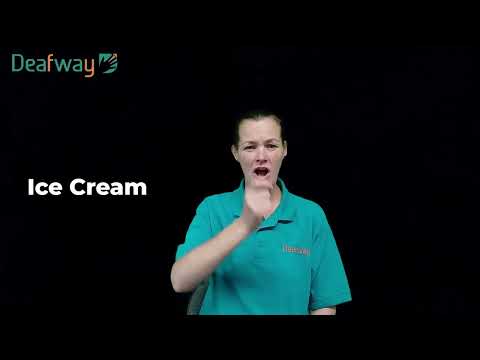
- Start with your dominant hand in a flat handshape (like a ‘B’ hand).
- Position your hand near your mouth, palm facing inwards.
- Move your hand slightly forward and then make a circular motion, mimicking the action of licking an ice cream cone.
- While performing this motion, add a happy facial expression to convey enjoyment.
Common Mistakes
- Some learners may forget to use the circular motion, which is essential for conveying the action of eating ice cream.
- Not using an appropriate facial expression can make the sign less expressive and engaging.
- Using the incorrect handshape—like a fist instead of a flat hand—can lead to confusion with other signs.
BSL vs ASL
In BSL, the sign for “ice cream” involves a circular motion near the mouth, emphasizing the enjoyment of the treat. In contrast, ASL uses a different gesture, which focuses on the handshape and position without the licking motion. This highlights the unique characteristics of each sign language.
Related Signs
- Sweet – Sign for something sugary or delicious.
- Dessert – The sign for any sweet course served at the end of a meal.
- Chocolate – The sign specifically for chocolate treats.
- Sorbet – A sign for fruit-flavoured frozen treats similar to ice cream.
- Vanilla – The specific sign for the classic ice cream flavour.
Frequently Asked Questions
Can I use this sign in a sentence?
Yes! For example, you can say, “I want ice cream,” by signing “I” + “want” + “ice cream.”
Are there regional variations of this sign in the UK?
While the sign is generally consistent, some regions may have slight variations in the movement or facial expressions used.
What are some similar signs?
Similar signs include “dessert,” “sweet,” and “chocolate,” which can be used in contexts involving treats.
Any tips for learning this sign?
Practice in front of a mirror to ensure your handshape and movements are accurate. Also, try incorporating facial expressions to convey enjoyment.
How do I explain this sign to someone unfamiliar with BSL?
Explain that the sign mimics the action of licking ice cream, making it a visual representation of the enjoyment of the treat.
Can children learn this sign easily?
Yes, children often find it fun to mimic the action, making it easier for them to learn.
Practice ASL Signs
Use your camera to practice signs and get real-time AI feedback on your technique.
Free · No signup required