
I Am a Nursing Assistant in British Sign Language (BSL)

The sign “I am a nursing assistant” is often used in the UK Deaf community to describe one’s profession in healthcare, specifically in nursing support roles. This phrase can be useful in conversations about work, roles, and responsibilities, allowing Deaf individuals to share their career paths and engage with others in the community.
How to Sign “I Am A Nursing Assistant”
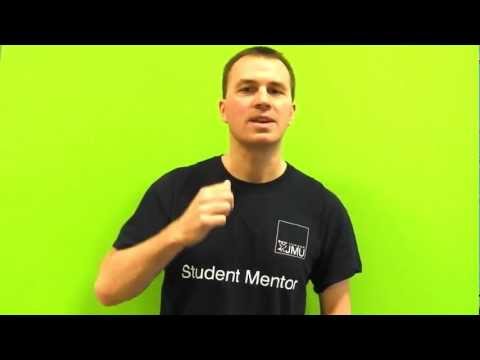
- Start by signing “I” using your dominant hand. Point to yourself with your index finger, keeping your hand relaxed.
- Next, for “am,” you can use a slight nod of your head to indicate the present tense. This is a non-manual feature that helps convey the meaning.
- For “nursing,” use your dominant hand in a flat ‘B’ handshape, and move it in a circular motion over your chest area to represent care and nurturing.
- To sign “assistant,” use your non-dominant hand in a flat ‘B’ handshape, palm facing up. With your dominant hand, form a ‘A’ handshape and place it on the palm of your non-dominant hand, then raise it slightly.
- Finally, to indicate “in BSL,” use both hands to form the sign for “BSL” by placing your dominant hand in a ‘B’ shape and moving it slightly forward from your body while maintaining eye contact to express confidence.
Common Mistakes
- Forgetting to use non-manual features like head nods can lead to misunderstandings about the tense.
- Incorrect handshapes, such as using a fist instead of a flat ‘B,’ can alter the meaning of the signs.
- Not maintaining space while signing can confuse the topic-comment structure of the sentence.
BSL vs ASL
In BSL, the phrase “I am a nursing assistant” follows a topic-comment structure, focusing on the role and identity. In contrast, ASL may use a different handshape and movement for the word “nursing” and does not typically employ the same topic-comment syntax. This difference highlights the unique grammar and structure of each sign language.
Related Signs
- Nurse – The sign for a registered nurse, often represented with a different handshape.
- Healthcare – A broader term encompassing various roles in health services.
- Assistant – The general sign for any support role, useful in many contexts.
- Work – A key sign for discussing employment and job-related topics.
- Help – Frequently used in healthcare conversations when discussing support.
Frequently Asked Questions
How do I use this sign in a sentence?
You can use it in a full sentence like, “I am a nursing assistant at the local hospital,” by adding the location after the main sign.
Are there regional variations in this sign?
While the core signs remain the same, some regional accents in BSL may influence the speed or fluidity of the sign.
What are some similar signs?
Related roles like “carer” or “support worker” have their own signs, each adapted to reflect specific job functions.
What tips do you have for learning this sign?
Practice in front of a mirror to check handshapes and movements, and try to find a local BSL group for real-life practice.
Can I use facial expressions with this sign?
Yes! Facial expressions are crucial in BSL to convey emotions and emphasis, so use them to enhance your signing.
How can I improve my BSL skills?
Regular practice, attending workshops, and engaging with the Deaf community will significantly enhance your signing skills.
Is this sign the same in all contexts?
While the core meaning remains, context can change how you might use or modify the sign in conversations.
Practice ASL Signs
Use your camera to practice signs and get real-time AI feedback on your technique.
Free · No signup required