
Colours in British Sign Language (BSL)
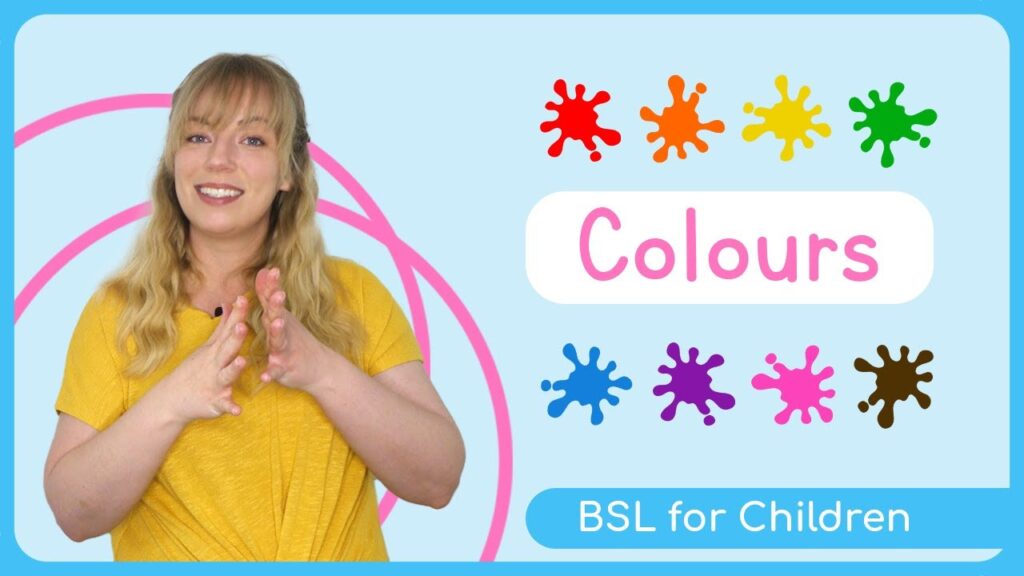
The sign for “colours” in British Sign Language (BSL) is essential for communicating about the vibrant world around us. It’s commonly used in various contexts, from describing clothing and art to discussing nature and preferences. Understanding how to sign colours is a fundamental skill in engaging with the UK Deaf community.
How to Sign “Colours” in BSL
- Start with your dominant hand in a flat handshape (like a ‘B’ handshape). Your fingers should be together and extended.
- Position your hand in front of your chest, about shoulder height.
- Make a gentle circular motion, moving your hand clockwise for a moment.
- As you sign, use facial expressions to convey enthusiasm or interest, enhancing the meaning of the sign.
- Finish the sign by bringing your hand back to the starting position.
Common Mistakes
- Forgetting to use facial expressions, which can make the sign appear flat or less engaging.
- Using an unclear handshape or not keeping fingers together, which can confuse the meaning.
- Failing to use the appropriate space, as signs in BSL often rely on spatial awareness to convey different meanings.
BSL vs ASL
In American Sign Language (ASL), the sign for “colours” is different from BSL. While BSL uses a circular motion with a flat handshape, ASL typically uses a different handshape and motion. This highlights the unique characteristics of each sign language, reflecting their distinct cultural contexts.
Related Signs
- Red – Sign for the colour red, often used in various contexts.
- Blue – The sign representing the colour blue.
- Green – Sign for the colour green.
- Yellow – The sign for yellow can be used in many discussions about nature and objects.
- Black – The sign for black, often used when discussing clothing or preferences.
Frequently Asked Questions
Can I use “colours” in a BSL sentence?
Yes! You can use “colours” as part of a sentence, such as “I like the colours of the rainbow,” following the topic-comment structure.
Are there regional variations for the sign “colours” in BSL?
There may be slight variations in the signing of “colours” across different areas of the UK, but the basic sign remains the same.
What are some similar signs to “colours”?
Some similar signs include individual colour signs like red, blue, and green.
What tips can help me learn this sign better?
Practice in front of a mirror to check your handshape and facial expressions. Watching videos of fluent signers can also be beneficial!
Can I use my non-dominant hand while signing “colours”?
While the dominant hand performs the sign, using your non-dominant hand for support or to create space can enhance clarity.
Is it necessary to use facial expressions with this sign?
Yes, facial expressions are vital in BSL to convey emotions and context, making your signing more engaging.
Practice ASL Signs
Use your camera to practice signs and get real-time AI feedback on your technique.
Free · No signup required