
BSL Translations in British Sign Language (BSL)

The sign for “bsl translations” is used within the UK Deaf community to refer to the process of translating information into British Sign Language. This sign is often used in educational settings, workshops, or discussions about accessibility and language resources for Deaf individuals. It highlights the importance of providing clear and accurate translations for better communication.
How to Sign “Bsl Translations” in BSL
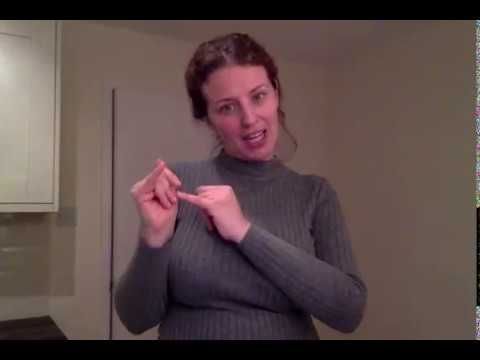
- Start with both hands in a flat shape (like a ‘B’ handshape) and positioned in front of your chest.
- Bring your hands together, palms facing each other, and create a small circular motion as if you are indicating a process.
- After the circular motion, move your hands apart slightly while maintaining the flat handshape, as if showing the translation of something occurring.
- Facial expression is crucial; maintain a focused and engaged expression to convey the importance of the translation process.
- Use space effectively by positioning your hands at different heights to represent the concept of translation, showing movement from one language (or sign) to another.
Common Mistakes
- Forgetting to use facial expressions, which are vital in BSL to convey meaning and context.
- Incorrect handshape; using a fist or a different handshape instead of the flat handshape can change the meaning.
- Not using space effectively; failing to adjust hand positions to show the concept of translating between languages.
BSL vs ASL
In BSL, the sign for “bsl translations” involves specific handshapes and movements unique to British Sign Language. In contrast, American Sign Language (ASL) uses a different sign and hand movements to convey the same concept, illustrating the distinct grammar and vocabulary of each sign language.
Related Signs
- Translate – The act of converting text or speech from one language to another.
- Accessibility – Ensuring that information is available to everyone, including Deaf individuals.
- Interpret – The act of translating spoken language into sign language.
- Communication – The process of sharing information and ideas.
- Language – A system of communication used by a community.
Frequently Asked Questions
How do I use “bsl translations” in a BSL sentence?
You can sign “bsl translations” while discussing resources available for Deaf individuals, e.g., “Bsl translations important.” Remember to use topic-comment structure.
Are there regional variations for this sign in the UK?
While the sign is generally consistent, some areas may have slight variations in movement or emphasis. It’s good to learn from local Deaf communities.
What are some similar signs in BSL?
Signs like “translate” and “interpret” are closely related, as they all involve the process of converting information into sign language.
What tips can help me learn this sign?
Practice with a Deaf friend or attend BSL classes to get feedback on your handshape and facial expressions for clarity.
Can I use this sign in formal settings?
Yes, “bsl translations” is appropriate in both informal and formal settings, especially when discussing resources for accessibility.
What are non-manual features, and why are they important?
Non-manual features include facial expressions and body language that add meaning to your signs. They are essential for conveying tone and context.
How does space play a role in signing “bsl translations”?
Using space effectively helps illustrate the concept of translation, showing the movement between different languages or ideas visually.
Practice ASL Signs
Use your camera to practice signs and get real-time AI feedback on your technique.
Free · No signup required