
Balanced Forces in British Sign Language (BSL)

The sign for “balanced forces” is often used in discussions about physics, particularly when explaining concepts related to forces acting on an object. In the UK Deaf community, this sign is commonly used in educational settings, particularly in schools and colleges, where science topics are taught in BSL. Understanding the sign helps facilitate clear communication about these concepts among Deaf students and their teachers.
How to Sign “Balanced Forces In Bsl”
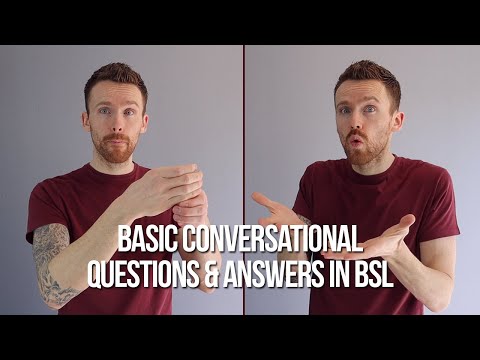
- Start with both hands in a flat ‘B’ handshape, palms facing down.
- Position your hands about shoulder-width apart, with the fingertips pointing forward.
- Slowly move both hands inward towards the centre of your body, maintaining the ‘B’ shape.
- As your hands meet, shift your facial expression to show focus or concentration, indicating the concept of balance.
- Hold the final position for a moment to reinforce the meaning before gently moving your hands back to the starting position.
Common Mistakes
- Forgetting to maintain the ‘B’ handshape, which can confuse the meaning.
- Using a quick movement instead of the slow and deliberate motion required to convey balance.
- Neglecting non-manual features like facial expressions, which are crucial for conveying the concept’s importance.
BSL vs ASL
In BSL, the sign for “balanced forces” involves specific handshapes and movements that are distinct from ASL. While ASL may use different signs or gestures for similar concepts, the emphasis on handshape and movement in BSL conveys a nuanced understanding of balance that is culturally significant in the UK Deaf community.
Related Signs
- Force – The sign for force involves a more dynamic movement to indicate strength or power.
- Motion – This sign reflects the concept of movement and direction.
- Newton – Used when discussing the unit of force, relevant in physics contexts.
- Force of Gravity – Specifically indicates the gravitational pull on objects.
Frequently Asked Questions
How can I use “balanced forces” in a BSL sentence?
You can say, “FORCE BALANCED,” to indicate that forces are in equilibrium.
Are there regional variations for this sign in the UK?
Generally, the sign remains consistent across the UK, but some regional dialects may have slight variations in speed or emphasis.
What similar signs should I learn?
Learning signs like Force and Motion can help expand your vocabulary in physics-related discussions.
What tips can help me learn this sign better?
Practice in front of a mirror to observe your handshape and facial expressions. Also, watch videos of fluent BSL users signing the concept.
Can I use this sign outside of a classroom setting?
Yes, it can also be used in casual conversations about physics, such as discussing experiments or concepts in everyday life.
What if I struggle with the handshape?
Take your time to practice the ‘B’ handshape separately before incorporating it into the full sign. Consistent practice will help.
Practice ASL Signs
Use your camera to practice signs and get real-time AI feedback on your technique.
Free · No signup required