
No in British Sign Language (BSL)
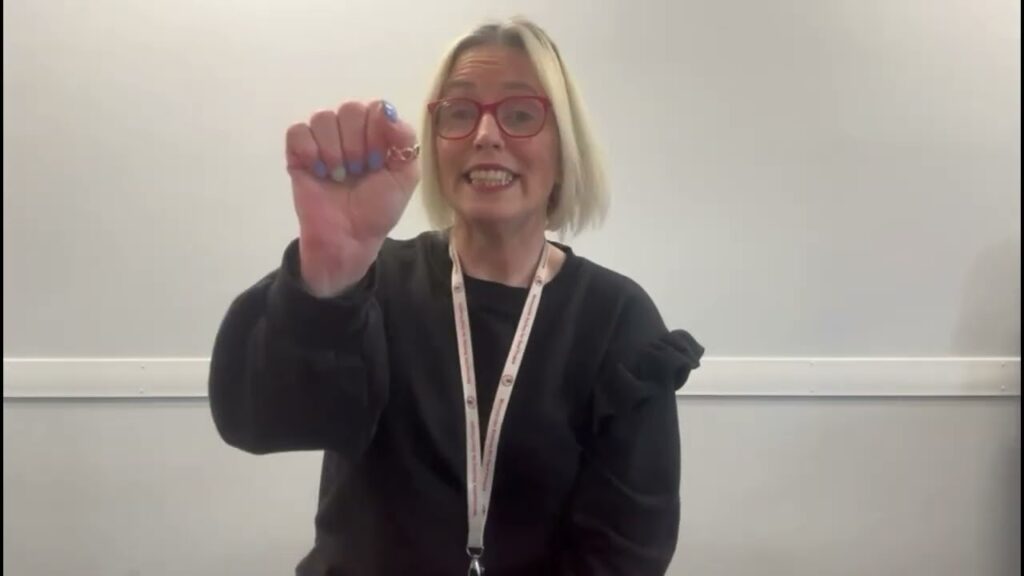
The sign for “no” in BSL is a fundamental expression used to indicate disagreement or refusal. It’s commonly used in everyday conversations within the UK Deaf community, helping to convey a clear message without needing to rely on spoken language.
How to Sign “No” in BSL
- Start with your dominant hand in a flat shape, fingers extended and together, resembling a flat ‘O’ or a ‘5’ handshape.
- Position your hand in front of your face, around chin level, angled slightly towards you.
- Move your hand away from your face while simultaneously bending your fingers downward, flattening your hand into a palm-down position.
- Maintain a serious or firm facial expression to reinforce the meaning of “no.” Using your eyebrows in a furrowed position can help convey a stronger refusal.
Common Mistakes
- Using an open palm instead of a flat handshape, which can confuse the meaning.
- Failing to use appropriate facial expressions, which are crucial for conveying the sign’s intensity.
- Moving the hand too quickly or erratically, making the sign less clear.
BSL vs ASL
In BSL, the sign for “no” involves a flat hand moving away from the face, while in ASL, it is often indicated by a ‘no’ handshape made by closing the fingers into a fist. This highlights the differences in handshapes and movements across the two sign languages.
Related Signs
- Yes – The sign for agreement or affirmation.
- Maybe – Used to express uncertainty or indecision.
- Please – A polite request sign.
- Thank You – A sign of gratitude.
- Help – Signaling a need for assistance.
Frequently Asked Questions
How do I use “no” in a BSL sentence?
You can use “no” at the beginning of a sentence for emphasis or after a question to indicate refusal. For example, “No, I don’t want that.”
Are there regional variations for the sign “no”?
The sign for “no” is generally consistent across the UK, though facial expressions might vary slightly among different communities.
What are some signs similar to “no”?
Signs like “not,” “never,” or “never mind” can express similar concepts but in different contexts. Each has its specific handshape and usage.
What tips can help me learn this sign?
Practice in front of a mirror to see your handshape and facial expressions. Engage with the Deaf community for feedback and practice.
Can I use “no” in different contexts?
Yes, “no” can be used in various situations, from declining offers to expressing disagreement. Context helps clarify its meaning.
Is “no” used differently in conversation?
Yes, the sign can be used with varying intensity and facial expressions depending on the context of the conversation.
Practice ASL Signs
Use your camera to practice signs and get real-time AI feedback on your technique.
Free · No signup required